Make money online fast

Make Money Online Fast: The Ultimate Guide to Earning Quickly in 2025

  Introduction Want to make money online fast? Whether you need extra cash or want to build a full-time income, the internet offers endless ...

Thursday, May 11, 2023

CEOs: Your Sales Reps are Damaging Your Brand With Lazy Prospecting Emails

As a CEO, I’ve got a prized inbox. And so every day I get dozens of emails from salespeople hoping to prospect me and gain my business. 

And I get it. I know that prospecting is part of the job of sales reps — and I know that many of them are going to go straight to the top and shoot their shot. 

I understand that I’m a target, but what I’ve seen lately has left me more and more dismayed. 

Lazy-emails

Sales reps are getting lazy. They’re blasting out prospecting emails without doing the slightest bit of research. 

These emails are so bad that I’m not just ignoring them, I’m getting irritated by them. Not only are these emails not going to get my business, they’re doing real damage to the image of the companies these reps work for. 

This kind of lazy email outreach is disruptive and damaging — and when I see the company they come from, I mentally cross them off the list of companies I would ever do business with. 

If you’re a CEO who’s not paying close attention to the work your sales team is doing, your brand could get tarnished without you even knowing it. 

Stop thinking of sales as ‘just a numbers game’

We’ve all heard the same thing over and over in our professional lives: “Sales is a numbers game.” 

I want to unpack what that actually means: that we think more about aggregate data than individual prospects. 

Everything we track is about the aggregate: Conversion rate, close rate, sales velocity. Every KPI is a generalization that lets us zoom out and focus on averages. 

sales-is-a-numbers-game-myth

This makes us think that sales is just a numbers game. We just have to apply those numbers to the future and we can predict how many deals we’ll close.

But I’ve come to see that this is the wrong approach. 

With every lost deal, with every abysmal open rate we shrug and say “sales is a numbers game.” And we ignore the collateral damage that comes with that mindset.

Think about it. 

A “sales is a numbers game” approach means that if 5% of your cold email targets get back to you and you close 10% of those, all you have to do is reach out to enough people to make the numbers work. 

Need to close 10 deals this quarter? Well, 10 is 10% of 100, so you need 100 people to respond to your emails. 

If you know you get 5% reply rate on your prospecting emails, that means you need to send 2000 emails this quarter.

But this ignores the staggering numbers on the other side of this equation: if 5% respond to your emails, 95% are annoyed by them — and many will write you off because of your sloppy approach.

Yes, you close 10% of those who respond, but what about the other 90% who chose not to buy?

This is the damage done by the spray-and-pray approach.

sales-damage

Think about the effect on the vast majority of people you’re targeting. Not only will they not buy from you — they’ll be left with an unfavorable impression of your brand. They’ll think you’re too lazy to put in the effort to research who you’re going after. 

They’ll think your brand is desperate and disorganized…. if they think of your brand at all.

Bad prospecting is more widespread than you think

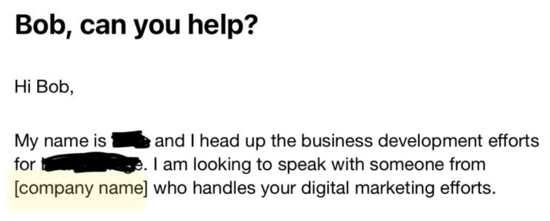
A few weeks ago I got so frustrated with these lazy sales emails I posted about it on LinkedIn. I took a screenshot of a particularly bad email (one that didn’t even take the time to fill in where the template said “[company name]”. 


What I said hit a nerve, and professionals of all kinds rallied around what I had said.

But here’s the worst part.

This whole experience made me want to go check out the emails my own sales team was sending out to prospects. I was taken aback. 

sales-prospecting-brand-damage

Even though we work hard to base our selling on relationships, my own team was sending out the same templated nonsense to other businesses. 

And I immediately saw that just as I was criticizing other businesses, lazy sales emails were hurting the IMPACT brand — something I’ve built with years of dedication. 

Email after email, each doing more damage to my business’ brand.

Change needs to start at the top

It’s easy to fault the sales reps. They’re phoning it in by not doing any real research before they reach out. But the blame doesn’t stop there. 

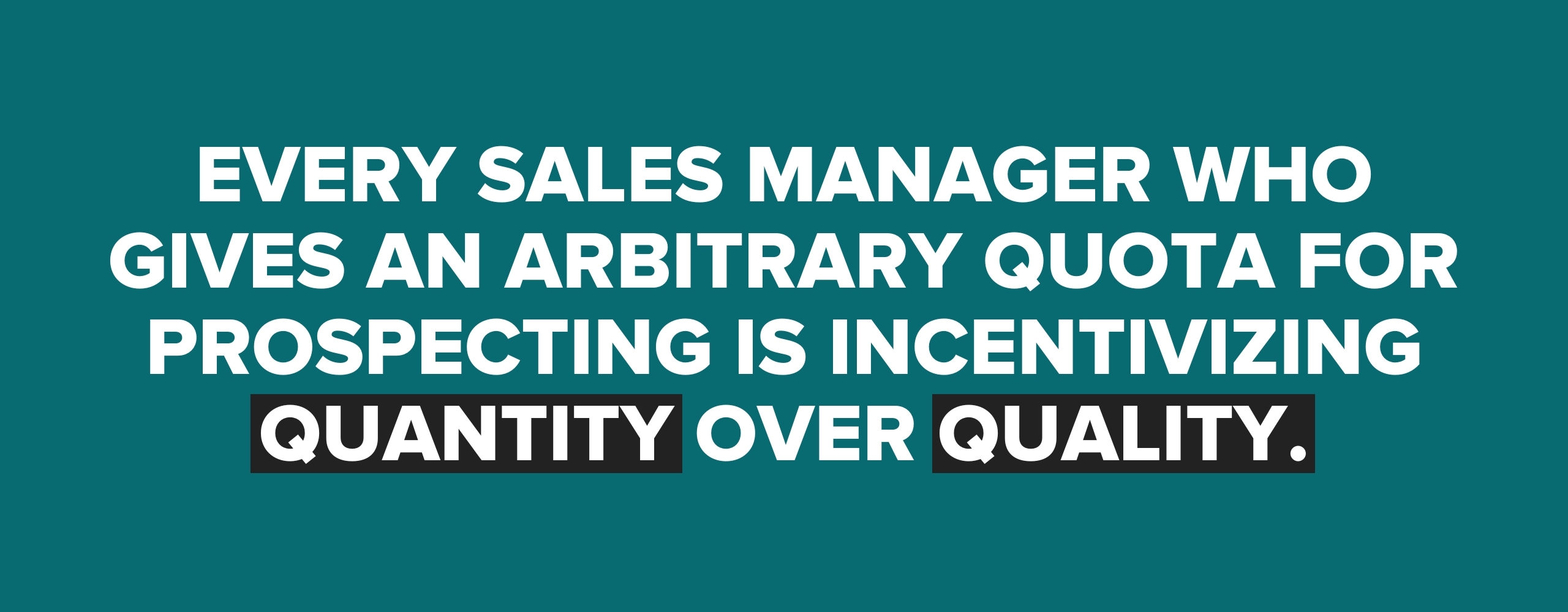
Every sales manager who gives an arbitrary quota for prospecting is incentivizing quantity over quality. When a sales rep hears they need to send 50 prospecting emails this week, corners are going to get cut to reach that quota.

sales-quality

Let’s raise our standards and try a different approach.

Think about the numbers I shared above. Let’s say each sales rep needs to close 10 deals this quarter. Imagine instead of 2,000 boilerplate, stocky emails they sent out 100 carefully crafted, fully researched emails that spoke directly to the pain that prospect is experiencing. 

I guarantee their response rate will be way higher. I guarantee their close rate will be higher, too. 

I think they’d probably still get your 10 deals — all without alienating 1,990 people in the process.

This way, they don’t look lazy or desperate. They look well-informed and caring — exactly how you, as CEO, want your business to be perceived. 


Author: rruffolo@impactbnd.com (Bob Ruffolo)

* This article was originally published here

How to make $1000/day with affiliate marketing 24/7 - start here!


Wednesday, May 10, 2023

Word-of-Mouth is Fragile; Here's How to Build Market Durability

Years ago, I worked as a salesman for my small pool company I ran with a few friends. Back then, we always loved doing a job in a subdivision.

Neighborhood-Pool-Overview

While we were installing a pool, neighbors would stop by and check the progress. They’d take a card and ask about our company. More often than not, we’d sell at least a few more pools in the neighborhood. 

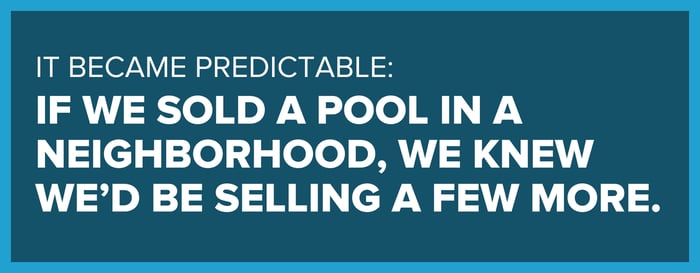
It became predictable: If we sold a pool in a neighborhood, we knew we’d be selling a few more. If we sold a pool to a rural home, we knew that that pool would be one and done. 

word-of-mouth-services

That’s how powerful word of mouth is. In fact, many service businesses rely solely on word of mouth or referrals. They get all the business they need this way and don’t see any reason to change. 

But here’s the thing: Whenever I hear a business say “We’re a word-of-mouth business,” I think the same thought: They’ve never been through a recession

I’ve seen this happen way too many times.

When the economy turns south, there simply are fewer buyers. People watch their budgets and push off or scale down purchases. Even the most robust word-of-mouth businesses are left scrambling. And when they are, they all say the same thing: I wish I had a marketing foundation I could rely on now that my referral leads have dried up.  

word-of-mouth-is-fragile

Why being a word-of-mouth business is not as good as it sounds

Being a word-of-mouth business can be great. It’s a reflection of the good work and attentive customer service that are hallmarks of your company. 

However, it’s not as good as it sounds because it might not be durable.

Word-of-mouth is fragile

If a recession hits, cost suddenly becomes the biggest differentiator buyers use, and quality and service are less of a factor.

Or it might not be a recession. Maybe a few bad reviews on Yelp or Angi start to make customers go elsewhere. Or new competitors enter your marketplace and do an advertising blitz with promotions that rattle your customer base. 

Whatever the reason, you could have a few bad months and suddenly the phone is not ringing like it used to. 

Therefore, it helps to have a backup plan that can supplement your referral network so you can weather any storm and scale your business even if word-of-mouth becomes less reliable. 

word-of-mouth-decline

Investing now in inbound marketing can help you shore up for the challenges that may lie ahead. 

Inbound marketing: An overview

Inbound marketing works like this:

  1. You produce written and video content for your website and for social media to attracts buyers who are using the internet to search for answers.
  2. These potential customers learn about what you do and choose your solution for their needs.

While it’s not quite as easy as that makes it sound, inbound marketing is a cost-effective investment in your business’ growth that can pay dividends for many years to come. 

word-of-mouth-trust

In some ways, inbound marketing overlaps with word-of-mouth: Both are built on a foundation of trust, and both allow customers to get to know your business on their own terms so that when they’re ready to reach out, they can do so with confidence. 

Inbound marketing and word-of-mouth: Both depend on trust

When my pool company faced a bleak future during The Great Recession, I turned to inbound marketing to make up the difference. My plan was simple: Answer customer questions on our website. By openly and honestly answering these customer questions, I was able to build trust with prospects who never saw our work or our trucks drive into their neighborhood.

That experience led me to develop a business strategy I called They Ask, You Answer. If your customer asks a question, you should answer it.

Now, more than a dozen years later, it is those answers I wrote that truly allow my pool business to continue to prosper — and they do so more effectively than word-of-mouth referrals ever could.

Inbound marketing in practice

The truth is, the way people buy has changed. 

Today, when people are getting ready to make a purchase, they start with a search engine. If they type in “How much does a new roof cost?” “Problems with driveway seal coating” or “Latex vs. oil paint — which is better for me?” and they end up on your content, they begin to build a relationship with your brand.

home-services-word-of-mouth

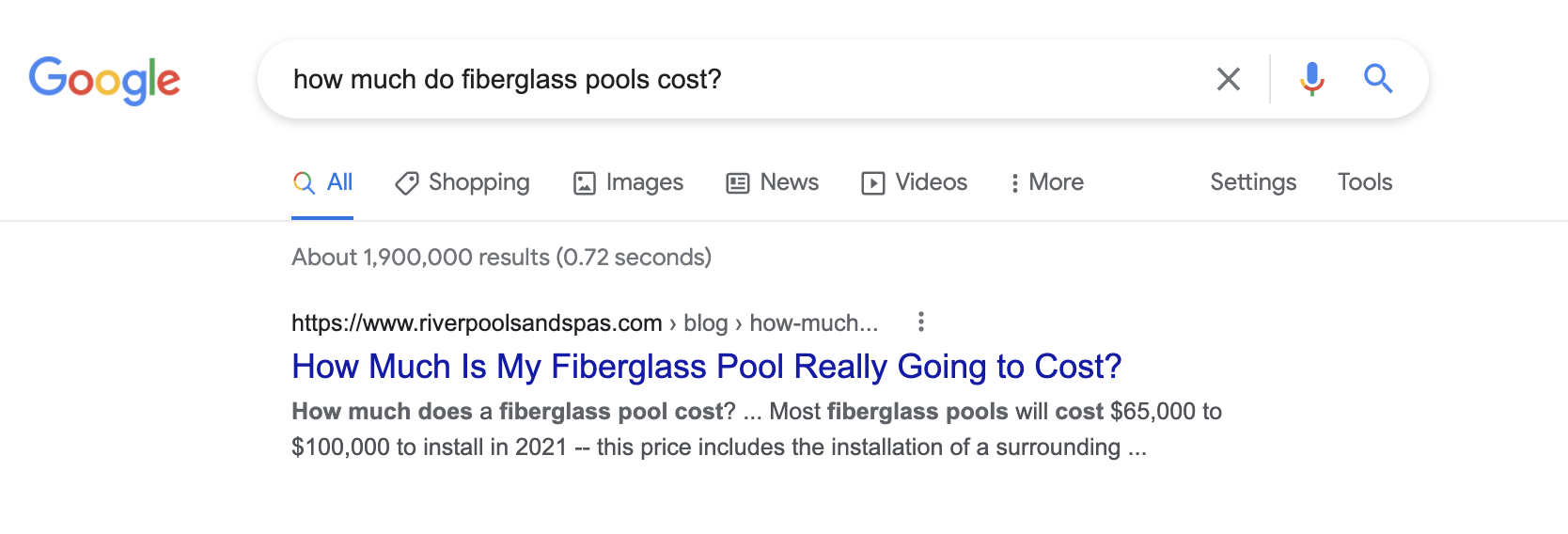
For me, many of my sales started with people Googling a basic question: “How much do fiberglass pools cost?” 

Because I had written an honest, straightforward article that explained cost — something many of my competitors were unwilling to address on their websites — customers found me and my business. They read my content and appreciated my honesty.

Next, they might click to read Fiberglass vs. concrete pools: An honest comparison. In this article, I openly talked about the drawbacks of fiberglass pools (mind you, fiberglass pools were the only types of pools we sold). 

The people reading these few pieces of content were already serious about buying a pool, and they started building a relationship with my company. Our honest content was able to build trust. Those articles won us more business than any subdivision job ever did because they kept working long after we left a given neighborhood. 

Today, they still rank at the top of Google. That’s prime real estate I don’t have to pay for. That’s the beauty of inbound marketing when it’s done well

river-pools-top-spot-1

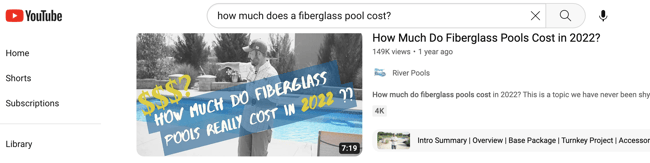
But people don't just use Google to learn. Here's the same question typed into YouTube:

Screenshot 2023-04-13 at 11.56.26 AM

We rank first there, too. Pulling in more than 140K views. 

Thousands and thousands of buyers right now are asking that same question: How much do fiberglass pools cost?

When the results pop up, at the top of the list is my article, clearly laying out project costs. Linked from there are many relevant topics that are also covered in depth. People click through and keep learning, getting ever close to a purchase. 

Scaling up from word-of-mouth: The first 2 steps to take

If you’re a word-of-mouth business looking to grow, I suggest you take two steps to diversify the way you bring in business. 

1. Choose an ad platform to get leads in the short term

If you need leads today, you have your choice between traditional “outbound” advertising such as mailers, radio spots, billboards, print ads, etc., and paid digital advertising such as Google Search Ads or Facebook Ads. Between the two, I’d vote for digital. 

honesty-inbound

Digital has the advantage over traditional advertising because it’s much easier to target and measure — assuming you’re using the right tools. 

With pay-per-click (PPC) ads like the ones that appear in Google search results, you know that you’re only getting charged if people actually make it to your website. So, if somone Googles “foundation repair in upstate New York,” you can pay to be at the top of that result. The more search traffic, the higher the cost, but you only pay if people actually click. 

This can be pretty effective, but I’d advise you to not fall into the trap of paying for every new lead that comes into your company. 

Therefore, while you’re paying for leads from PPC, be sure to invest in inbound marketing as well.

2. Invest in inbound marketing for long-term growth

Here's how to get started: Hire a content writer to address the biggest questions your buyers have. With today's AI innovations, the writer should be able to get a lot of content produced pretty quickly.

Your potential customers are typing their questions into Google right now — even as you read this. Having PPC traffic is great, but when you stop paying, those results go away.

If you can write an article that ranks high on its own, you’ll drive tremendous traffic to your site. That’s more and more eyeballs on your homepage, on your offerings, on your thought leadership. 

potential-customers

Remember, those articles I wrote back in 2008 are still at the top of Google (granted, with updates along the way) because they’ve been helpful to what is now millions of people — some of whom have become customers and many of whom have not.

Just like word-of-mouth, these pieces of content build trust and keep people coming to my business to ask about our services. They cost me nothing, and have delivered millions of dollars in revenue, year after year, during good times and during recessions. 

Customers buy from businesses they trust. I’ve found that candid content is the most effective way to build trust with prospects who haven’t even heard of your business yet.

Today, although I’m still a silent partner, I no longer sell pools. Instead, I help lead IMPACT, a sales and marketing training firm that helps businesses grow by applying the principles of They Ask, You Answer.

If you're interested in how you can grow your word-of-mouth business so your lead flow is more sturdy and predictable, come and see how we can help you! Click here to speak to an advisor


Author: msheridan@impactbnd.com (Marcus Sheridan)

* This article was originally published here

How to make $1000/day with affiliate marketing 24/7 - start here!


Monday, May 8, 2023

7 Must-have Word-of-Mouth Marketing Strategies [Infographic]

Word-of-mouth (WOM) is a powerful asset in marketing.

It not only gets people talking, but offers a sincerity and trustworthiness other marketing methods don't.

It is also one of the oldest and most effective methods of marketing — because it comes from fellow consumers.

Unlike brands that are of course going to talk about how great they are, other consumers don't have anything at stake with sharing what they really think about a purchase or company. It's not their sales or reputations on the line so they seem more reliable. 

This is likely why a whopping 95% of consumers search online for reviews and information before purchasing a product and 88% believe brand recommendations from peers more than any form of marketing. 

With game-changing numbers like those, it’s important not to neglect the importance of reviews, ratings, and recommendations when it comes to planning your organization’s marketing strategy.

How do you do that exactly?

I put together this detailed infographic sharing seven actionable tips you can use to add word-of-mouth marketing into your strategy.

WOM-infographic-2023-comp

Long before social media, word-of-mouth was our go-to for sharing and learning valuable information. That’s why word-of-mouth marketing is one of the oldest and most effective forms of marketing.

  • 88% of consumers said that they trusted recommendations from people they know, above all other forms of marketing messaging. (Nielsen)
  • 81% of consumers reporting that social media posts from influencers, friends or family members drove interest in an item or service within the past year (Matter Communications)
  • Marketers rated the quality of word-of-mouth leads a 4.28/5. (Referral Rock)

Luckily, WOM is easier than ever thanks to the internet! 

7 ways to add word-of-mouth marketing to your strategy

1. Encourage authentic user-generated content (UGC)  

UGC is content created and shared by consumers about brands or products. 

In recent years, many brands have started paying creators to make this content for them (or recruiting “ambassadors”), but true authentic UGC is created by consumers voluntarily and it’s still possible to get. 

Authentic UGC is candid, relatable, and shows users what a real-life experience with your product looks like. 

  • 73% of online shoppers agreed that user-generated content made them more confident when purchasing. (TurnTo Networks)

How can you get users to create content? 

  1. Have a unique hashtag to identify content created by customers 
  2. Incentivize creating content using your hashtag or tagging your brand. Offer a free gift, discount, or feature on your profile.  
  3. Create a sense of community. Showcase your user-generated content prominently on your website or main profile 

Brands that do it well:

2. Share customer testimonials/reviews

According to Global Newswire, 95% of customers read product reviews before making a purchase. In fact, even just one review can increase internet users clicking the “buy” button by 65%.

Reviews help reassure the performance, quality, and/or value of your claims and make consumers feel more comfortable doing business with you. There’s a reason they call it social proof after all.

Testimonials can be written or video and can be hosted on your website or pulled from others. Depending on your industry, some popular review sites include:

  • Google
  • Yelp
  • Angie's
  • TripAdvisor
  • TrustRadius

Once you have your testimonials or reviews, repurpose them into your marketing: 

  • Dedicated site page
  • Homepage & landing pages
  • Relevant product/service pages
  • Lead generation content 

3. Get product ratings on your site

Depending on your business model, you may want to give people the ability to rate or review specific products, services, etc. directly on your site.

  • 84% of consumers care most about your star rating (Bright Local)

This is especially useful for eCommerce or if you’re a tech company that sells several products.

Brands that do it well:

  • Amazon
  • Etsy
  • NewEgg

Popular rating tools:

4. Offer an incentive:

Giving your customers a reason to share with others can skyrocket your word-of-mouth marketing as well. 

Big or small, people are always more willing and likely to do something if they receive some sort of value in return. So, consider giving your consumers a discount or free gift in exchange for referrals. 

Brands that do it well:

Uber: Free Rides

DropBox: Free Storage Space

HelloFresh: Credit towards your next box

5. Create a referral program

You can take this a step further by creating a formal referral program. A good referral program:

  • Makes spreading the word easy and quick 
  • Makes it worthwhile for both parties (with an incentive or other benefit)
  • Measures the results of your campaigns

Popular referral tools:

6. Connect with influencers and thought leaders

Influencers are exactly what their name suggests; individuals with a strong following and power to influence the beliefs and behavior of those in it. 

Because of their already established reputation, word-of-mouth marketing from an influencer or thought leader is undoubtedly the most valuable.

  • 69% of consumers trust influencers, friends and family over information coming directly from a brand (Matter Communications)
  • Influencer Marketing Industry is set to grow to approximately $21.1 Billion in 2023 (Influencer Marketing Hub)

How to appeal to influencers and thought leaders

  • Quote them in your content
  • Feature them or their products/services prominently 
  • Let them try your product/services for free

7. Offer a unique, shareworthy experience

At the end of the day, the easiest way to generate word-of-mouth marketing in this digital age is to offer a unique, share-worthy experience. 

If you give your consumers something memorable they cannot get anywhere else, they’ll want to share it with their friends and loved ones whether or not you ask them to. 

Brands that do it well:

  • Goodr 
  • LuLuLemon
  • IKEA

Quick word-of-mouth wins: 

  • Identify and nurture your top customers 
  • Ask for reviews/ratings when things are going well; don’t wait! 
  • Use social media as a referral channel 
  • Go above and beyond with unexpected customer service gestures 
  • Use tools to automate the process
  • Make sure you have amazing service, staff, and support
  • Crowdsource feedback to make staff and support improvements 

Word-of-mouth is just a piece of the puzzle

Before you try any of these, you have to set marketing goals that are aligned with your business's goals.

Additionally, you should consider how word of mouth can augment channels like your content marketing and larger inbound marketing efforts.

Want to more about how to grow your business and keep your customers happy with sales and marketing training from IMPACT? Talk to us. 


Author: gsukhraj@impactbnd.com (Ramona Sukhraj)

* This article was originally published here

How to make $1000/day with affiliate marketing 24/7 - start here!


Wednesday, May 3, 2023

What You Need to Learn From Customers Who Didn’t Buy From You

What do you do with a prospect who ultimately doesn’t buy from you?

If you’re like most companies I work with, you go one of two routes. 

  1. One, you do nothing. You mark the deal closed/lost in your CRM and move on to the next prospect.
  2. Or, two, you enroll them in an email nurture sequence hoping they consider you again in the future. 

In either case, the process is pretty rote — and results in an enormous missed opportunity to learn where your sales and marketing practices could improve. 

lost-customers

After all, who can better illuminate the flaws of your processes than someone who went through every stage of your buyer’s journey except the last one?

Businesses need to stop ignoring this golden opportunity. 

They must build a formal process for following up with closed-lost deals and gleaning the information they can — all while not being pushy or overbearing. 

Here’s how I teach my clients to go about this.

Create 2 closed/lost buckets: ‘Competition’ and ‘Inaction’

The first step is to differentiate your closed/lost prospects into two separate buckets:

  1.  Buyers who chose to go with a competitor
  2.  Buyers who chose not to buy from anyone 

What you can learn from each is different, so let’s break down each one.

1. What you can learn from prospects who chose a competitor

Every time you see someone choose another business, it should teach you more about your own value proposition. (We will cover exactly how to conduct an exit interview with a close/lost lead in another article.)

Think about it like this: if a customer ultimately chooses to buy from someone else, it’s because that other option made more sense to them. I know that sounds obvious, but it’s a point worth focusing on. 

In any given industry, I like to think that there are not better and worse providers — there are just better and worse fits for customers. 

competition

Option A might make sense for people who need flexibility. Option B is best for people with a tight budget. Option C is for people who want more hands-on service.

You get the idea.

If someone chose a different business, it was likely because their value prop better aligned with the buyer’s perceived needs. 

Every time you’re selling to someone, you should get an even clearer idea of who you best serve. And every time you lose a deal, you should get an even clearer idea of who your competitors serve.

So, what do you do with this information?

Again, you have two options — and they’re not mutually exclusive.  

  • Niche down. Your first option is to get comfortable in your niche so you can win every deal that fits that demographic. 
    Let’s say you’re a boat manufacturer. If you know your option works best for novice weekenders, focus on winning every novice weekender you can. 
    Make sure your messaging speaks to their needs, make sure your content answers their questions, make sure your sales process moves at their pace.
  • Shoulder your way into the margins. Your second option is to try and carve out a little more room in the margins so you can win some deals adjacent to your niche. 
    If you specialize in flood insurance, you might begin to offer package deals to customers who need other kinds of insurance, too. 
    This way, you can strategically start to expand — as long as you don’t lose your core niche. 

In either case, getting the information is the important part. 

If you can learn more about why customers chose not to do business with you, you can develop an ever-evolving portrait of how you’re seen in the marketplace. 

business-opportunity

Then, it’s up to you whether you want to lean into the way the market already sees you or expand and try to increase your market share. 

2. What you can learn from prospects who chose not to buy from anyone

I’ll admit, this one’s trickier. No one likes to lose a deal, but when a prospect chooses and competitor, I usually get it. Something about that competitor felt better. 

But what about inaction?

What about when someone gets to the very end of your sales process and chooses to walk away?

You can only learn as much as the prospect is willing to tell you, and sometimes that’s not much. Sometimes, buyers can’t really articulate why they said no. Sometimes, they don’t want to.

The truth is, sometimes it’s your fault, and sometimes it’s not. 

5 reasons you lost a deal to inaction

I find that most of the time when you lose a deal to inaction, it’s because of one of five reasons. I’ll break down each and explain proactive tactics that allow you to get ahead of similar situations in the future. 

1. The buyer might just be indecisive

When we have a close/lost deal at IMPACT that’s made it through the entire sales process — only to balk at the last minute — I find myself thinking: Are you able to make decisions as a company?

And sure, there’s a little bit of frustration in there, but the sentiment is honest. 

Some organizations struggle with making decisions. 

decision-making

They might not have the processes in place, or they might get bogged down in discussion, unable to reach a consensus. So, it might not be anything about your solution. It might be all about misalignment or dysfunction within their leadership team.

But that doesn’t mean you can’t counteract it. 

How to solve it:

Build steps into your sales process that 1) bring in all stakeholders and decision-makers and 2) set clear outcomes for any given meeting. 

If you get everyone into a room and make it clear that the meeting should end with a decision about whether or not you’ll be moving forward, you’ll eliminate the gray area.

2. The buyer isn’t a good ‘internal salesperson’

This is often related to decision making, too. If your buyer seems to be all-systems-go but then stalls on the final deal, it might be a communication problem. 

In a B2B setting, your point of contact at the company becomes your internal salesperson for the other stakeholders. Maybe they were just a sub-par salesperson when it came to pitching the idea internally. 

If you’re B2C, maybe the buyer did a bad job justifying the purchase to other involved family members.

How to solve it:

Don’t let the prospect sell it on their own! Provide videos, case studies, and buyer’s guides that they can share with other decision-makers so nothing gets lost in translation. The easier you can make the internal sales process, the more likely you are to close the deal.

3. Outside factors led to cold feet

Look, I get it. We live in a complex world and every buying decision is interlinked with a dozen others. 

Often, indecision is due to outside factors beyond your control. If you’re B2B, maybe your buyer’s Q3 numbers just came back and they’re not as profitable as they thought. As a result, they’re going to limit spending. If you’re B2B, anything from inflation to a college tuition increase could cause a buyer to tighten their belt and not move forward. 

How to solve it:

Keep these closed/lost prospects in your rotation. Ask if you can reach out again in six months. Be sure that your cancellation and refund policies help soothe anxieties about buying from you. 

4. Your sales process went too fast (or too slow)

As my colleague Chris Duprey puts it, many businesses don’t actually understand the decisions a customer needs to make to buy from them

As a result, organizations have an arbitrary sales process that either rushes prospects ahead before they’re ready or holds them back with unnecessary extra steps. Either extreme could alienate a buyer and kill a sale. 

How to solve it:

Orient your sales process around buyer decision points so that you’re aligned with the buyer’s needs. Check in with your prospects to be sure you’re on the same page and addressing all of their questions. 

5. The buyer doesn’t trust you

Trust is the common currency with which all businesses operate. 

If your sales process didn’t build trust by addressing the fears, worries, and concerns your buyer had, then in the end, it might have been a gut feeling that held them back from going ahead and signing on the dotted line.

How to solve it:

Commit to utter transparency and honesty in your entire sales process. 

Be clear about who is (and is not) a good fit to buy from you. Offer unbiased reviews of your products or services — and answer every single buyer question on your website so you make it clear you have nothing to hide. Be helpful at every turn.

The golden opportunity to improve your sales process

Many prospects who enter your sales process won’t buy from you. That’s just the way it is. Some will be disqualified, some will choose a competitor, some will just atrophy and choose to not move forward at all. 

In any case, their experience can be invaluable for you to improve your sales process. Because ultimately, you want fewer people like them to enter in the future. 

When you reach a point where it becomes clear that the prospect is not moving forward, don’t just ghost them and move on to the next deal.

Reach out and simply say, “Hey, we now both agree that you're not gonna be working with us. Can I ask a couple of questions to make sure that you are on the same page?”

You may hear, “We’re going to go with Company X, but it was a really hard decision.” Or you may hear, “We’re just not ready to move forward right now.”

Make no mistake, these will be frustrating to hear. But it’s better than not knowing and just having to guess. 

Every piece of data makes your business stronger. 


Author: wschultz@impactbnd.com (Will Schultz)

* This article was originally published here

How to make $1000/day with affiliate marketing 24/7 - start here!


Monday, May 1, 2023

The 5 Most Common Sales Problems — And How To Solve Them

In a now-famous article published in The Wall Street Journal in 2021, author Patrick Thomas asked the question many business leaders have been wondering: Why are so few people pursuing a career in sales?

The article touched a nerve and went viral, getting shared over and over on LinkedIn and other platforms. 

The question was a valid one.

Despite high earning potential and a slew of openings, young professionals were not choosing sales as a career — and mid-career salespeople were leaving the field. Sales offers a lucrative career path, but it has its challenges both as a career and as a responsibility within an organization. 

sales-career

Whether you’re a young professional looking to get started in sales or a veteran sales rep hoping to solve some of your persistent challenges, this article is for you. 

Below, we’ll cover:

  • The state of sales today
  • Five common problems sales teams face
  • How to solve them

Whether you’re a sales rep, sales manager, marketing team member, or business leader, this information will help you. 

Let’s dive in together.

The state of sales

The sales industry is full of myths and misperceptions. If you’ve never worked in sales, you likely have an image of a used car salesman in your head, complete with a phony smile and aggressive sales pitch.

Sure, there are some industries where that’s the case, but that’s generally an outdated exaggeration. 
sales-relationships

In reality, modern salespeople are relationship builders. They guide and educate prospects toward a purchase. There’s a lot less pitching and a lot more listening than there might have been 20 years ago.         

Sales reps are not just answering questions, they’re managing emotions, shaping expectations, and building trust with prospects. Taking these steps helps eliminate many sales problems from the very start.

To watch a good sales rep in action is to see deft emotional intelligence on full display. 

Salespeople are a business’s gatekeepers

Salespeople are the vanguard of your organization, reaching out, shaking hands (often virtually), and bringing customers into the fold.
salespeople-brand

They are the face of your brand. In this role, they are always in the process of building relationships and providing guidance. Sales professionals who give off a pushy, arrogant, or aloof vibe make your whole company seem that way.

Sales teams that freely share the internal knowledge base of your company create bonds and build trust with their audience of prospects and customers.

5 common sales problems (and how to solve them)

Whether they’re selling products or services, B2B or B2C, pros everywhere face the same sales challenges and there’s a reason these problems are so widespread: They’re notoriously tricky and hard to solve.

Below, I’ll lay out five common challenges, as well as the solutions I’ve found to work. 

I’m not saying I can instantly boost all sales performance. In fact, the solutions I’m presenting take time and commitment, but they should start moving you and your sales team in the right direction.

Here are the five common sales problems — and how to solve them.

Problem 1: Your sales process is way too long

What it is: The bigger and more expensive the thing you sell, the more likely that your sales process is lengthy. After all, there’s no process to sell a stick of gum, but bigger ticket items require more information, more questions, and more touchpoints.

Your sales process stretches from the first touchpoint a prospect has with your team to when they make a purchase decision.

Why it’s a problem: Long processes are a problem for a number of reasons. First off, the longer a sale takes, the more time your team has to spend on it. This translates to fewer opportunities and fewer sales. 

But it’s not just that. 

Salespeople get emotionally bought in to every prospect. They build relationships. We sometimes speak with clients whose teams have a months-long process.

For a sales rep who invests four months into a prospect only to have the deal fall through, the effect can be devastating and demoralizing.

How to solve it: Answer prospect questions ahead of time with content

The fastest way to shorten the sales cycle is with sales enablement materials. Have your sales team compile a list of the most common questions they hear from customers. Then, work with the marketing team to develop resources that thoroughly answer these questions.
pricing-website

This sales enablement content could take many forms: blog articles, videos, buyer’s guides, research reports, or case studies. And it should be suited to different steps in the sales process.

More broad, generalized content can be given to prospects early on, whereas case studies would work well with later-stage prospects. 

This type of content only gets created when your sales and marketing teams work together, so get ready to collaborate.

Bonus tip: Align your sales process with buyer decision points

Your sales process should not be arbitrary. Chart out the decisions a customer has to make in order to buy from you. Then, make sure your sales process aligns with these decision points. This will keep you from making a sales process that moves too fast or too slow.  

Problem 2: You don’t have enough leads

What it is: Every customer who buys starts off as a lead — but not every lead becomes a customer. A healthy sales funnel has leads coming in all the time so that paying customers can come out the other end. 

Why it’s a problem: You need leads to have sales, and you need sales to have revenue. Without leads, your business is in rough shape. 

Sales managers should routinely check on each sales rep’s pipeline. While it’s exciting to see late-stage deals move closer to closing, it’s critical to pay attention to the other end of the funnel, too, to make sure good-fit leads are coming in.

How to solve it: Generate better leads with high-quality content — both on and off your platform

There’s no silver bullet to bring in more leads. Many companies will seek to boost organic web traffic, hoping more traffic will mean more leads. Unfortunately, this often leads to fluffy content that might drive traffic, but not the kind you’re looking for

fluffy-content

Marcus Sheridan, developer of They Ask, You Answer, started his career as a pool installer. He found that he could get thousands of visits to a blog post titled “Top 10 games to play at your pool party,” but this was not traffic with buying intent, so the high numbers didn’t really matter.

Instead, he found that thoroughly answering buyer questions was a better tactic. So, instead of a games article, he’d write something like “Fiberglass pools vs. concrete pools: An honest comparison for your project.”

Sure, the traffic numbers weren’t as high, but the second article drove real leads to his website and gave his sales team a solid foundation.

But you shouldn't just rely on your website. A YouTube channel is a must — as well as short-form content for YouTube Shorts, Instagram, LinkedIn, or any other spot your ideal customers customers spend time.

The same content in multiple forms can serve a wider audience. 

Here's that same pool article in a video:


Problem 3: Your leads are unqualified 

What it is: Sales success depends on a steady stream of qualified leads. That is, leads who:

  • Can afford what you sell
  • Are ready to buy 
  • Are decision-makers for the organization (in the B2B world)

Unqualified leads are just the opposite, and if your sales funnel is full of people who won’t ever buy from you, all your other efforts will be for nothing.

Why it’s a problem: You can do everything right — great sales calls, good rapport, smooth product demo — but if the prospect can’t afford you, you’re not going to get the sale.

How to solve it: Commit to buyer education

The biggest factor in lead qualification is budget. If someone can’t afford what you’re selling, it’s best for everyone to know that as early as possible. Yet, thousands of companies are reluctant to address pricing on their website

As a result, potential customers enter the sales process without knowing if they can actually buy the thing they’re looking at.
bad-fit-prospect

And it’s not just price.

Buyers have questions. The more questions you can answer on your website, the fewer unqualified leads you’ll have. Those who are not a good fit for what you’re selling will opt out and stop wasting your sales team’s time. 

Problem 4: You’re wasting your effort on bad-fit prospects

What it is: It’s often pretty easy to spot an unqualified lead. They usually can’t afford what you’re selling or they’re simply not ready to buy. Bad-fit prospects are a little different.

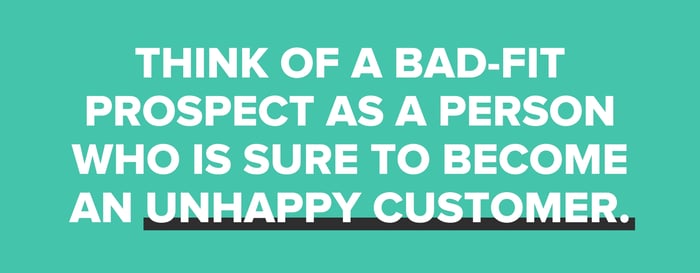
Think of a bad-fit prospect as a person who is sure to become an unhappy customer. They might have the money and the inclination to buy, but the fit just isn’t right.

Maybe they have unrealistic expectations. Maybe there’s a cultural misalignment. A bad-fit prospect might seem good on paper, but it’s just not going to be the right relationship for either of you. 

Why it’s a problem: Happy, satisfied customers build your brand and spin your flywheel, talking about your organization with friends and colleagues. They leave positive online reviews. They bring you referral business. 
sales-bad-fit

Unhappy customers do just the opposite. Selling to someone who will steer others away from your brand is worse than not making a sale at all.

How to solve it: Know exactly what you sell — and who it’s for

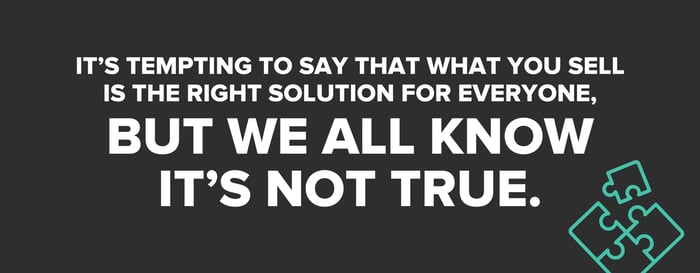
It’s tempting to say that what you sell is the right solution for everyone, but we all know it’s not true.

  • A pickup truck is the right vehicle for some buyers but not others.
  • An adjustable-rate mortgage is perfect for certain homebuyers but a nightmare for others.

Every business needs to determine what it sells and who it sells to.

You never want to force prospects to buy something that’s not right for them — and the sooner you’re aware of a bad fit, the sooner your sales team can counsel them out of the sales process and toward a better fit solution. 

Doing so benefits the prospect and your business, which will see an increased customer lifetime value.

At IMPACT, we teach our clients to produce “product/service fit” materials that sales reps can share with prospects. We want them to specifically make sure your web content reflects what you present in the sales process.

Look at this example from IMPACT client Office Interiors. This video explains the product and provides information, but it doesn’t go for a hard sell. Instead, it explains who would (and would not) be a good fit for what they’re selling:

Problem 5: You’re spending too much time on low-value tasks

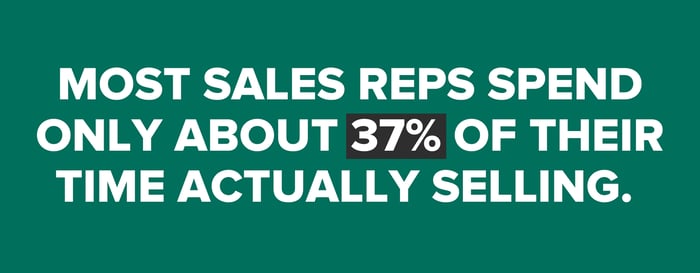
What it is: According to research from InsideSales, most sales reps spend only about 37% of their time actually selling

Why it’s a problem: Sales is a numbers game. If you want more sales to happen, you need to have more of everything that comes before a sale: more leads, more sales calls, more opportunities. This is not blanket permission to spray and pray — just a reminder that more time spent not selling translates into fewer sales. 
sales-reps-selling

On top of that, your sales team is compensated based on the deals they close. With limited opportunities comes limited earning potential — and this leads to anxiety, frustration, and resentment, compounding any sales problems greatly.

How to solve it: Sales reps need to guard their calendars

The statistic above should be a call to action for all businesses. Yes, there are always going to be meetings, training, and administrative work. But the fact is that your sales team likely spends 63% of its time not selling. 

  • For sales representatives: Advocate for yourself and guard your calendar. If you need time for prospecting, block it off on your calendar. Doing research ahead of a call? Block it off. If someone books time with you during prime selling hours, ask to reschedule. Your time is a vital asset. Don’t let other people squander it. 
  • For sales leaders: You will need to run point on this. Is there a meeting that could be an email? Could training and feedback come asynchronously? Could that 60-minute huddle be completed in 30 minutes? Take a fresh look at your team’s calendars. Get creative about how you can give your team its time back.

Sales reps need to focus on education — including their own

Some of the biggest problems sales reps face can be solved by putting the customer at the center of the whole buying process. 
buyer-education

Today, buyers are more savvy and well-informed than ever. Unfortunately, some sales teams are holding on to outdated sales techniques that don’t fit the way today’s customers make purchases. They’re still stuck in the hard-sell mindset that’s turning off buyers — and causing so many young professionals to resist going into sales. 

The antidote to the vast majority of sales problems is education:

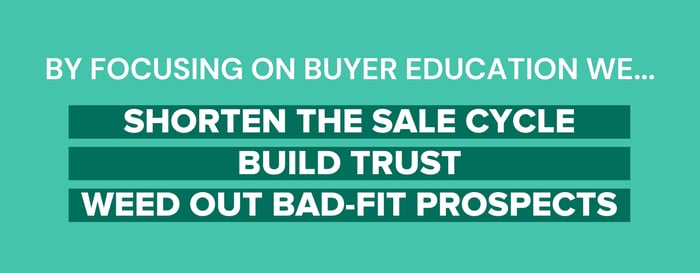
  • When we focus on buyer education, some of our most persistent sales challenges vanish. We shorten the sale cycle, build trust, and weed out bad-fit prospects.
  • When we focus on our own education, we stay up to date on new technology that can help us do our job better. But that’s not all. Education keeps us open to feedback, willing to grow, and more likely to collaborate. 

Before the internet changed how people buy, sales reps held all the information. This led to distrust and unhappy customers. Today, education can free the buyers and the sales reps from that highly flawed model. 

Empowering your sales team for success

The pandemic upended the sales profession. With business travel and trade shows shuttered, with boardroom presentations on hiatus, sales teams were forced to adapt quickly to an unfamiliar reality. 

Suddenly, teams were selling over Zoom.

Almost accidentally, this put the buyer’s needs back into the buying experience. Research by McKinsey found that roughly 75% of B2B customers prefer remote sales interactions over traditional face-to-face ones

By now it’s safe to say that businesses are unlikely to go back completely to how they did business before — and this is especially true of sales. 

We should take this opportunity to solve the most persistent sales problems. Because, just as with the pandemic, doing so will solve for both seller and customer. 

At IMPACT, we train businesses to put their customers at the center of their marketing and sales efforts.

If you want to begin to see what’s possible, take our free course: The Fundamentals of Virtual Selling. Suddenly the sales outcomes you’re shooting for will not seem out of reach. 


Author: jbecker@impactbnd.com (John Becker)

* This article was originally published here

How to make $1000/day with affiliate marketing 24/7 - start here!