Make money online fast

Make Money Online Fast: The Ultimate Guide to Earning Quickly in 2025

  Introduction Want to make money online fast? Whether you need extra cash or want to build a full-time income, the internet offers endless ...

Wednesday, June 14, 2023

Set the Tone As a Business Coach: Trust and Accountability, Not Friendship

At any given time, Brian Casey is coaching about a dozen business clients. His current book of business includes human hair wig manufacturers, a genetics company, and a local print services company, just to give you a sense of his range. 

And, due to the nature of his work, Brian is regularly onboarding new clients as others graduate from his services, ready to manage their growth on their own.

Brian is a business coach who specializes in sales and marketing training, and he knows a thing or two about the most effective client-coach relationships.

He believes that you can create more productive and positive client-coach relationships by keeping an important tenet in mind: You are not the client’s friend or therapist. 
coach-not-therapist

Your role is that of mentor, guide, and advocate. And if you focus on the four core principles below, you’ll start and end that way.

4 principles of great business coaching

There are countless ways to be a great coach, but there are common threads that run between them all. According to Brian, he uses four principles to establish and maintain a relationship with his clients that’s productive, durable, and pointed toward success.

And, he says, it’s important to get this right from the start so that you don’t find yourself having to backtrack to change course. 

1. Before the relationship begins, establish what’s required for a successful outcome

Brian’s relationship with his future clients begins during the sales process, where there’s a fair amount of job interview vibes. Both sides are getting a feel for each other, determining if it’s the right fit. 

Brian advises coaches to be as upfront as possible about exactly what they expect from their clients. “I make sure that anybody who I'm having a sales conversation with understands what’s expected of them and their team,” he says. “I want them to be clear about the effort and commitment they will need to put in to achieve the results they’re after.”

past-client-success

This is a time to lean on your experience. You can be clear about what you’ve seen from clients in the past and what’s led to success.

At the same time, make sure you explain your role as well. The client is hiring you for your guidance, after all, so reiterate that you’ll be there every step of the way, checking in and making course corrections as needed. 

When you’ve established these ground rules from the get-go, you’ll have an easier time and better outcomes down the road. 

2. Dont assume trust will just happen

Trust is the foundation of any relationship, business or otherwise. But trust is no accident. And trustworthiness is a quality you should show early and often.
trust-is-no-accident

There’s no single agreed-upon recipe for trust, but Brian recommends you do the following:

  • Fulfill your promises: Nothing breaks trust quicker than failing to live up to the expected standards. So, keep your word and hold up your end of the bargain. Show up on time, follow through when you say you will, respond promptly, and never let your client feel like they’re alone.
  • Do your homework: The coach is there to give advice and set direction. You can’t do this if you haven’t done your research and thought carefully about your recommendations. Even if you use a repeatable framework with numerous clients, make sure it’s freshly applied to each set of circumstances.
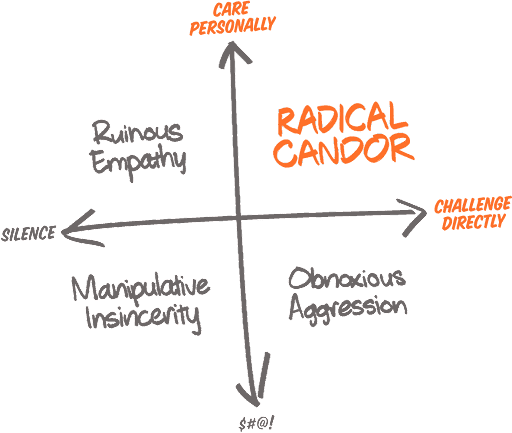
  • Practice radical candor: Kim Scott’s famous framework is a perfect fit for coaching, says Brian. Be honest with your clients — while at the same time showing that you care about them. 
    This means pushing back again bad ideas, calling out sub-par work, and holding the team accountable. At the same time, the coach must celebrate wins, acknowledge progress, and care personally for each client.
radical-candor

Trustworthiness might look different for your unique circumstances, but you won’t get far without at least doing these basics. 

3. Utilize the power of the outsider

Beyond experience, the greatest asset the coach brings to the client is an outside perspective. Oftentimes, a client is too close to a problem to see it clearly. Or, they’re limited by personality or office politics and can’t solve it.

The coach is the unbiased outside expert who can cut through red tape and see the forest for the trees.

coach-outsider

Brian sees the role of the coach as a non-judgemental questioner. 

Tell me why you run meetings this way.

Tell me why the team is structured how it is. 

Tell me why you’ve chosen the messaging you use.

In each case a question prompts a discussion, and a discussion can uncover blindspots that no one on the team was aware of. 

Remember, your goal is not to have the answers, it’s to help your clients find the answers for themselves. 

So, as you ask, think of what Stephen Covey would say: seek first to understand. You’ve got to get the questions right. Even a slight change to any of these questions could introduces judgement and evaluation, which is not the goal.

Instead, you want to prompt reflection and self-discovery.

4. Celebrate wins, but avoid hollow praise

There are times when a coach needs to be a drill sergeant — which goes in the costume trunk along with visionary, truce broker, and bullshit detector.

One more role you should play? Cheerleader. You can see their progress, and you should honor it. Says Brian, “I like to celebrate wins as much as — probably even more than — my clients.”

give-praise

Let’s be honest: we know the success the client seeks is not always easy. It’s going to take a lot of hard work and dedication, and there are sure to be setbacks. As a coach, be ready to celebrate the wins, both small and large, that lt the client recognize the progress they’ve made. 

Normalize recognition so that members of the client team are comfortable doing it for each other as well. 

But with that said, remember that the coach must avoid hollow praise. We all know that trophies mean less when everyone gets one. Same thing with praise.

So, don’t fawn and simper. Offer legitimate, specific praise when your clients need to hear it — while staying away from the ‘everything you do is wonderful’ slippery slope.

The power of first impressions

By the time the ink is dry and Brian actually starts working with a new client, he’s already met with them several times during the sales process. 
client-self-discovery

At every stage, Brian has been direct about what he’s expecting. They have agreed together on what success looks like, how accountability works, and the process of course correction that will inevitably occur. “By the time I start working with a business,” he says, “we’ve already established a good common ground of what’s expected.”

At the same time, Brian has made it clear that he’s trustworthy, perceptive, and dependable so that both sides know what they’re getting into.

It is up to the coach to start each new client relationship on common ground. If they don’t, they’ll struggle to set those expectations on the fly somewhere down the road. 


Author: jbecker@impactbnd.com (John Becker)

* This article was originally published here

How to make $1000/day with affiliate marketing 24/7 - start here!


Monday, June 12, 2023

How To Give Feedback to Clients: The Right Message at the Right Time

If you’re a marketing agency or a business consultant, your clients want one thing from you more than anything else: guidance. 

Guidance is the most valuable commodity you can offer them. After all, your expertise and your experience are what clients pay for. Each client business wants you to validate its successes, correct its missteps, and help it set a course for a prosperous future. 

But to do so, you’ll need to give feedback — and you’ll need to give it well.

No one balks at the idea of giving positive feedback because we all know how good praise feels, but critical feedback is the kind that really spurs change and growth. And critical feedback is a lot harder to give. 

feedback

Your clients’ success — and, by extension, your success — depends on your ability to deliver the right feedback at the right time so your clients get the guidance they’re looking for.

At IMPACT, we work with companies from all over the world, and we often find ourselves providing that negative feedback that no one’s looking forward to but everyone needs to hear. 

For six years, I worked directly with a wide range of clients, and I learned (often the hard way!) how to deliver feedback to the businesses I was working with.

In this article, I’ll lay out some important ground rules for delivering feedback to your clients, including some important guidelines you’ll need to establish ahead of time to make sure your message lands. I’ll cover:

  • Why you need a “feedback is a gift” mentality in your client relationships
  • How and when to give positive feedback to clients
  • How and when to give negative feedback to clients

Let’s dive in together so we can all have better conversations. 

A ‘feedback is a gift’ mindset

All relationships are based on trust, and trust comes from communication.

With any new client or customer, you need to establish the principles of good communication early on so you can build trust and set the stage for effective feedback.

good-communication

With this in mind, we work with our clients to build a “feedback is a gift” mindset. This means that we embrace the feedback process (both giving and getting) because it makes everyone better.

We consider this so important that it’s actually a core value of our company. So it’s something that we both practice and preach.

So, how do you build a “feedback is a gift” culture?


First off, we establish frequent touchpoints. A regular cadence of meetings means that issues get addressed quickly and no one dreads an upcoming session because of built-up issues. Both the client and the agency know that issues will be quickly managed and dealt with. 

Maximize honesty and candor. From the beginning, we establish principles of honesty and candor. We tell the truth, even when it’s not necessarily what the client wants to hear. 

Normalize feedback: In my experience, if both sides see feedback as something constructive that happens on a regular basis, people are less likely to get defensive and take things personally.

normalize-feedback

Critical feedback is especially hard to give, and this is exacerbated by so many professionals seeking to avoid conflict. As the agency or consultant, you should model the way you’d like this to be done.

Assume positive intent: You will get more value from feedback when you assume the person giving it has your growth in mind. Even if something is phrased in a touchy way, assume that no one is trying to hurt your feelings. 

Know (and use) the different types of feedback:

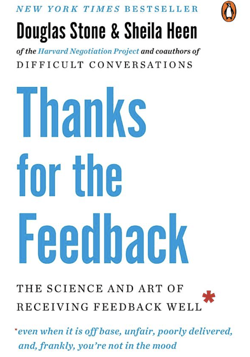
According to Douglas Stone and Sheila Heen, authors of Thanks for the Feedback, there are three main kinds of feedback.

thanks-for-the-feedback

When you know the difference, you can differentiate between them. They explain the differences this way:

  1. Appreciation is fundamentally about relationships and human connection. At a literal level, it says, "thanks." But appreciation also conveys "I see you," "I know how hard you've been working," and "You matter to me."
  2. Coaching is aimed at trying to help someone learn, grow, or change. The focus is on trying to help the person improve, whether it involves a skill, an idea, knowledge, a particular practice, or that person's appearance or personality.
  3. Evaluation tells you where you stand. It's an assessment, ranking, or rating. Evaluations are always in some respect comparisons, implicitly or explicitly, against others or against a particular set of standards. Evaluations align expectations, clarify consequences, and inform decision-making.

When you build relationships on a foundation of trust, you’re setting conditions for a healthy flow of feedback between your team and your clients. 

How to give positive feedback to clients

You and your client are a team. Their successes are your successes, so you should not hesitate to provide positive feedback when it’s warranted. 

Give positive feedback right away, as soon as you identify something you’d like to highlight. Don’t wait.

positive feedback

The longer the time between when you see something and when you say something, the less genuine your feedback becomes. 

When and how to give positive feedback

People love positive feedback, but what they really need is valuable feedback. Just saying something is great might make the person feel good, but it’s not specific enough to be meaningful. Here are a few tips on how to make your positive feedback most effective and valuable:

  • Be timely. When it comes to feedback, the sooner the better. That said, you don’t want to blurt out praise before you’ve collected your thoughts. But once you’ve thought things through, don’t wait. 
  • Be specific. If you like something, say why. Highlighting specifics helps a person improve and shows that you looked carefully at the work they’ve done.
  • Use the right medium. Feedback can come through any channel, from positive comments in a Google Doc to recognition at a meeting or event. When you can, try to deliver positive feedback face-to-face, even if that’s through Zoom.
  • Choose your moment. There’s nothing wrong with giving positive feedback in front of others. Public recognition is great for morale and camaraderie, but be sure you read the situation and person. You don’t want to make an employee feel uncomfortable. If you praise one person for something multiple team members contributed to, you run the risk of doing more harm than good.

Beware of the trap of too much praise

Remember getting a gold star in elementary school and feeling proud — only to realize everyone else got gold stars too? The more positive feedback you give, the less power it has. Don’t fall into the trap of heaping praise on everything a client does. 

Instead, withhold praise until it’s really warranted — when something is truly above and beyond. What you say will mean more, and it won’t be diluted by other positive feedback that wasn’t really deserved.

How to provide critical feedback to clients

True learning only happens when we’re challenged.

As an outside expert, you have the responsibility to provide useful feedback to help your clients grow and improve. This won’t always be easy to deliver — and it won't always be easy for them to hear. 

critical-feedback

All the more reason to develop a culture of feedback that normalizes both praise and critique. 

When and how to give critical feedback

Just as with praise, critical feedback is only useful if it’s specific and timely. Use these four tips to remind yourself how to do it right. You’ll quickly notice that they’re the same principles as above — just applied to a different outcome. 

  1. Be timely. Just as with positive feedback, the sooner the better. Let your clients know your objections as soon as you can. The longer you wait, the more work may have to get undone. 
  2. Be specific. Generalized praise is not very helpful, but at least it makes people feel good. Vague, general criticism is the worst. It’s way more likely to be taken personally, and it makes people second-guess themselves. 
  3. Use the right medium. Feedback can travel along many channels, but I believe critical feedback is most effective when it's put in writing — and explained in speech. It’s less likely to be misconstrued — and the person can refer back to it. Try to never give negative feedback asynchronously. Instead, deliver it in a way where the person receiving the feedback can ask questions and seek clarity in real-time.
  4. Choose your moment. There’s an old saying in coaching: Praise FROM the sideline, criticize AT the sideline. While positive feedback can be public, negative feedback never should be. Find the right time to offer the feedback the customer needs to hear. But don’t keep waiting for the moment to present itself. If necessary, set up a meeting so the feedback can happen before too much time passes. 

Remember, feedback is a two-way street

Your relationship with your clients is mutually beneficial. Remember, their success is your success, and their challenges are your challenges. 

feedback-both-ways

To establish the best possible relationship, feedback needs to flow both ways. Any marketing agency or consultant needs to collect feedback on a regular basis to improve the work they do for clients, especially on the following:

  • Customer experience: A customer survey or feedback form is good — but so is a face-to-face session like a group interview. This is where you’ll collect high-quality feedback that speaks to the customer experience. If you don’t request feedback, you won’t get it. Clients may be thrilled or they may be unhappy, but you won’t know until they suddenly decide to stop working with you. 
  • Specific deliverables or services: You’ll also need feedback on specific things: email copy, training sessions, a blog post, or strategy documents. To get good feedback, give good feedback. If you’ve established a solid relationship and given constructive feedback to your clients, they should be comfortable doing the same for you. 

But you need to ask for it. Specific feedback at the right time through the right medium doesn't just happen. 

If you want specifics, don’t ask vague, open-ended questions. If you want feedback through a certain medium, ask for it. 

And when you get it, assume positive intent. Feedback makes you better, but only if people actually give it to you. 

Giving feedback and gathering feedback

If you’ve ever felt attacked, picked on, or micromanaged at work, you know what it does to a person. You end up feeling withdrawn, defensive, and hurt.

feedback-request

Unfortunately, many people associate feedback with these emotions because feedback is often given in the wrong way at the wrong time.

In order for your relationships with clients to be as fruitful and effective as possible, feedback has to be normalized, and it has to flow both ways. Set the conditions early so that feedback — both positive and critical — happens regularly and is a catalyst for growth. 

When delivered well, feedback can help your clients set their course to success. 


Author: kpetro@impactbnd.com (Kaitlyn Petro)

* This article was originally published here
How to make $1000/day with affiliate marketing 24/7 - start here!


Thursday, June 8, 2023

The Best Sales Training Programs Check These 4 Boxes

There are any number of reputable firms offering sales training that can help your team improve. However, there are also many sub-par training regimens that will have little if any effect on sales team performance. 

If you’re looking to improve performance and boost outcomes, you’ll need to make sure you’re investing in the right training that will lead to competence and growth.

To succeed in 2023 and beyond, you need your team to thrive on virtual sales platforms like Zoom or Google Meet — and a lot of sales training hasn't caught up with the digital-first shift.

Sales training often operates under the same false assumption: The techniques we use for selling face-to-face easily translate to selling on Zoom.

For this and other reasons, sales training often fails to deliver results. So, before you invest heavily in training for your team, be sure what you're buying checks these four boxes. 

1. Multiple sessions to extend and enrich the learning

Often when sales teams choose a training option, they're enticed by full-day programs that won't eat up too much calendar time.

sales-training-all-day

An all-day training session sounds great, but there are some serious drawbacks to putting all of your training in a single basket, so to speak. 

  • First off, five or more hours of training at a single time can feel overwhelming. It’s the proverbial firehose of information. In the aftermath, attendees have taken in too much information to actually implement much of it.
  • Second, a full day of training inevitably leaves people feeling behind in their work week. The day after a full-day session is often spent catching up on the emails and calls you missed. If you spend the day after the training as a catch-up day, you're putting another day between what you learned and when you can start putting it in place.
  • Third, a single training session does not allow for sufficient reflection and skill development. True change is about incremental improvement, not an abrupt shift. 

Instead, look for a training that offers multiple shorter sessions. If you really want your team to adopt new techniques and strategies, they will need to keep practicing and getting feedback. This can’t happen in a single day. 

The same six hours of training is going to be way more effective if it's split into three different sessions. 

2. Review of sales call recordings to prompt self-reflection

One of the incredible benefits of virtual sales is the ability to record all sales calls. But this only pays dividends when used properly. 

Call recordings allow for the most accurate feedback and self-reflection possible. Sales training should take advantage of this. The instructors can provide feedback on actual sales calls, which makes the training extremely valuable to every attendee.

Without this kind of specific, real-world feedback, it’s impossible to judge exactly how (or if) the training is making a difference in the day-to-day work of the sales team.

sales-training-feedback

What’s more, recordings can show progress. Compare your week one call to your week six call. Now you can see how effectively you're putting your learning into action. 

3. Role-plays to practice skill adoption

When you mention role-plays, you’re sure to get a lot of eye rolls. It’s true that not many people like role-plays — but it’s also true that role-plays work.

According to They Ask, You Answer author Marcus Sheridan, “If you can do things well with your team watching you, when you meet with a client, everything gets easier.”

sales-training-role-plays

As the saying goes, practice makes perfect. When you’re learning new techniques, there are going to be inevitable slip-ups. No doubt you’d rather have those happen in training sessions than with clients.

When they’re done well, role-plays are invaluable tools for getting reps and building skills. The more reps you can get to prepare for a given situation, the more comfortable you’ll be when you get there.

It’s just like with athletes. Professional athletes are so skilled because they’ve gotten in so many reps for any given situation.

A famous viral video showed NBA star Steph Curry hitting 105 straight three-pointers in practice, all from the same spot on the floor. Shot after shot after shot.

Each shot is a kind of role-play (shooting without defense, without a crowd, with a pass from the same spot). When it’s time to take that shot in a game, he’s ready.

Curry is a career 43% three-point shooter (according to StatMuse he's 49% from that baseline). It’s always harder in an actual game situation. But the practice is what gets you better. 

4. A plan for post-training growth

All too often, sales training ends and its effect quickly dissipates. A few weeks later, there are no lingering effects of the training you spent so much money on. 

Training is only valuable if it has a lasting effect on your company and your culture. Great sales training allows for continued learning after the sessions end.

If the training incorporates specific feedback on sales calls, it’s easy to continue this process after the training wraps up. 

sales-training-value

Once teams see the value of giving and getting feedback on sales call recordings — and once they’ve practiced doing so — they can implement this process into their professional development.

In most companies, sales reps will have one-on-one meetings with the director of sales once or twice a month. At these meetings, they should plan to review one recent sales call, with the structure established during their training. 

This regular practice ensures growth.

As the team normalizes recording calls and getting feedback, the more comfortable sales reps are watching their own calls and improving their technique. 

This way, the investment in training continues to pay dividends long after it’s complete.

Sales training for the digital-first world

Millions of businesses invest in sales training each year, only to come away feeling like they wasted their money. Their sales numbers didn’t bounce back the way they wanted, and the team showed only minimal adoption.

A modern sales rep is dealing with exceedingly well-informed buyers who are very aware of their other options. These customers are expecting an exceptional, personalized buying experience, not a tired sales pitch. 

The sales rep who delivers an optimal buying experience is the one who wins. The one who tries to shoehorn a sales process into Zoom and expect everything to turn out fine is the one who loses. 

Sales training needs to focus on the delicate, EQ-heavy nature of sales, helping good reps get better and great reps hone their craft. 

The right training can have a profound effect on sales team performance, but only if it avoids the too-common pitfalls of sub-par training that promises results but can't deliver.


Author: jbecker@impactbnd.com (John Becker)

* This article was originally published here
How to make $1000/day with affiliate marketing 24/7 - start here!


Wednesday, June 7, 2023

My Best Sales Reps Haven’t Hit Their Quotas All Year: What Do I Do?

Sales reps are on the front lines of any business disruptions, whether that's a supply chain disruption, an economic downturn, or an industry shakeup.  Their experiences can be the bellwether for how a company, industry, or entire economy is doing.

If you’re a sales leader and you’ve found that even your best sales reps are not hitting their numbers, it’s easy to be discouraged and uncertain about what to do next.

sales-reps-forecast

However, this is a time to live in the solution, rather than focus on limitations and shortfalls. We can’t solve for all of the disruptions thrown in our path, but we can control how we react — and this is a time when leadership needs to set the tone for how an entire company responds. 

Sales performance: Start by asking the right questions

Whenever you're evaluating the performance of your sales team, you need to start by looking at the big picture: You have to put these numbers in context. 

  • First off, are your sales team’s numbers down consistently across the board?
  • Are there some reps who are finding more success than others?
  • Are certain products or services over- or under-performing?
  • Have there been any changes in your customer demographics?

Then, consider broader pipeline issues. Are leads down? Form fills? Inquiries? Or is it just close rates?

Next, look at the broader industry. Speak to friends and colleagues at other companies in your field. Are they experiencing similar struggles? 

sales-team-data

The more you can learn to contextualize the data, the better you can understand what the actual problem is.

Then, you can determine the best path forward. 

Focus on the solution

Once you contextualize what's going on, you can begin to move forward. This requires a mindset shift: How can I see these challenges as opportunities rather than a string of costly disappointments and defeats?

You can’t change what’s in the past, but you can set yourself up for greater outcomes in the future. To do this you need to give your sales team the tools to be successful.

sales-team-mindset

1. Keeping morale high by focusing on training

For your sales reps to be successful, they need the tools to do their job well — and this is more true today than ever. 

When sales reps learn something new, whether that’s a new tool or a new technique, I find that they get reenergized to do their work better. If a rep suddenly learns about 1:1 video, say, or ChatGPT they immediately want to put it to use to better connect with prospects, but they need some help to do it well.

Now is a time when we are asking our sales teams to quickly adapt to a new normal, in some cases changing how they’ve done things for years or decades. 

This adaptation must be assisted with training. 

If you just assume your team can be successful with 1:1 video because they all know the basics of a platform, you’re not giving them what they need. Sure, familiarity is crucial, but it’s really just table stakes at this point. 

They need the right training — and they need to practice and role-play these skills every week to stay at the top of their game. 

🔎 Related resources to help you:

2. Remove friction from your sales process

Any slowdown provides an opportunity to modernize and improve your sales process. How can you make it easier, faster, and smoother for your customers to buy from you? 

Have you looked into a touchless sales experience? 

According to a study from Gartner, 33% of all buyers would prefer an entirely “sales-free” sales experience. That means that many of your buyers don’t want to talk to your sales reps at all. Or, only in a very limited matter.

Is your sales process optimized for these consumers, or are they all funneled into the same experience, regardless of their buying preferences?

Your marketing team must produce content that builds trust and educates your buyers 

The right content can enable sales to move more quickly. In the digital; world, customers do tons of research before they speak to a salesperson. Content that answers customer questions will forge a relationship and build trust, making the salesperson's job easier.

sales-performance-content

If you’re not sure what content should be covered, start by asking your sales team what questions they get asked over and over.

A regular brainstorm meeting between your marketing and sales teams will ensure a steady stream of content that will help align your efforts.

🔎 Related resources to help you:

3. Listen more than you pitch

Too often, we see salespeople who spend the bulk of any given sales call talking about how great their solution is. They charge through a lengthy pitch deck highlighting dozens of features — all while the prospect sits there, forced to drink from a fire hose.

Studies show that the most successful sales reps spend the majority of their time in meetings listening. 

sales-team-ai

This means asking questions, prompting self-discovery, and building a relationship.

Use an AI tool like Gong or Chorus.ai to analyze call recordings to see if your team is spending too much time pitching. If so, devote some meeting time to practicing the skills of questioning and listening. 

Your future buyers will thank you.

🔎 Related resources to help you:

Success depends on culture, training, and process

It can be demoralizing to see deal after deal fall through. This can cause even the most seasoned and successful salespeople to doubt themselves and lose hope. 

But it is important to first understand the context. Many businesses are struggling as the economy fluctuates and uncertainty looms.

sales-team-success

Take this as an opportunity to modernize, streamline, and improve your sales process. This means educating your buyers in the way they want to learn and selling to them the way they want to buy. It also means equipping your sales reps with the training and tools they need to serve your modern buyer

The most successful sales teams demonstrate the same key characteristics and tendencies, regardless of their industry.

  • They see opportunity where others just see an impediment
  • They focus on learning
  • They celebrate agility 
  • They promote a culture of collegiality and support

You can do these same things with your team.

With the right culture, the right sales process, and the right training, your sales reps can get back to their winning ways. 


Author: msheridan@impactbnd.com (Marcus Sheridan)

* This article was originally published here
How to make $1000/day with affiliate marketing 24/7 - start here!


Thursday, June 1, 2023

How to Write a Persuasive Case Study That Converts (w/ free template)

Research shows that brand trust is the second most important purchasing factor for brands across most geographies, age groups, gender and income levels, trailing only price.

This is especially true in the digital sales and marketing world, where trust is the currency that underpins all business. Your ideal buyers will ask:

  • “Can you prove you have the abilities and experience you say you have?”
  • “Can you demonstrate that you’ve helped someone like me (or in my industry) in the past and gotten great results?”
  • “Can we trust that you’re going to deliver on your promises?”

If you’re in a services-related industry or sell specific kinds of products, you’re often going to answer those questions with one of the most powerful pieces of assignment-selling content on the planet: a case study.

(If you're ready to get going, you can access our free case study template so you can follow along with the process below with ease.)

Why you need to produce case studies

Before we dive into the nuts and bolts of pulling together your case study, let's have a quick refresher on why a case study actually is so important.

I know, I know. You’ve seen a hundred of these, but before you set out to write a great case study, you need to understand the purpose, as it will inform every decision you’ll make as you go through this process.

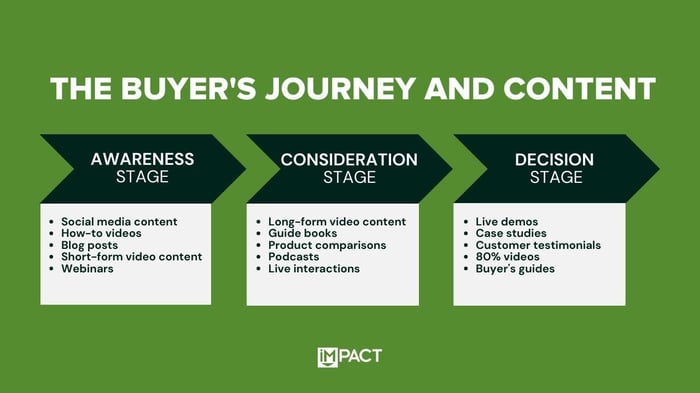
If you're looking to nurture a prospect, case studies are a powerful way to nurture them through the buyer’s journey. This is particularly true since potential customers can be up to 70% of the way through the buyer's journey before they reach out to someone in sales – and by that point, they’re still going to consume a bunch more content before they make their final purchasing decision.

content-buyers-journey

That’s why your content strategy needs to cover more than just blogs, social media posts, and podcasts targeting the awareness and consideration stages. 

When done well, case studies can be invaluable inbound marketing tools during that critical decision stage when prospects are evaluating who is going to help solve their problem – and you want them to choose you.

Case studies are also indispensable content pieces to be used during the sales process to help get the customer over the line.

So, how do you actually write a case study? Follow these five steps

Step 1. Pick your case study subject

If a client case study fails to deliver, it's often because you picked the wrong client to highlight. 

That’s why you need to evaluate the subject of your case study before you begin work. But don't get caught up on the size of the story you're telling, simply thinking that the bigger the client, the longer the engagement, the better the story.

case-study-client

That's not always the case. 

One-off projects, a short engagement, or a long-term, strategic endeavor that took months to complete — they’re all viable candidates for your next case study.

But what do the most successful case study subjects have in common?

Well, the easiest way to answer that is by telling you what you should avoid:

  • If a project is still in progress, it's not case study material. You can’t write aspirational case studies, where there is “hope” or “intent” to bring about certain results. Wait for the story to be complete before you start telling it.
  • If your client is not happy with the work you produced, they're not case study material. This should be obvious, but I’m going to throw in this reminder anyway. When it comes to your case study, you should not be the only one satisfied with what you delivered. 
  • If you don’t have results to share, you don't have case study material. It’s that simple. So make sure you have the data to back up any story you're telling.

Keep this in mind for any case study project you're considering. Set it aside if it doesn't meet these criteria. Chances are, it could develop into something down the road.

The best case studies highlight completed work supported by measurable results that show how you solved a problem for a now-happy client. Most of all, both you and your client need to be on the same page in considering the products, work, or services you provided were successful.

Step 2. Gather your information

Once you’ve identified your case study subject, it’s time to roll up your sleeves and go on a fact-finding mission. There are a lot of questions you’ll need to answer before you start working on a draft, and you’ll probably need to talk to a number of different people in order to get them.

For example:

  • Which of your ideal buyers will this case study target?
  • What problem did your client need to be solved?
  • Why were you chosen to help them solve it?
  • How did you approach the challenge?
  • What was the ultimate solution, how did you arrive at it and how long did it take to implement?
  • What benefits or results did your client see as a result of your work immediately?
  • What benefits or results did your client see as a result of your work over time?
  • Are there any anticipated outcomes they expect to see in the long run?
  • Do we have a client testimonial?

The goal is to gather as much information as possible across the entire story:

First: Who is your client, and what was their problem or goal?

Next: What was the process of uncovering the solution and how was it implemented? 

Finally: How have the end results impacted the client's current state?

Much of this information can come from people on your team, but I can't overstress the importance of talking directly to the clients themselves. 

At IMPACT, when I'm writing a case study:

  • I start by collecting information from colleagues via a Google Form.
  • Next, I set an internal meeting to hear from the IMPACT team that worked with the client. I want to get background information and start to find the narrative.
  • Then, I meet with key stakeholders from the client to interview them about their experience and ask them for any data they're able to share. 

We also offer this free case study template that contains a list of questions you should ask when gathering information for your case study.

Step 3. Write your case study

Your case study will live and die by your ability to craft a narrative that is memorable.

You accomplish this in two ways: tone down the fluff and be persuasive.

A) Minimize your editorializing

Whenever I’m working on a project I’m particularly proud of, I have a tendency to provide too many superfluous details.

In the context of a case study, this kind of over-editorializing can make it look like you’re trying to fluff or pad your case study because your results are flimsy.

Instead, streamline your narrative and your language.

Every detail you include should serve one purpose: to support the thesis of your case study. If it doesn’t, cut it out.

main-case-study-focus

Also, avoid words or phrases that attempt to influence an opinion, such as unnecessary adverbs or adjectives.

For example, if you’re showcasing a branding project, don’t say the final logo was “beautifully designed.” That kind of statement should only be shared if it’s a testimonial from a client — the client's opinion of your work is the one that matters, not yours.

B) Put your persuasive writing skills to work

All that said, your case study should inspire people to take action. They should want to immediately pick up the phone and call you because they feel compelled to work with you, right?

case-study-best-practices

That only works if you write in a way that is both inspirational and compelling.

Persuasive copy is powerful. Here’s how you do it:

  • Even though you’re telling a story about a specific client, include qualifiers about them (industry, size) – or their situation (pain point, objective) – that allow a reader to feel like you’re speaking directly to them and the problem they’re trying to solve. They should be able to easily step into their shoes and say, "Hey, that sounds like me."
  • Comparisons, such as metaphors and analogies, can be your best friend in a case study, as they can help a reader accept a certain scenario as being true if it’s related to something they already understand. However, there is one caveat: Don’t use clichés. 
  • Use power verbs. In fact, here are 185 of them, waiting for you to choose them. Power verbs have momentum and imply results. Power verbs aren’t wimpy.
  • Spotlight data, client quotes and testimonials to demonstrate the effectiveness of your work.

Finally, don’t forget to proofread!

4. Design your case study

When you have your case study draft in hand, filled with persuasive phrasing and glowing client testimonials, it is time to design. The first question you need to ask yourself is about format. Is this a PDF to be shared with bottom-of-the-funnel buyers? Is it a webpage? Does it need to match other case studies your team (or your predecessor) has produced in the past?

case-study-design

Of course, the end result at this step will probably depend a lot on your brand’s visual standards, but I still have a few tips for you.

If you’ve been blogging or creating content for any amount of time you — and your designers — probably already know the basics.

  • Whitespace is your friend
  • Visuals are essential
  • Break up walls of text with headings, subheadings pull quotes, and bulleted lists
  • Call out relevant data points and quotes you want readers to remember visually
  • If you have a testimonial, include the person’s name, job title, and photo. It shows you solve problems for actual people.

When it comes to case studies, design is just as important as the copy itself.

A well-written case study will only be persuasive if you create something visually appealing enough that a prospect will actually read it. If they don’t read your case study because of an ugly, unfriendly design, all of your hard work will have been for nothing.

case-study-results

The format of how you present your case study is up to you, but keep in mind they should be easy to find and read. Our success stories are on our navigation and they're ungated. You shouldn't have barriers between site visitors and proof that what we do delivers results.

5. Create a customer journey video for your case study (bonus!)

Video is one of the most powerful ways to build trust and shorten your sales cycle. At IMPACT, we teach our clients that there are seven types of video for sales and marketing that are proven to drive traffic, leads, and sales — and one of them is the customer journey video.

Here's an example from one of our own case studies:

The key to a successful customer journey video is right in the title. It's about their journey. It's not simply a gushing video version of a testimonial – it tells a story, from beginning to end. It showcases where your client started, the problem when it finally reached its breaking point, how they finally overcame those obstacles and how things are now.

make-your-buyer-the-hero

Most of all, this type of video makes your client the hero, not you. Which brings me to my final point.

If you remember nothing else, let it be this

Yes, a case study is meant to be the "proof of life" for your capabilities and what's possible should your ideal buyers choose you as their solutions provider or partner. 

That being said, the best case studies make the clients the hero of their own success stories. They do not paint the solutions provider as the white knight who swoops in to save the day, with a client demonstrating no agency, ownership, or ability to overcome their obstacles. 

If you want to convince an ideal buyer of your worth, your value, and what you can do for them, show them what's possible for themselves. Don't be the hero, be the guide that shows them the pathway to success.


Author: jbecker@impactbnd.com (John Becker)

* This article was originally published here
How to make $1000/day with affiliate marketing 24/7 - start here!