* This article was originally published here
Wednesday, July 12, 2023
Affiliate Marketing on YouTube: Unlocking a Winning Strategy - 24matins.uk
Affiliate Marketing on YouTube: Unlocking a Winning Strategy 24matins.uk
* This article was originally published here
Discover how to make money fast with affiliate marketing - subscribe here!
* This article was originally published here
Monday, July 10, 2023
9 Self-Selection Tools to Inspire Your Business Website
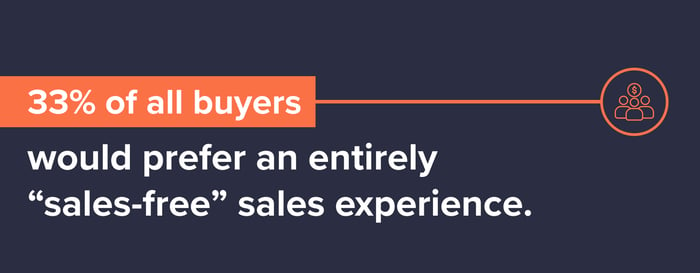
According to a study from Gartner, 33% of all buyers would prefer an entirely “sales-free” sales experience. In other words, they'd like to complete their purchase without having to speak to a salesperson. For buyers who identify as millennials, the number is even higher: 44%.
By all indications, that number will only go up in the years ahead.
Yet according to Zendesk, only one-third of businesses offer customer self-service tools on their websites.
Buyers want a friction-free process that allows them to research and select what they want all on their own. As a result, they’re more open to using bots and artificial intelligence to answer their questions and direct them along the buyer’s journey — as long as their problems are addressed quickly and accurately.
In short, your buyers want more control over the entire sales process.
The question for you is, are you helping them?
Self-selection tools on your website can help buyers self-educate as they move closer to a purchase.
These tools can be as simple or as complex as you need them to be, and they can work in virtually all industries, both B2B and B2C.
The key to it all is keeping your buyer's needs in mind — and providing the information they need to make the right purchase.
Below, you'll see a range of examples to inspire you.
What are self-service tools and how do they work?
Self-service tools are tools or interfaces on a website that allow users to find answers to their questions and configure their own buying experience. This helps our prospects identify on their own what product, level, plan, or type of service they’ll be purchasing.
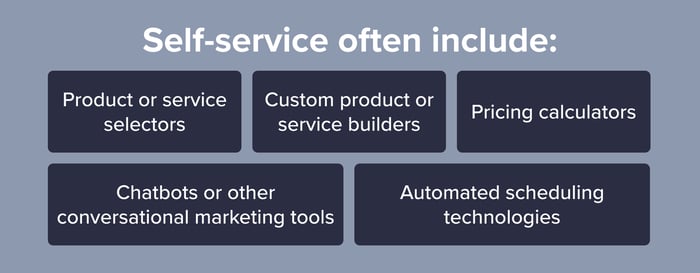
Self-service tools that B2B and B2C companies often use include:
- Product or service selectors
- Custom product or service builders
- Pricing calculators
- Chatbots or other conversational marketing tools
- Automated scheduling technologies
There is a range of ways these tools work, depending on which one you’d like to provide and how.
For example, if you’re adding a pricing calculator or chatbot to your website, it might be as simple as adding a plugin. If you’re looking for something more comprehensive, you might need to have someone configure the tool for you. This will all depend on what your buyers need and how you decide to give it to them.
Here are some tools other businesses have put together that could inspire what you choose.
Self-service tool examples
A self-selection tool will turn your website into one of your most powerful sales tools.
Use these examples to inspire you to see new ways you can serve your customers.
1. Wix’s website creator
Wix is an awesome tool that makes it super easy for you to go in and create a new website in minutes.
Let’s face it: Not everyone who wants an online presence needs something complicated right away. A lot of small businesses and sole proprietors can benefit from using a platform like Wix to get up and running online fast.
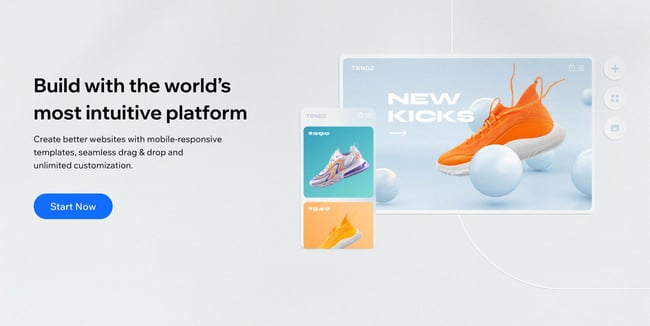
As soon as you sign up, and enter your email address and password, you start your journey by answering questions, such as, “What do you want to create a website for?” and “What kind of website does your company need?”
Your answers inform the decisions the software makes to recommend the right template for your needs.
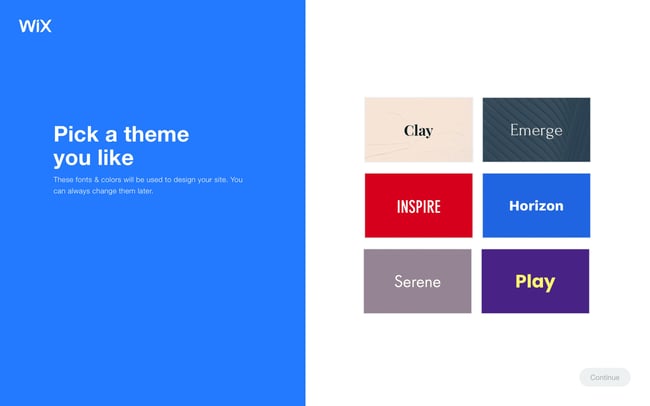
Finally, you can let Wix's software build you a site or choose from a list of their recommended templates.
You can choose your favorite homepage design, input your credit card number, and in just a few steps, you could be online that same day.
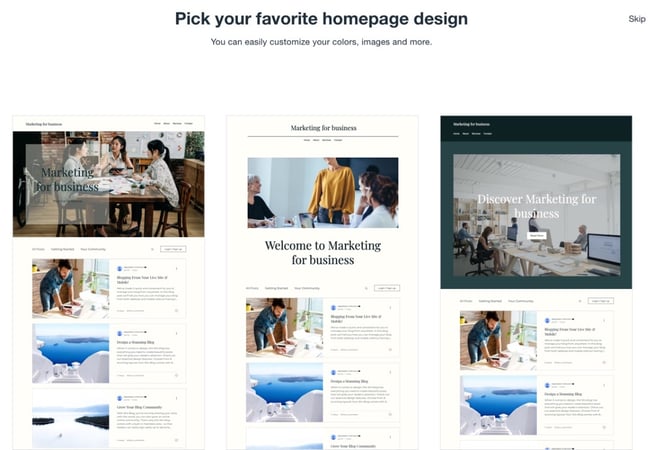
It’s such a clean and frictionless process of getting your website up and running, that it can solve a huge pain point for many businesses.
2. River Pools’ pricing calculator
Wait, a pool company has a self-selection tool?
Yes. River Pools, which sells and installs fiberglass swimming pools, has an awesome pricing tool to help you find the perfect swimming pool for you.
In just a few steps and clicks, you can become a more informed pool buyer and also plan ahead for hidden costs that might come with additional options and add-ons that come with a project this big.
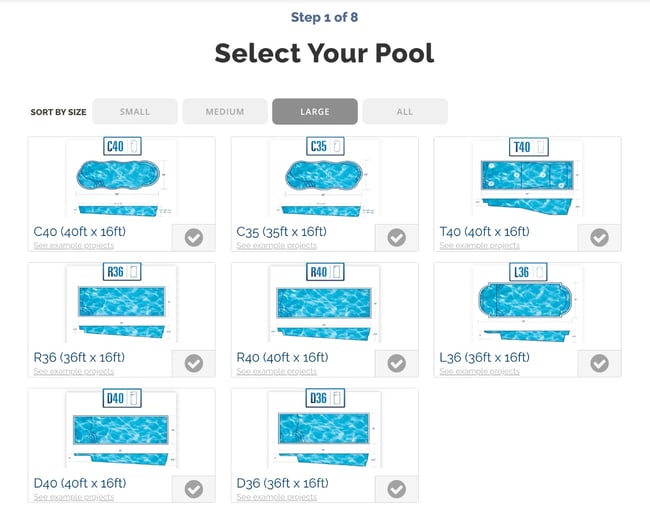
You select the materials that’ll go into your pool and any add-ons, such as an automatic vacuum or cascade.
Each step provides extra details to make the experience feel more personal and well-thought-out.
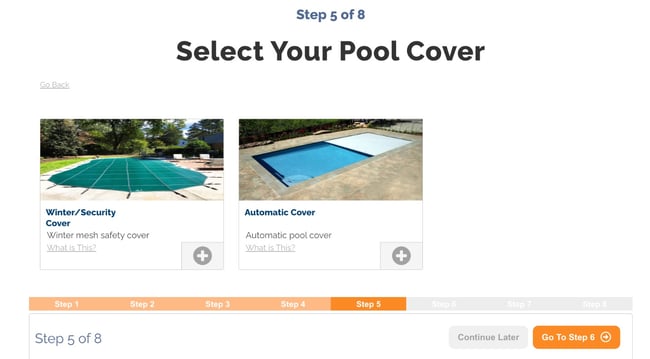
The tool then presents some factors you may need to plan for, such as whether or not you’ll need additional trenching or a retaining wall.
At the end of the process, you input your info and the quote gets sent right off to you in just a few minutes — no tricks or strings attached.
3. Rancilio's coffee machine selector tool
Coffee machine marker Rancilio offers an incredibly helpful comparison tool for selecting the right coffee machine. You start by selecting whether you are looking for an espresso machine or bean-to-cup machine.
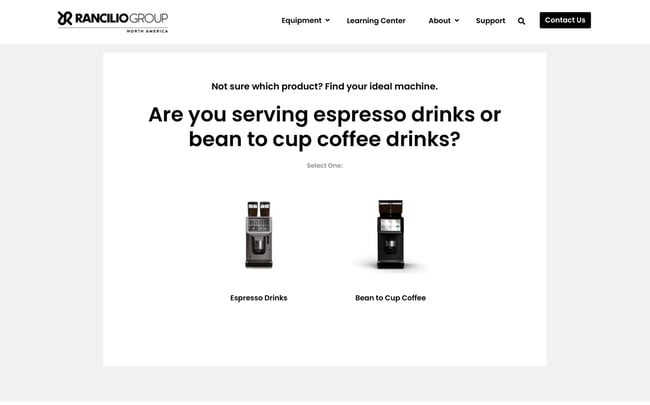
Next, you choose the volume of coffee you’re planning to make each day (fewer or more than 50) and whether you want the machine to carry milk on demand.
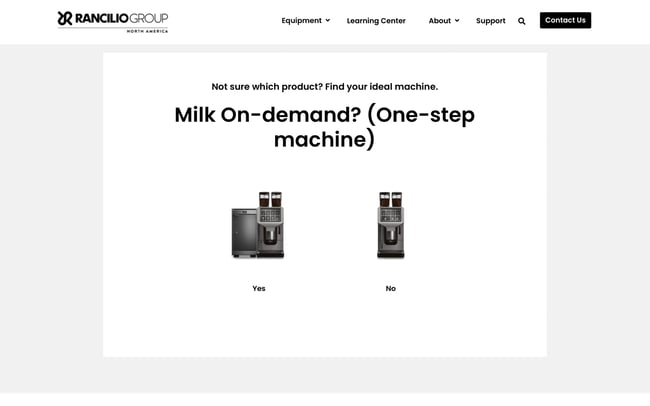
This takes you to a screen where you can view all the different products available with the specs you chose, or you can get in touch with one of their specialists to walk you through which machine might best suit your needs.
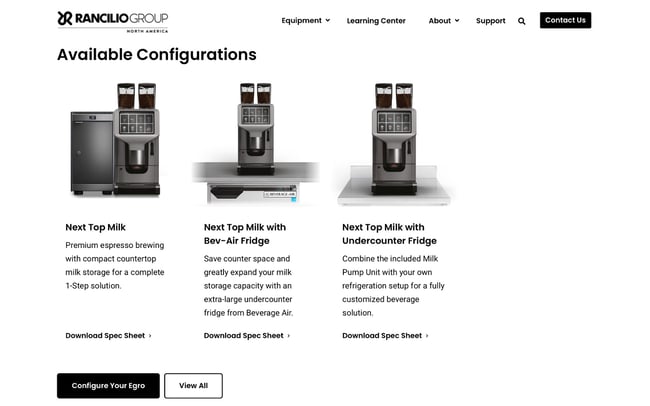
The tool helps you figure out your own needs while guiding prospects closer to a buying decision.
4. Bahler Brothers’ patio design quiz
Another one of our SMB client favorites is Bahler Brothers’ patio design tool.
If you’ve ever struggled designing or redesigning your outdoor space, you will appreciate how fun and informative this single-page self-selection tool is.

After you land on the page, you’ll select which option you like from a group of visual pattern choices, and the page will then automatically scroll you into the next section, keeping track of your progress all the while.

Once you reach the end, you provide your contact information and immediately receive which style you’ll most likely enjoy for your patio. Mine was Rustic, and they’re spot on.

5. Berry Insurance's chatbot
For prospects who want to ask questions on your website without the hassle of searching for your phone number or "contact us" page and waiting for a reply, chatbots, live chat, and other AI conversational tools are the way to go.
IMPACT client Berry Insurance is seeing great success with their fun and unique chatbot featuring the company mascot, “Shredder.”
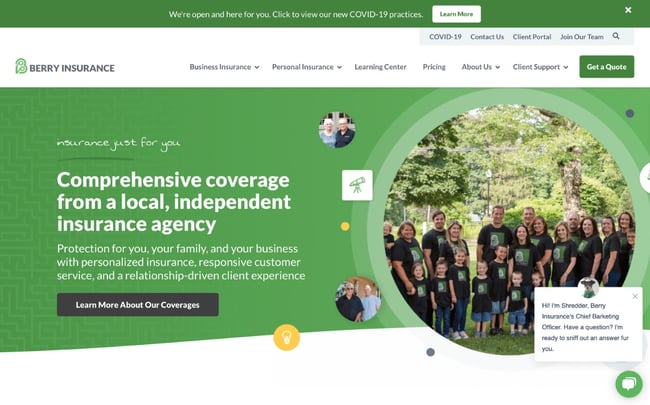
Since Berry Insurance is a regional business, the bot first asks you where you’re located. If you choose one of their regions, it leads you further down the pipeline.
If you select “other,” as we did below, the chatbot automatically weeds you out of the sales pipeline while helping you find information about their services.
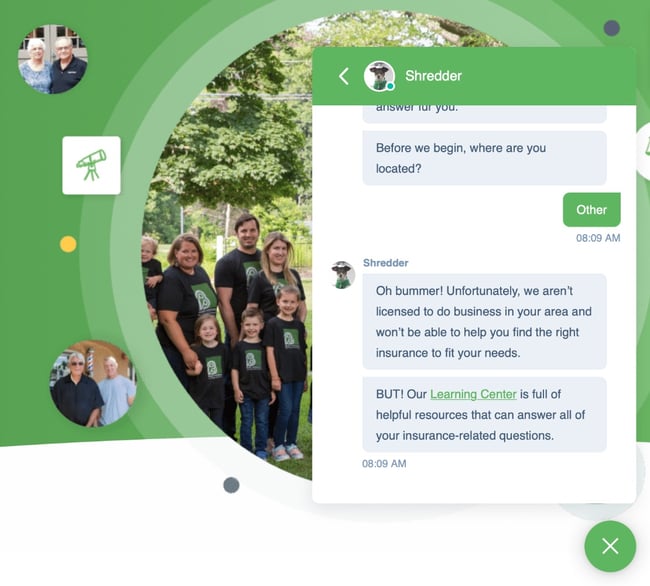
This is a great example of how to kindly turn away bad-fit leads while also being a helpful, trustworthy business in the process.
Want to learn more about what chatbots can do for your site? Check out our blog post on how to add a chatbot.
6. Yale Appliance’s pro range configurator
IMPACT client Yale Appliance is one of the premier appliance sellers, installers, distributors, and educators in the United States.
Website visitors can find information on just about any household appliance they can think of. The extensive learning center can guide buyers to make the most informed decision possible.
From pricing information to reviews and professional assessments — it’s all at there.
That being said, one popular tool they offer is their Pro Range Configurator.

You can select a range size, fuel type, burner type, burner configuration, colors, and other features.
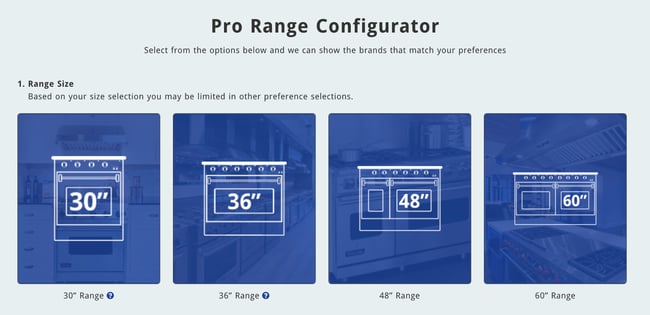
You select the materials that’ll go into your pool and any add-ons, such as an automatic vacuum or cascade.
7. TruGreen’s pricing tool
We love this tool because it’s a great example of how to help your prospects usher themselves through the complete buying process — start to finish.
First, you select what lawn issue you need help with.
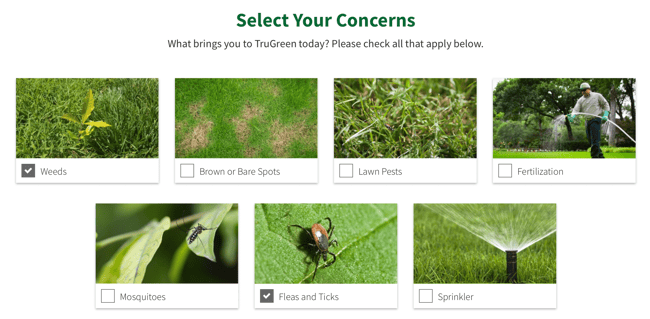
Then, after you add your personal contact information and some property details, you receive a quote and can pay on the spot.
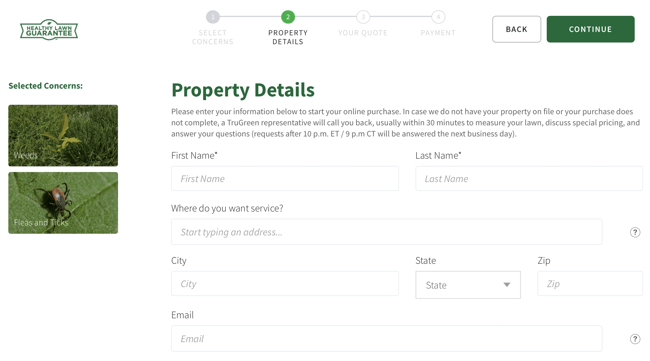
If you’re already a customer, you’re good to go, but if not, someone will be in touch with you to make sure the services you purchased are set in motion.
8. AIS's printer and copier selector
Office tech can be a hassle. When it comes to printers and copiers, it's so easy to over-buy, leaving you with high payments — or you under-buy, and you've got machines that can't handle the workload.
AIS developed a tool to help.
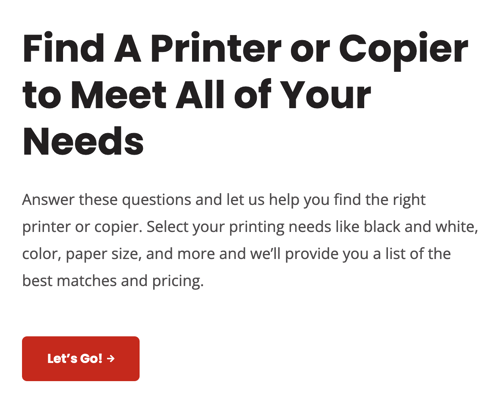
You walk through a series of questions about everything from output needs to daily volume to space requirements.
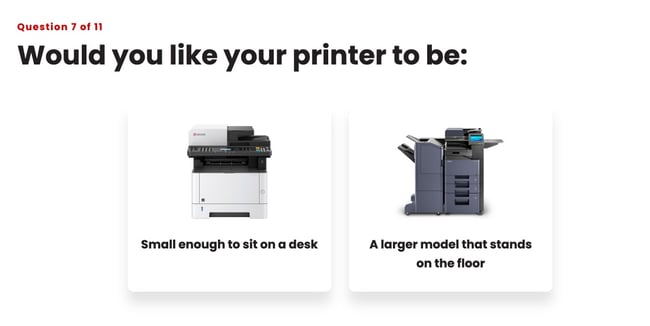
At the end, you'll see a range of options suited to your needs.
9. Retrofoam's price calculator
This business specializes in spray foam installation to bring down energy costs.
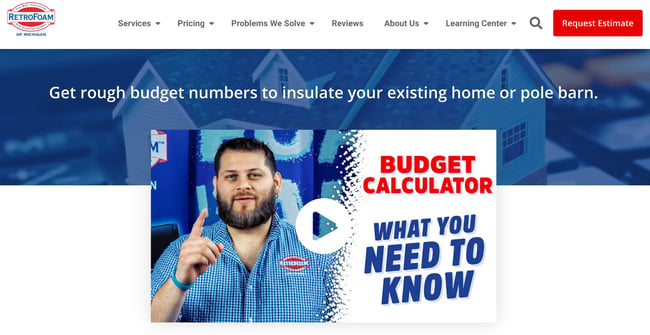
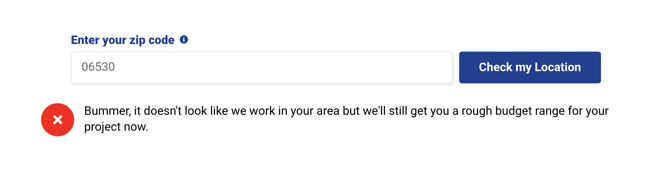
Because they're located in Michigan, their self-selection tool start by asking for your Zip code.
Even if you're outside their service area, you can still use the tool to get an idea for your project.
As you go on, you see clean illustrations and simple questions about the building you're insulating.

When you get to the end, you get a quote that's suited to your unique needs.
The biggest mistake businesses make with self-service tools
The biggest mistake we see businesses make with their self-service tools is thinking their prospects understand what the company is presenting.
We call this learning gap “the curse of knowledge” because we often forget that some things need a deeper explanation.
To avoid making this mistake, which can turn buyers away, remember to add explanations to everything in your self-service tools.
For example, in the River Pools pool builder tool, one of the add-ons is a retaining wall. Not everyone will know what this is, so there is a link that says “What’s this?”
The prospect can click to read more and learn about why they might or might not need this option.
Self-service is the future
We live in a world where people can buy pretty much anything over the internet, from custom footwear to cars and houses. Increasingly, this will be the norm.
Instead of a "There's no way you can sell what we sell online" mindset, think of the possibilities: "How can we make buying easier for our customers?"
Vast improvements in AI technology are making chatbots better and better, and custom tools are often not as costly as you'd think.
Many of our IMPACT clients have used self-service tools to help their sales teams realize incredible results.
To learn more, check out our free course:
If you want to learn more about turning your website into your greatest salesperson, set up a time to talk to one of our experts, and we’ll show you how to implement these strategies for your business today.

Author: jbecker@impactbnd.com (John Becker)
* This article was originally published here
Sunday, July 9, 2023
Twitter Tests Voice and Video Calls in DMs
Another step in expanding Twitter's utility.
* This article was originally published here
Saturday, July 8, 2023
Reddit Shares New Insights into How People are Seeking Home Insurance Information in the App [Infographic]
A growing number of people are conducting home insurance research on Reddit.
* This article was originally published here
Friday, July 7, 2023
Meta Shares ‘Threads Dictionary’ to Keep Users Up to Speed on the Latest App Lingo
Debate over Threads lingo is already ramping up.
* This article was originally published here
Thursday, July 6, 2023
How to Create a Content Map To Solve Your Marketing Guesswork
After talking to dozens of clients over the past few years, I’ve come to understand the biggest stumbling block that prevents content marketing success.
Businesses understand the idea of content marketing. But when it comes to execution, they just don’t know what to do. There are so many tasks. So many content topics. So many mediums.
So they do one of two things:
- Nothing. When they understand the scope of the task, they freeze up and just keep dumping money into other marketing ventures — usually paid ads.
- A little bit of everything. You can guess what this looks like. A few top-of-the-funnel posts, maybe some product reviews, with a bit of sales enablement content thrown in.
As you might guess, neither one delivers results, and businesses are left scratching their head saying, “We tried content marketing but it just didn’t work for us.”
But they didn’t really try it with any kind of plan or framework. So it’s no surprise that the results were underwhelming.
Exactly how to create a content map
When I start working with a new client, I lead them through a content mapping exercise that gives them the guidance they needed all along. For many teams, this process helps clarify their entire marketing strategy.
It’s so simple, they’re surprised they never thought of it before. But once they have it down on paper, everything starts making sense.
1. Map out the stages of your buyer’s journey
Don’t think of the generic awareness-considering-decision buyer’s journey. Think about your unique product. Start with a potential buyer being “problem-aware” and end with them making a purchase.
To do this, I use a thought-map tool called Lucid Chart.
I write out the stages a buyer goes through BEFORE she reaches out to our company.
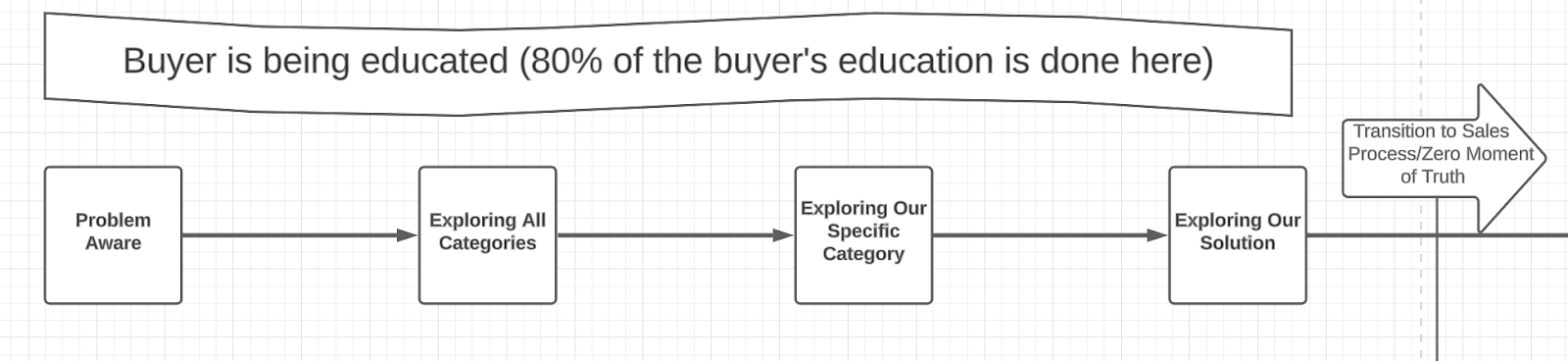
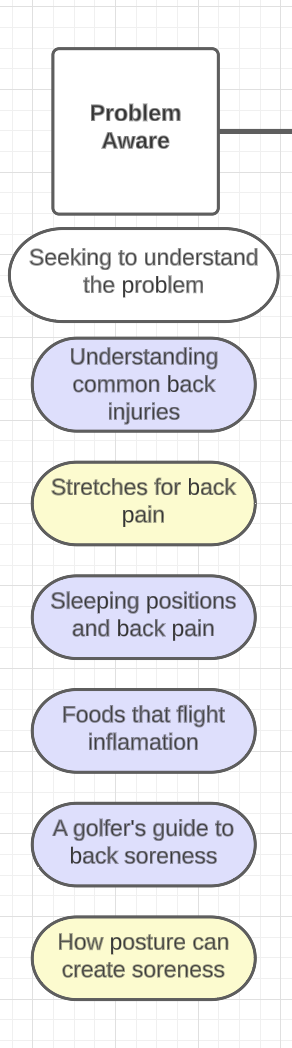
- First, a buyer is problem-aware. Learning about the problem and the symptoms that go along with it. For example, let’s say this person starts experiencing back pain. At this point, she’s trying to understand exactly what kind of pain she’s feeling, where’s its located, what makes it feel better or worse, etc.
- Next, a buyer starts exploring all categories. This means they’re trying to understand a huge menu of solutions. For our friend with back pain, she’s looking into massage, stretching, surgery, chiropractic care, and diet changes.
- Next, our buer usually zeroes in a specific category. Let’s say she thinks a chiropractor would be best. So she starts looking at chiropractic offices in her area. She reads reviews, learns about copays, different specialties, etc.
- Finally, she explores one unique solution. She’s looking at a single office, a single doctor. She’s narrowed her choices.
At this point, she’s reached what’s called the ‘zero moment of truth.’ She’s ready to pick up the phone or fill out a website form. She’s entered the database. She’s taken most of the steps to becoming a customer. By some estimates, she’s already 80% of the way there.
Then, I write out the stages of the sales process.
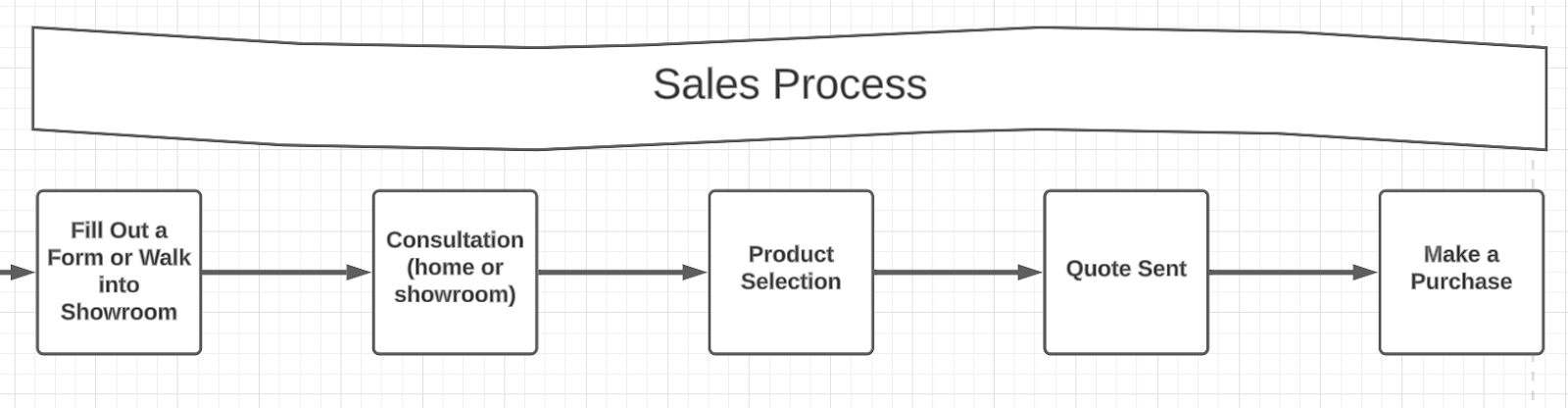
Let’s say we’re talking about an interior decoration business.
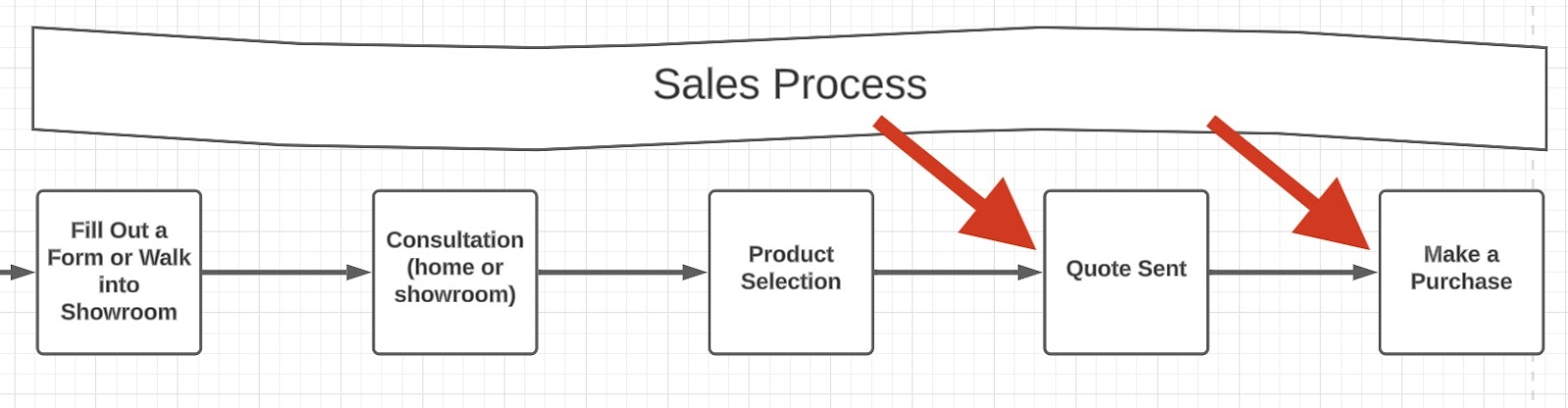
- Once the buyer’s reached the zero moment of truth, he fills out a form or walks into the store. He’s now a lead in your sales process.
- Next up for this business would be a consultation, either in the home or in the showroom. The buyer is getting closer to making a decision.
- Next, he works with his designers to select the products that fit his style and budget.
- Next, he gets a quote for everything he’s selected.
- Last, he makes a purchase.
Now, you’ve mapped out your buyer’s journey.
2. Start at the end of your buyer’s journey
The mistake that many marketers make is thinking that marketing is only responsible for the first half of this process. In other words, your job is to build awareness and get people into the funnel. Get them to the zero moment of truth — then you can hand them off to the sales team. So they get started all the way at the top of the funnel.
This is the wrong approach.
Instead, start at the other end. Focus on the very final steps a person takes before becoming a customer.
Why focus on the end of the buyer’s journey? This is the place you can have the most immediate impact on the finances of your business. If a piece of content can make it easier for someone to buy or dislodge a stuck deal, that’s actual revenue coming into your company’s bank account.
This is how a piece of content produced today can bring in revenue tomorrow.
I’m not saying you should ignore top-of-the-funnel content. Just that it shouldn’t come first. The bottom of the funnel is where you can have the biggest impact in the shortest amount of time.
So, for our interior design example, it’s Quote Sent and Making a Purchase.
3. Brainstorm questions, concerns, and objections that hold people up from moving forward
Next, work with your sales team and brainstorm the common issues that come up with buyers at each of these stages.
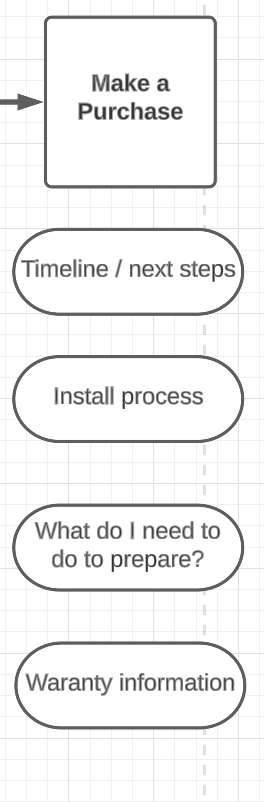
So, when they’re getting ready to pay, what are they thinking about?
I don’t know your business, but I’d guess they’d want to know about things like the installation process, warranty information, what they need to do to prep their space, and timeline.
So, I put these under that step.
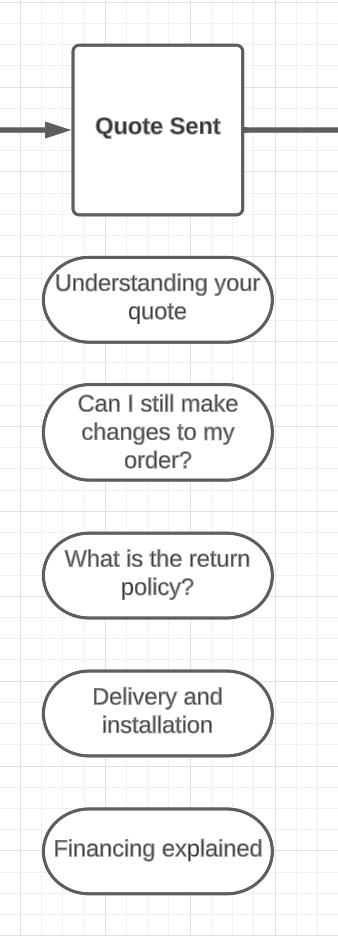
Then, I back up to the step before. When they’re seeing the quote, what are their questions then?
They’re probably wondering about the return policy, financing, and how to understand the details of their quote. So, I put those under that step.
4. Figure out the right medium for each piece of content
The medium matters. If you’re explaining how a roof install happens, it should be a video. If you’re going over timeline, it should be text and graphics. Once you’ve got everything down, figure out HOW you’re going address customer questions on this topic. Color-code your chart to reflect this.
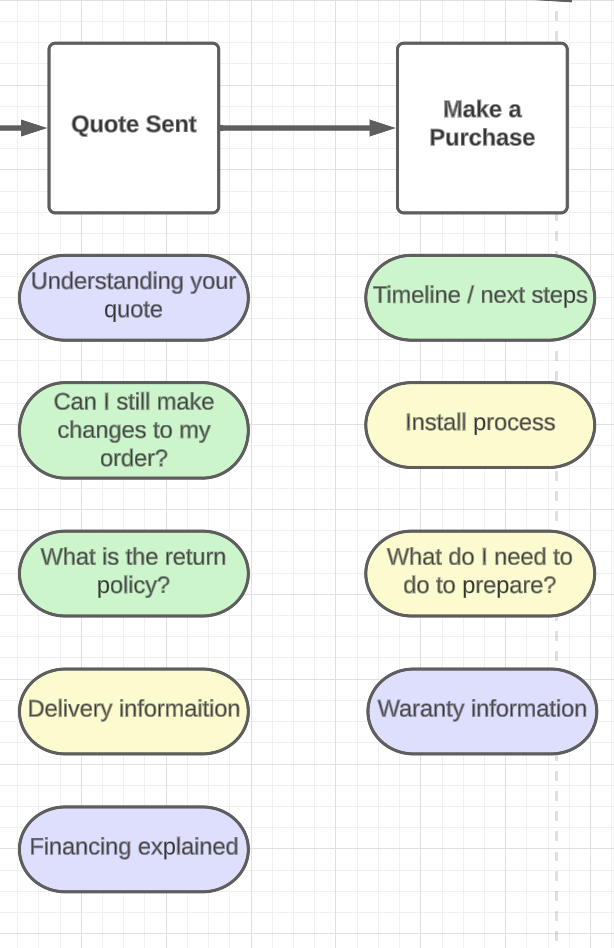
Blue for articles. These are in-depth topics that could use a full explanation in an article.
Yellow for videos. These are highly visual topics. The clearest way you can explain them is with video.
Green for the buyer’s guide. These are shorter FAQ-type answers that should be covered in the buyer’s guide.
Maybe some topics get covered in more than one format. Maybe there’s a short explanation of warranty information in the buyer’s guide, and a link to a more complete article.
Make the process work for you.
5. Do this for the entire buyer’s journey
At each stage, brainstorm the questions on a prospect’s mind — even way back in the very early stages.
Think back to the woman with back pain. As she’s coming to understand her symptoms, what is she looking to learn?
6. Do this for everything you sell
You can make similar maps for all of your core offerings. While that may seem overwhelming at first, you’ll find a lof of the content can do double or triple duty. (An article that explains financing, for example, could be used for dozens of products.)
When you brainstorm new content, figure out where it fits in the buyer’s journey. Add it to the chart. Add links between new content and older content.
And develop a plan for keeping workhorse content fresh and up to date.
The map you’ve been waiting for
If content marketing has felt too big and too nebulous, this is the way to get clarity. A content map connected to your buyer’s journey is the missing piece.
No more guesswork. No more post-and-pray as you wait to see if you start ranking. No more eye-rolls from sales when they hear about the latest marketing content.
If you get started and become stuck, reach out to IMPACT and talk to one of our coaches. We can simplify the whole process so you see results, not roadblocks.

Author: bcasey@impactbnd.com (Brian Casey)
* This article was originally published here
Wednesday, July 5, 2023
Marketing Without a Map: Why You Need A Content Mapping Strategy
When I start working with a new client, they’re usually in the I know I need to produce content but I have no idea where to start camp.
And I get it.
Content marketing can be hard. And it’s certainly overwhelming.
This all becomes even more complicated if you’ve tried content marketing in past (or paid an agency to do it for you). This means there’s also the difficulty of knowing what to do with older content that’s probably aging like warm milk.
(Do you take down all those posts about the early days of the pandemic? About moving to your new office? About that new product you launched in 2019?)
Content mapping is the solution to all this uncertainty. Just like a real map, a content map is a way to know where you are, where you’re headed, and how long it will take to get there.
Without it, you’ll forever wander, unsure if you’re headed in the right direction.
The blunder of marketing without a map
Content marketing is nothing new. The premise has been around at least since 2008. In the time between then and now, most companies have had some kind of content marketing initiative.
And most have been terrible. (It’s true. Most business blogs are self-serving, their YouTube videos are boring, and their social posts are thinly-veiled sales pitches.)
When you don’t have a map, you’re likely to thrash around awkwardly, taking a few steps in one direction and then backtracking the other way.
In a lot of cases, marketers without a map jump in and make one of two mistakes:
- Mistake #1: They go all-in on traffic. If they go this route, marketers are likely to produce troves of fluffy content that’s only designed to get clicks. And while organic traffic is nice, if the people coming to your site have no intention of buying, it’s not going to do anything to bring in revenue.
- Mistake #2: They produce bland, derivative content. This one’s especially true if you hire an agency or a freelancer to write your content. Where’s the first place they go to do their research? Google or ChatGPT. The result is content that’s interchangeable with everything written by your competitors. It’s safe, boring, and totally forgettable.
These mistakes have real consequences.
More and more distance between marketing and sales
In a perfect world, your marketing and sales teams are tightly aligned, and the messaging in your marketing materials lines up perfectly with what buyers hear from your sales reps.
But this type of meandering, aimless approach to content marketing furthers the divide between marketing and sales. For every stop and start, for every useless piece of content, salespeople become more skeptical of what marketing produces.
They’re less likely to share an article or a video from the marketing team. And, as a result, your sales reps have to work harder to close each deal, creating materials from scratch, hoping they don’t have to undo any damage done by the marketing team.
The result is content that’s disorganized, inconsistent, and doesn’t deliver any actual revenue to your company. Then, company leaders find themselves saying, “well, we tried content marketing and it didn’t work for us.”
I hear that frustration. I’ve worked with dozens of business leaders who’ve felt lost and frustrated. Which is why they need a content map.
The #1 goal of all content marketing
I’m going to go out on a limb here. The top priority of all marketing is helping your sales team close more deals.
This is the low-hanging fruit. This is how content you produce today and have an impact tomorrow — not four months from now when it finally appears in a SERP.
If you, as a marketer, can produce content that will help a salesperson close a prospect, you are doing more good for your company than if you ranked #6 for some long-tail industry keyword.
Here’s how you can get started making content that matters.
Step 1: Map out the journey of your buyers, including your sales process
If you haven’t done this already, shame on you. (Or, better yet, reach out to one of our sales trainers. We can help!)
Either way, once you have your sales process mapped out, you can clearly see the steps a customer has to take to buy from you.
Tip: When mapping out the stages of the buyer’s journey, start with the earliest stage being something like “problem aware” — which just means they know they have a problem and are trying define and quantify it.
The last stage of the buyer’s journey should be something like “customer becomes an advocate” — really you’re looking beyond the initial purchase.
Step 2: Fill in the map with questions, doubts, and sticking points
Once you’ve mapped out the journey your buyers take, it’s time to put yourself in the shoes of the buyer. Brainstorm with your sales team what common questions buyers ask or think about at each stage of their journey. Identify what doubts buyers have about purchasing at each stage of their journey. Identify sticking points that buyers need resolution on at each stage of their journey.
Then start to associate these questions with the stages of buyer’s journey. Refine these questions, doubts, and sticking points into article topics through keyword and intent research or even asking your sales team what language is used when this topic comes up.
Step 3: Start creating content for the stages closest to when people spend money
The problem with most content marketing efforts is that they start all the way at the top of the funnel, hoping to fill up the top so more customers come out of the bottom.
Wrong.
Start at the bottom of the funnel. Produce content for that buyer who has ALMOST made up her mind to buy from you. If 80% of prospects in her position buy from you, create content that gets that number up to 90%.
The effect will be tremendous.
Step 4: Focus on customer education
Right before the customer signs, what’s going through his mind? What are his last few questions before he’s ready to take the leap? Does he want to know about the cancellation policy? About the onboarding process? About the setup fee?
Now, imagine right before he asks that question, just as its forming in his mind, the sales rep emails and says,
“Hey Matt, before we meet tomorrow I thought you might have a few final questions about our cancellation policy. So, I wanted to send along an FAQ resource that should cover most of the things you’re wondering about. If you have any additional questions, be sure to bring them up in our meeting on Thursday.”
Step 5: Repeat, working toward the top of the funnel
Next, start working toward the top of the funnel. At each decision point, create content that’s going to ease the tension, answer the question, or address the concern.
Remember, you need to teach the way people want to learn. If something’s easier seen than read, use video. If your buyers need something thorough, you should write it. A bunch of quick answers? Use an FAQ format.
Align your content with the buyer’s journey
The key to making content that matters is aligning it with your buyer’s journey. And don’t worry about vanity metrics. Instead of fluffy top of the funnel that’s unlikely to contribute to your bottom line, start close to the sale — and focus on buyer education.
This is the strategy and framework your content needs. This is the map that gets you from confusion to clarity.

Author: bcasey@impactbnd.com (Brian Casey)
* This article was originally published here
Tuesday, July 4, 2023
r/AMA Mods Stop Running Celebrity Interviews, as Reddit’s API Pricing Protest Drags On
Reddit's volunteer moderators continue to protest the app's actions.
* This article was originally published here
Monday, July 3, 2023
Inbound Marketing vs. Content Marketing: What's the Difference?
Often, the terms “inbound marketing” and “content marketing” are viewed as synonymous. What’s worse is that when you do a quick Google search to learn the difference, that’s all you get. A quick definition of each of the terms and then a brief explanation of how they’re different.
The reality is that inbound marketing is a mindset that impacts your entire organization. It's an effort to be helpful while creating a great online learning experience. Content, and content marketing, is the engine that drives inbound marketing efforts. In order to be successful, you need both.
You can see results like this, but they take time and dedication. And you need to know what you're doing.
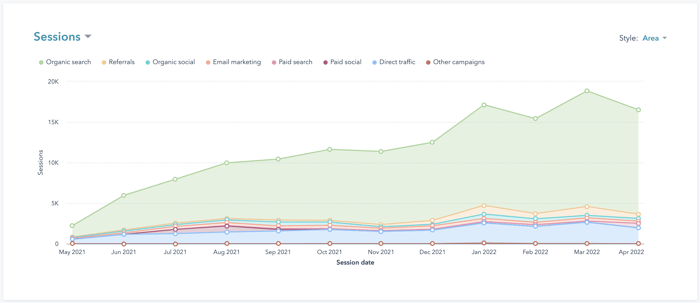
This article is going to take you beyond just quick definitions and show you how to use both inbound and content marketing to increase your traffic, leads, and sales.
If you want a deeper dive into either, you can click below.
- What Is Inbound Marketing? (definition + examples)
- What Is Content Marketing? (definition + examples)
If you want to understand how the two terms relate, keep reading.
What is inbound marketing?
Inbound marketing is a sales and marketing strategy that attracts ideal customers to your business through helpful and informative content.
- Inbound marketing contrasts with interruptive outbound marketing that blasts messages to as many people as possible.
- Inbound business contrasts with a “legacy” sales mindset of chasing down prospects and convincing them to buy from you.
Instead, the effort of an organization revolves around drawing people in with a website, video, social media, and written content that educates and truly empowers a buyer to make a decision.
If you build something great online, your prospects will discover it and enter your funnel.
Inbound marketing: What it's NOT
- Inbound marketing isn’t just a marketing thing.
It’s also not a flavor of the month initiative that can bring in new sales overnight.
For inbound to work, there is a necessary shift in the way that you think about your buyers and every interaction with them.
A single article alone can take a month or more to actually start to build traffic from the search engines to your website. A single YouTube video is unlikely to turn into a sale.
So, if you’re looking for a quick fix, turn to paid advertising or something like a more immediate return.
Instead, your marketing team will need to concentrate on generating sales-focused content, not awareness campaigns, or fluffy content that doesn’t help buyers. For your sales team, they’ll need to relearn how to approach customer interactions.
No more cold calls and trying to close sales as quickly as possible. Instead, the sales mindset is to educate prospects along the way knowing that good fits will move forward and bad fits will weed themselves out. - Inbound marketing isn’t a strategy that will be successful without accurate tracking and attribution.
You’ll need HubSpot (or another similar tool) to get accurate data.
Without this information, you can’t prove the ROI of your inbound efforts and you can’t show that the content you’re creating is actually making money. - Inbound marketing isn’t just a funnel where you get people to fill out forms on your website and then send them emails until they buy.
Although terms like top-of-funnel and bottom-of-funnel are still used today in inbound marketing conversations, the goal is to show value and be helpful even if it means eliminating some potential customers.
What is content marketing?
Content marketing is the primary driver of your inbound marketing efforts. The goal is to create honest, transparent, and educational content on a consistent basis for your ideal buyers.
The publication and promotion of content drives organic website traffic from search engines, gets you found on social media, increases your qualified lead pool, and empowers your sales team to close more deals faster.
Content marketing: What it's NOT
- Content marketing isn’t just blogging. You can’t publish articles three times a week and call it a content marketing strategy. For content marketing to be effective, you need to have your sales and marketing teams come together to determine what content needs to be created.
Your content should focus on questions that your sales team receives and topics that will help someone understand the options to solve their problem, all with an informational and helpful approach. Then you must determine how you’re going to address these topics. - Content marketing isn't just trying everything and seeing what works.
Are you going to create a video? Write a detailed blog? Update your website to transparently show the answer? There is no point in purchasing a content marketing tool without knowing exactly what you're going to do with it. - Content marketing isn't only something that happens on your website. Yes, a business blog is an important part of your content efforts, it's not the only place to attract an audience. You will likely also use:
- YouTube
- Social media sites
- Other publication websites
- Podcast platforms
- Newsletters
- and more
Content marketing + inbound marketing
At a high level, inbound marketing is the holistic strategy, and content marketing is the primary tactic.
Without content, inbound marketing efforts are fruitless.
Nightmare #1
Let’s say Taylor Swift decides to drop a new surprise album overnight... again. You wake up super excited to dive in and see how it stacks up against her other albums, while knowing in the back of your mind that its ceiling is fourth after Lover, Red, and the self-titled album — yes, in that order.

But when you go to Spotify, the album doesn’t have any songs on it. It’s just a designed album cover with a description of the idea for the album and information about the artist.
This is the exact same thing as having an inbound strategy, but no content.
Nightmare #2
Without a larger inbound strategy, content lacks the support to make an impact with your ideal buyers.
Imagine now that Jordan Peele just came out with a new movie. You’re dying to see it because, well it’s a Jordan Peele movie and you’re a human.

But when you go to watch the movie, every scene is in a random order and there’s no actual narrative at all. Now if you’re like me you’d sit there nodding with a pensive look on your face and act like you totally understand the artistic direction.
But in reality, the movie didn’t take you anywhere and it seemed accidental. This is what it’s like to create content without a larger inbound strategy.
3 key differences between inbound marketing and content marketing
Inbound marketing and content marketing have a symbiotic relationship. They also share the same goal: to educate potential customers so that when they’re ready to buy they come to you.
But that’s where the similarities end.
1. Inbound marketing and content marketing have different owners
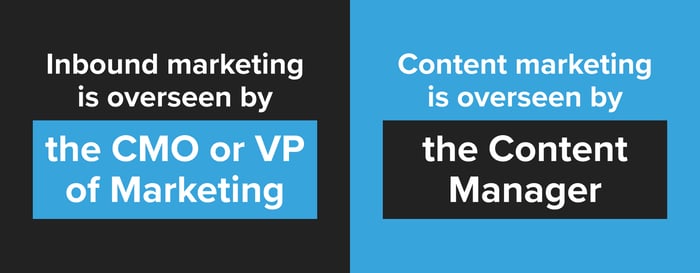
Inbound marketing will be owned by someone in your company that oversees your entire marketing department. This could be a CMO, a VP of marketing, or a marketing director.
The person in charge of your inbound marketing strategy should have a foundational understanding of all aspects, but not specialize in any per se. That means this person should be able to contribute to conversations about content marketing, social media, SEO, conversion rate optimization, lead nurturing, and sales enablement.
Depending on the depth and complexity of your team, however, that individual may not be the specialist who handles the ownership of those areas.
Content marketing responsibility will be owned by a content manager.
Content managers focus on building an editorial calendar, building content creation processes, distilling interviews with in-house SMEs into easy to understand thoughts, and exciting your entire team about using content in the sales process.
While a content manager should have a broad understanding of the entire inbound marketing strategy, they’re deep in the weeds writing, editing, publishing, and promoting content.
2. Inbound marketing and content marketing have different deliverable outcomes
A true inbound marketing strategy will include written content, but also focuses on providing that same inbound mentality across others channels. Those might include paid advertising, building a transparent and user-friendly website, or building an online community.
Content marketing strategy has a narrower scope of deliverables, usually in the form of articles, videos, podcasts, and downloadable content offers.
3. Inbound marketing and content marketing have some differing goals
While the overarching goal for both inbound and content marketing is to increase sales, there are some metrics that indicate success that are unique.
For inbound marketing, it might be things like website conversion rate, number of generated leads, percentage increase in sales, increase in average order size, and an increase in the quality of inbound leads.
While content marketers certainly need those metrics to show their efforts are working, success can be proven in other ways.
Content marketers focus on metrics like increasing the time that website visitors spend reading articles and watching videos, decreased bounce rates, increases in organic keywords and traffic, and the number of content pieces consumed by high-quality leads.
How to use inbound marketing and content marketing to grow your business
Here is how to properly implement both inbound and content marketing to increase sales.
- Put the right people in the right (dedicated) seats
Don’t make the mistake of trying to have one person own content creation and inbound strategy. These are two completely separate roles with distinct responsibilities that each will more than fill a 40-hour workweek.
The most successful companies I’ve worked with have someone fully dedicated to content marketing strategy and one person completely focused on the big picture inbound strategy. - Get everyone aligned on the 'culture of inbound'
Changing the culture to focus on buyer education doesn’t happen overnight.
Your entire company needs to see the value in changing the way you interact with customers and be willing to try something new.
A workshop can be a great way to bring everyone together to align and get excited about this new way of doing business. - Establish a revenue team
A revenue team is made of key players from sales and marketing with a shared goal of increasing revenue through traffic, leads, and sales.
Your revenue team should meet on a weekly or biweekly basis and include both your content and inbound marketing managers. Use these meetings to have content brainstorms, discuss content and inbound marketing initiatives, and align with the sales team on how and when to use content and inbound deliverables. - Define your content creation processes
You’ll need to set the foundation for how you’ll actually do that content thing we’re talking about.
Your content needs to reflect your company personality and presents a consistent look and feel, so you’ll need a content style guide.
To make sure that your content has a decisive direction that’s helping increase sales, you’ll need a content strategy.
This is where you’ll agree on what goals you have for content, define your audience, and create a step by step roadmap for how content is created from being an idea to being a published piece of content. - Outline your 90-day priorities
Inbound marketing and content marketing need to have independent priorities and goals.
Using the revenue team meetings, establish what success looks like in the first 90 days. Create a list of priorities for your inbound marketing and content marketing team. Each priority should have a clear definition of what success looks like. - At the end of your 90-day initial period, recap wins and lessons learned
At the end of your initial 90-day period, use one dedicated revenue team meeting to recap the priorities for your inbound and content marketing teams:
-
- Were you able to advance each of your priorities?
- What went wrong and what went right?
- What did you learn that will help the entire team continue to improve sales through content and inbound efforts?
After this priority recap meeting, use your next revenue team session to determine your next 90-day period priorities. Follow this structure from now until the end of time.
Considering inbound or content marketing at your organization?
If you’re looking online for things like content marketing and inbound marketing, I’m going to guess that you’re at the point where you realize your sales process and results could stand to be improved. The inbound methodology isn’t going to net you results overnight, but we’ve seen so many success stories when companies commit and build inbound and content marketing strategies.
You can continue on the same path you’ve always gone down and hope for better results, but trying to grind harder with an outdated approach will only get you so far. Every day that you wait to make the shift is delaying the results you could be seeing.
Results like an increased close rate, a shorter sales cycle, increased average order size, and more leads and traffic to your website.
If you're ready, we’ve created a free video training course that will guide you toward implementing inbound in your organization.

Author: bcasey@impactbnd.com (Brian Casey)
* This article was originally published here
Sunday, July 2, 2023
Saturday, July 1, 2023
Friday, June 30, 2023
Meta’s Experimenting with its Own In-Facebook App Store to Compete with Apple and Google
This could be a significant move for Zuck and Co.
* This article was originally published here
Subscribe to:
Posts (Atom)
-
Mobile app design is in the midst of a never-before turmoil and trans...
-
10 SIDE JOBS TO EARN AN EXTRA $100 DAILY Start Earning Money Fast With Internet Marketing - Subscribe Here! Via Make Money Online Channel...
-
Two Websites To Make $100 Per Day New System Makes Easy Money With Clickbank Daily. Click Here! Via Make Money Online Channel


