Nostalgia can drive emotional response and boost brand messaging.
* This article was originally published here
Nostalgia can drive emotional response and boost brand messaging.
HubSpot is an incredibly powerful tool, essential for any business looking to improve their operations and level-up their marketing strategies. However, its complexity means that finding the right talent to manage HubSpot for your business can be challenging.
"Too often, business owners know they need someone great who understands HubSpot but aren't sure beyond that. We help crystallize what they actually need this person to do," says Jason Azocar, CEO of HubSearch.
Jason joined Alex Winter at IMPACT Live to discuss the origins and mission of HubSearch, a company dedicated to matching businesses with HubSpot specialists.
"We're hyper-specialized to the HubSpot ecosystem," Jason explains. "Our clients need marketers, ops professionals, or HubSpot admins who can do sophisticated, complex work in the product." This specialization allows HubSearch to provide businesses with candidates who not only have the necessary certifications but also the experiential knowledge to handle real-world challenges.
Jason emphasizes the importance of deep, situational project work over basic certifications. "Certifications are great, but they don't always mean you've gotten deep into the more sophisticated components," he says. HubSearch looks for candidates who can demonstrate their expertise through detailed examples of their work and problem-solving abilities.
Jason's passion for helping businesses succeed shines through as he discusses the impact of placing the right talent: "We get to help people land their dream jobs and help companies make key hires that unlock the next level for them.”
Jason Azocar is the CEO of HubSearch, a company dedicated to helping businesses find the HubSpot talent they need to thrive.
Connect with Jason on LinkedIn
Download the HubSearch 2024 Salary Guide
Watch: New AI Tools: HubSpot Updates That Will Transform Your Business
Read: HubSpot Vs. WordPress: Which is Better for Your Business Website
Free assessment: How Does Your Sales & Marketing Measure Up?
Watch: How a Remodeling Company Tamed its AR Problem with HubSpot

You can now filter your search by paying users only. If you want.
X is looking to bring back some more advanced analytics elements.
WhatsApp Channels is a one-to-many broadcast messaging option.
According to a recent study by Marketo, organizations with strong sales and marketing alignment experience roughly 70% higher conversion rates and over 200% more in revenue. But if we know alignment is so important to our bottom line, why do so many of us struggle to get it right?
Maybe you’ve been publishing marketing content but aren’t sure why the sales needle isn’t moving. Or you're in sales, unsure exactly why your marketing team even creates content in the first place.
Don't worry, you're not alone. A lot of the businesses that come to us have these exact same struggles.
We all know a well-oiled sales and marketing machine can transform our businesses, whether you operate a B2B or B2C — but understanding how to make it work is where most of us get confused.
The following is a straightforward framework we teach our clients, and if you use this strategy too, your sales team will walk away knowing exactly what content your marketing team is producing and how to use it. In return, they’ll experience a dramatically shorter sales cycle and increase sales.
We promise.
Ready to get started? Here’s what to do.
The first step toward aligning your sales and marketing teams is creating a content-creation culture in your business.
You might be thinking: What does this even mean?
At IMPACT, we believe that “programs” are abandoned just about as fast as the time it takes to set them up. But when we change the culture of our business, it becomes the way we live, breathe, and exist in our organizations.
Now, we know that culture change can feel daunting, but it's not as hard as it seems. It starts with leadership. If company leaders believe in the power of content to attract, educate, and build trust with your audience, you've got the foundation you need.
If the leadership team is on board, everyone else can follow suit. If not, there'll be no progress.
To build a true culture of content at your business, your teams need to know what’s in it for them — especially your sales team. They need to know the what, why, and how. The truth is that the right content will make them better salespeople. They will close more deals and they will close them faster. However, salespeople are notoriously resistant to change, so this will take some finesse.
Without this understanding, content marketing will feel like any other marketing trend. Help them see the light. Provide the educational opportunities that help your team learn what's possible. For instance, we recommend this free course in which author Marcus Sheridan explains how salespeople can use content to close more deals.
.jpg?width=700&height=364&name=Screenshot%202024-05-29%20at%209.44.29%20AM%20(1).jpg)
Marcus advocates for a They Ask, You Answer approach in which salespeople are educators instead of persuaders.
Once they catch the vision of what’s truly possible, you can all work together toward the rest.
When we say content needs to be a culture within your organization, we don’t mean you need to turn all your employees into world-class actors or writers. What it does mean is that you need their intelligence — these subject-matter experts know the ins and outs of your products and services.
What this also means is you can’t dump content creation on an engineer, salesperson, or anyone else who is working a full-time in your organization. You need to have one person on staff who owns the content production process — start to finish.
We call this person a content manager, and not only will they ensure content is published regularly without fail, they will also:
This needs to be a full-time job for one person within your organization. They will regularly meet with your sales team, and be the sole person in charge of publishing at least three pieces of content per week (blog articles, podcasts, videos, etc.).
We’ve seen organizations take shortcuts here, and it never works out. Inevitably your content creation process will be put on the back burner, and you want to keep up the momentum.
Learn more here:
Content Manager Job Description for Marketing Teams (All Industries)
A Weekly Onboarding Guide for Your New Content Manager
Once you get buy-in from your team and hire a content manager, you’ll want your sales and marketing teams to meet regularly. Without shared meeting time, they'll never get out of their silos.
They will meet to form a connected vision of how marketing can help sales get the content they need to close more deals faster.
We tell our clients to form a "revenue team" with members of sales and marketing focusing their efforts together. This is a place for
How it works: Instead of working in silos, where marketing creates content they think sales needs, they meet with salespeople to discuss which pieces of content the sales team needs.
It could be a new buyer's guide, a product comparison video, or an article explaining your services. Anything that will help sales close more deals faster.
The future of sales and marketing is buyer education.
If your content educates and informs, if will help visitors become leads and leads become customers.
Assignment selling is the act of using content during the sales process to address major objections and questions your buyers have.
Assignment selling, when set up and used correctly, will be your sales team’s No. 1 selling tool for shortening the sales cycle and driving up revenue.
The plan is easy to draw up and use, and if you design it the right way for your company, you will see unbelievable results in sales cycles, timelines, and closing rates.
It works — and it will always work — because your prospects will always care about one fundamental thing: learning as much as possible about what they are going to buy. Your prospects have questions, and instead of spending your time addressing them on each call, let the content do the work for you.
Using content to accelerate prospects through the sales funnel means educating buyers before your sales call. Well-informed prospects are more prepared to buy.
When 'assigning' content to a prospect:
If someone’s not willing to take the time to read your content, they're likely not a very serious buyer, so the process weeds out bad-fit prospects along the way.
Assignment selling is the best and most efficient solution for shortening the sales cycle and zeroing in on the right potential buyers. To do it right, you need your revenue team to obsess over what content will improve your sales cycle the most.
When you commit to aligning your sales and marketing teams, you will see shortened sales cycles, higher closing rates, and improved ROI.
All the tools and examples we shared with you here are from a busienss framework we teach our clients called They Ask, You Answer. The framework has helped hundreds of businesses just like yours gain millions in revenue.
To take the first step at implementing They Ask, You Answer in your business, talk to one of our coaches who can walk you through how to finally take the guesswork out of your sales and marketing.
With strategic coaching and hands-on training for your marketing and sales teams, we can help you improve your metrics and scale your business with great content.

With the introduction of its AI overview feature, Google is hoping to change the search landscape and keep its dominance as the top player in the game.
For years we’ve seen the traditional search results (ads, followed by organic links) change, with featured snippets, YouTube videos, and Google Shopping results sometimes getting top billing. This new feature marks another step in that direction. Above everything else, you’ll see an AI-generated answer to your question that’s about a paragraph long, including links to the source material Google may have pulled the information from.
Mandy York, IMPACT content and video expert explains, "This update that's called the AI overview, it's at the very top of the page. So now this is like the first thing that you see. It's over the YouTube videos. It's over everything."
The new AI features present both challenges and opportunities for businesses looking to drive organic traffic to their sites. Mandy points out that Google's AI tends to favor concise, clear answers from a single source, similar to the old featured snippets, so producing helpful content is likely still the best strategy.
However, the AI has thus far proved unreliable, which makes it hard to predict for businesses and hard to trust for users. The challenge lies in the AI's occasional reliance on unreliable sources, such as Reddit. "What it doesn't get is that Reddit is not exactly a scholarly resource... It's a patently bad place to get information" Mandy says.
Whether this AI overview actually pulls good information or not, businesses are worried about what it means for their own traffic.
Mandy suggests writing content that is straightforward, conversational, and easy to understand. "Explain things like you're talking to an actual customer that is standing in front of you," she advises. This approach aligns with the They Ask, You Answer framework, focusing on building trust through clear and helpful content.
Even with so much still unknown about the future of search, marketers should stay true to their values. Focus on providing genuine value to your customers, while staying informed on new changes in tech. This way, businesses can navigate this new AI landscape.
Mandy York combines her experience as an award-winning educator and thriving business owner to help others take creative and actionable steps toward their content and video marketing goals.
Connect with Mandy on LinkedIn
Free assessment: How Does Your Sales & Marketing Measure Up?
Endless Customers is a podcast produced and distributed by IMPACT, a sales and marketing training organization.
We coach businesses to implement our They Ask, You Answer framework to build trust and fill their pipeline.
For inquiries about sponsorship opportunities or to be considered as a guest, email awinter@impactplus.com.
Want to tell us about a challenge you’re facing? Schedule a free coaching session with one of our experts.

New insights into what people are searching for on social and Google.
"Too often sales and marketing stand on opposing sides.” says Chris Duprey, IMPACT head coach. “That has to change if we are going to continue to grow and develop."
Chris explains that one of the root causes of this divide is a lack of understanding and communication: "Sales is generally just uneducated around what marketing's role actually is."
He emphasizes the importance of salespeople taking the time to familiarize themselves with marketing materials to leverage them effectively in their sales processes.
"Sales folks need to read the content or watch the content that marketing produces,” he says. “Only then can they say the marketing team isn't creating the right content."
So, how can this age-old divide between sales and marketing get crossed? For Chris, it’s all about reaching across the aisle to understand what the other teams are actually working on.
He also shares a key strategy to enhance collaboration: "Have the marketing team sit in on sales role-play sessions." This practice really breaks down walls, allowing both teams to see firsthand how they can support each other.
Chris advises sales teams to check their egos and approach marketing as partners rather than support staff. Sales teams must "stop thinking that you're the only people that provide value to the organization.” Recognizing the crucial role marketing plays in educating buyers can transform the dynamic between the two teams.
When these two groups work as a greater team, the results make the effort well worth it: "I've seen 25% to 50% upticks in close rate just because people start working together."
Chris Duprey is a sought-after speaker and business coach with over two decades of leadership experience.
Get to know Chris through his IMPACT bio page
Connect with Chris on LinkedIn
Watch: The Future of Sales Training: Using AI to Develop Your Approach
Free assessment: Score Your Sales Team
Watch: Sales Videos | Win More Business With ‘The Selling 7’
Endless Customers is a podcast produced and distributed by IMPACT, a sales and marketing training organization.
We coach businesses to implement our They Ask, You Answer framework to build trust and fill their pipeline.
For inquiries about sponsorship opportunities or to be considered as a guest, email awinter@impactplus.com.
Want to tell us about a challenge you’re facing? Schedule a free coaching session with one of our experts.

Instagram posted, then deleted, a video advising against using certain CTAs .
Would a watered-down version of TikTok’s algorithm be as effective?
"Marketing and sales should be friends. We find that when those teams do work together, there can be huge improvements in so many areas." says Allison Riggs, IMPACT Head Coach.
This episode of Endless Customers tackles the stereotype that these two departments often don't see eye to eye, leading to silos and missed opportunities. Allison joins Alex Winter to discuss how marketers can approach and improve their relationship with sales to help their business grow.
In order to achieve this harmony, she suggests, "There needs to be at least a monthly meeting between sales team leaders and your marketing team leaders.” Regular, structured communication helps ensure everyone is aligned and working towards the same goals.
"Participation isn’t just about attending meetings. It’s about actively engaging and collaborating," Allison explains. Marketers should encourage sales teams to participate in creating content, sharing insights, and providing feedback. "We're here to support and help, not to flip everything on its head," she reassures, stressing the importance of a collaborative mindset.
Allison offers practical advice for marketers looking to help sales understand the marketing side of things by starting with one key salesperson, “Find a champion within the sales team who is open to trying new things. Start there and build that relationship," she suggests.
The main key is also being sure to share why it’s important: "When they understand the why, the what, the how, it clicks for them," Allison explains. This understanding fosters buy-in and participation from the sales team.
Allison Riggs is a Head Coach at IMPACT. She trains sales, marketing, and leadership teams to embrace a culture of radical transparency within their organizations, empowering them to become the most trusted voice in their space.
Email her at ariggs@impactplus.com
Connect with Allison on LinkedIn
Work with Allison in They Ask, You Answer Mastery
Endless Customers is a podcast produced and distributed by IMPACT, a sales and marketing training organization.
We coach businesses to implement our They Ask, You Answer framework to build trust and fill their pipeline.
For inquiries about sponsorship opportunities or to be considered as a guest, email awinter@impactplus.com.

While you can post longer Reels clips, you probably want to avoid it most of the time.
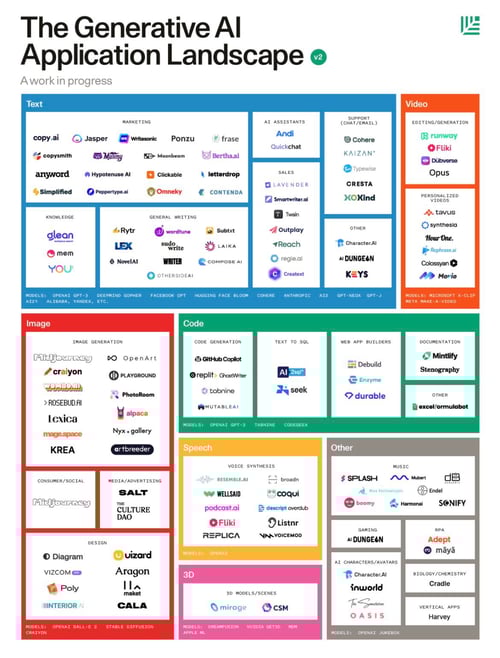
Literally thousands of new AI tools have been released since ChatGPT burst on the scene at the end of 2022. At the same time, established brands have added AI capabilities to the platforms we already use every day.
 Source: @heyBarsee
There’s no doubt that the pace of innovation has increased from a trickle to a waterfall, and that’s led to a lot of noise and chaos in the marketplace.
People are overwhelmed — and things show no sign of slowing down.
At IMPACT, we work with businesses of all shapes and sizes — which means we see dozens of industries, team structures, and verticals. And within those organizations, we’re coaching marketing teams, training salespeople, and advising senior leadership.
In short, we see a wide swath of the professional landscape.
Below are some tools we advise clients to try out to increase their efficiency and improve their output.
For each tool, I’ll explain what it does, what it costs, the pros and cons, and my impressions — and this should give you a leg up as you’re sifting through the crowded AI landscape.
Here we go.
Descript is an AI-powered video and audio editor that will transcribe your footage automatically so you can edit it just like a Word document.
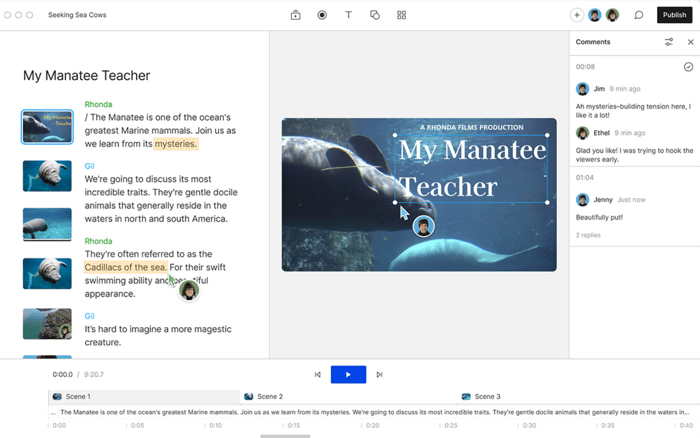
Descript uses speech detection AI to transcribe any audio or video file you feed it. The accuracy they offer is some of the highest I’ve seen. If there are errors, industry terms, or specific names you want to ensure Descript remembers moving forward, you can add them to your own glossary to be even quicker in the future, which is cool.
Another feature I found was that you can add new scenes with one click. Simply adding a slash “/” within your script will allow you to add a new scene. Descript has thousands of clips, gifs, and images to choose from to add to your video, or you can simply create your own. Little tips and tricks like this can be found in their resource center, so users can continue to learn from one another.
The user experience is very smooth and Descript allows you to apply text-based editing to save you time and ease overall. I only see Descript getting better from here and I’d expect its competitors will follow suit in terms of text-based editing for their users.
There’s a free version, with Creator ($12/month), Pro ($24/month), and Enterprise tiers. Full details on their pricing page.
Opus Clip is also a video editing tool, but with a specific purpose: To turn long-form video into digestible shorts. Think: Cut a 30-minute podcast into 10 vertical-framed 30-second short-form videos. As an example, here's a clip we made with Opus.
Like a lot of AI, Opus Clip is a multiplier. If you're trying to generate a lot of content, a tool like Opus can get videos out the door at a tremendous rate. While you won't have as much control as you do in a traditional editor like Adobe Premiere, the clips are serviceable — and you can do minimal editing within the platform.
We all know that short-form video is crucial for engaging with your audience, and Opus can help you speed that process up.
Users report that the tools has improved significantly of late, so if you tried this in the past and were unimpressed, give it another look.
There's a free version, then you can choose Starter ($9/month) or Pro ($29/month)
The best AI tools feel collaborative in nature. That way, the user has more control over the finished output. Hyperwrite is an AI writing assistant that learns how you write so it can continually improve what it generates.
Hyperwite offers a full suite of writing services, from full generation to translation to summarizing. You can use it write a new blog post from scratch, draft a follow-up email. do research, or craft a social post. For marketers, this can be a god-send.
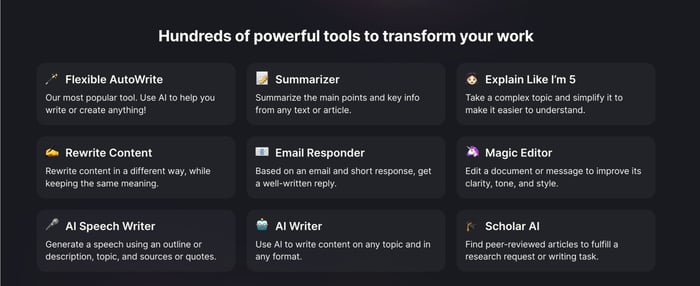
There are tons of AI writing tools on the marketplace right now, from well-established do-it-alls like ChatGPT to specific ones like Jasper. Hyperwrite is my go-to for the quality of what it produces and its ease of use. Plus, as a Chrome extension, you can use Hyperwrite across all platforms.
Premium: $20/month, Ultra: $45/month
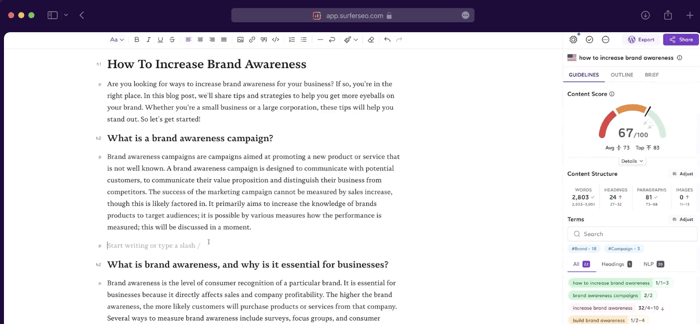
Surfer SEO is a cloud-based on-page optimization tool that allows you to analyze and compare your own pages against what currently ranks in SERPs.
Through my experience with a variety of writers across a variety of industries, SEO seems to be the one thing they all overthink.
I recommend this tool quite often to my clients as they try to rank in Google. I don’t see this as a tool someone would need forever, but a great tool to utilize if you are new to SEO and don’t have the bandwidth to learn everything all at once.
I specifically love the actionable feedback it lists out for you in the SEO checker on the dashboard. This information is very direct and doesn’t leave you feeling unsure as to what you need to do to improve your content.
Tiers include Essential ($89/month), Scale ($129/month), Scale AI ($219/month), and Enterprise.
Reclaim is a smart scheduling app for Google Calendar that uses artificial intelligence to automatically build the perfect schedule for your priorities every week.
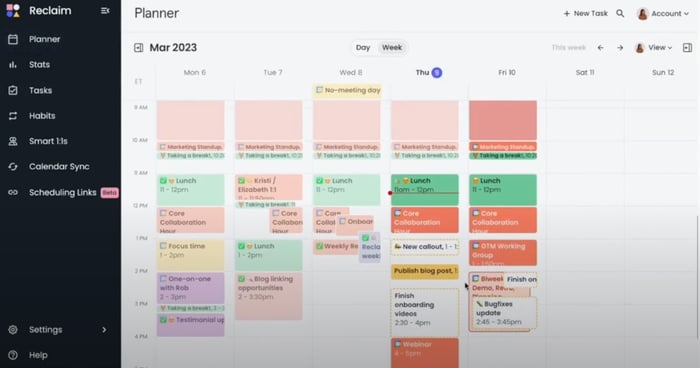
I trialed this tool for a few weeks and found it extremely helpful. With that said, I am an overly organized, color-coded planner type of individual, so I may not be the best use case for Reclaim. However, I now recommend this to my clients all the time.
It doesn’t matter what industry or what department you work in — a lot can go wrong if your calendar is chaotic. Having everything organized in one spot gives you the freedom to maximize your availability without clogging up your calendar.
The coolest part, I think, is when a meeting is canceled or something shifts in your calendar, Reclaim will auto-reschedule it for you at an opportune time.
And lastly, Reclaim will adjust your events from “Free” to “Busy” as you get busier — so you stay flexible, but not overly available.
I trialed this tool for a few weeks and found it extremely helpful. With that said, I am an overly organized, color-coded planner type of individual, so I may not be the best use case for Reclaim. However, I now recommend this to my clients all the time.
It doesn’t matter what industry or what department you work in — a lot can go wrong if your calendar is chaotic. Having everything organized in one spot gives you the freedom to maximize your availability without clogging up your calendar.
The coolest part, I think, is when a meeting is canceled or something shifts in your calendar, Reclaim will auto-reschedule it for you at an opportune time. And lastly, Reclaim will adjust your events from “Free” to “Busy” as you get busier — so you stay flexible, but not overly available.
Lite (free for life), Starter ($8/month per user), Business ($12/month per user), Enterprise ($18/month per user).
While these tools open up amazing possibilities, remember that they, themselves, are not a strategy. They are not insight or creativity, either.
Let these tools enhance and speed up the work you do, but don’t expect them to do the job for you.
And remember, the AI landscape is shifting by the day. These tools will improve, others will emerge, and category kings will eventually come to dominate.
Keep experimenting and learning.

"In moments where you’re faced with unfamiliar technology, remember: it's okay to feel uncomfortable. Curiosity and capability go hand in hand when learning something new." - Cary Weston
In this episode of Endless Customers, Alex Winter sits down with Cary Weston, an agency owner and They Ask, You Answer certified coach, to explore the potential of artificial intelligence (AI) in modern marketing and sales.
Cary's journey with AI began with curiosity and evolved into The ChatGPT Experiment, a podcast designed for curious beginners. He wants to help those who are curious to get started with AI become capable users, integrating the basics into their daily work.
Cary understands that many people, including business owners, are intimidated by AI and its unknown potential. By understanding this, Cary has been able to help businesses feel more comfortable with new technology.
Cary offers a practical example of using AI to streamline customer inquiries. By using ChatGPT to search through email transcripts, his client identified common questions and created a "How to Order" page, significantly reducing repetitive inquiries and improving customer satisfaction.
He also discusses how to maintain authenticity in AI-generated content by using it as an assistant rather than something that does all the work for you. He states, "AI is like an amazing instrument. It's a tool and a problem-solving partner, not a replacement for human effort."
Cary Weston is a partner at Sutherland Weston and the creator of The ChatGPT Experiment podcast.

Now, you can dress up as a potato in your virtual meetings once again.
The funding will also help X improve its Grok chatbot.
The revised user count suggests X is growing at a significant rate.
Maybe it's time to reassess your online habits.


