Make money online fast

Make Money Online Fast: The Ultimate Guide to Earning Quickly in 2025

  Introduction Want to make money online fast? Whether you need extra cash or want to build a full-time income, the internet offers endless ...

Monday, April 17, 2023

5 Keys to Marketing Your Business During a Recession

As frustrating as it can be, sometimes even the most qualified prospects aren't in a place to buy from you. 

Sometimes certain purchases just aren't a priority.

At others, they aren't in the budget.

With costs of everything from eggs to rent rising dramatically amidst aggressive inflation in the U.S. today, many buyers are reassessing their spending, and maybe your deal is one of the things that isn't making the cut.

In light of this, you may be thinking about cutting back your marketing investment. And I get it — Why spend time and effort trying to attract buyers when people aren't going to buy?

But, I urge you, don't take your foot off the gas pedal completely. 

Marketing is essential to maintaining your brand awareness and audience relationships, and consistency is key.

In this article, we'll discuss why you need to maintain your marketing during a recession, and we'll share tips on how to do so effectively. 

Marketing isn't just a nice to have
marketing-during-a-recession1

Marketing is an essential part of any business strategy. It's your business' voice to potential buyers.

It's how you share your unique perspectives, education, and guidance and build the trusting relationship you need to ultimately close deals. 

Recession or not, the worst thing you can do for this relationship is go silent.

Think about it.

When it comes to marketing, you're ultimately trying to earn prospects' trust. You want them to see that you know what you're talking about, but also not just out to sell them. 

Modern buyers don't want your sales pitch. They want to make informed decisions on their own. 

But like any relationship built on trust, that means offering guidance and support even when it's not beneficial to you. 

To maintain a healthy, trusting relationship with your audience, you need to continue to invest in your marketing even when prospects are not in a position to buy from you. 

marketing-during-a-recession2

That means continuing to share content and offer value. It means maintaining and improving your offerings. 

Continuing to offer value when times are tough shows that your business isn’t just a fair-weather friend, so to speak.

You don’t just care about making a buck — you care about helping your customers solve their problems, and you'll be there even when it isn’t necessarily profitable for you to be.

I know what you're thinking: You're a business and you need to make money.

But this is a long-term play. 

Even though some prospects may not be in a position to buy today, that doesn't mean they won't be in the near future.

When you maintain your marketing during a recession, when prospects are ready to buy again, you won’t be forgotten. Rather, you will be one of the first solutions that come to mind. 

Let's talk about five things to keep in mind to do this most effectively.

5 keys to marketing your business during a recession

1. Double down on educational and helpful content

During economic uncertainty, focusing on producing high-quality content should remain one of your top priorities. 

This is one of the most low-cost but far-reaching strategies you can engage in. Let me explain. 

In They Ask, You Answer, IMPACT partner Marcus Sheridan explains how he actually grew his pool business during The Great Recession of 2008. He did this by answering common buyer questions through content on his website.

While other pool companies were shying away from topics like price and potential problems with their products, Marcus chose to address them directly on his business's website.
marketing-during-recession3

As a result, River Pools and Spas, brought in more traffic and leads who were concerned about price. Eventually, these turned into sales — and the company was doing even better than it was before the recession started.

As we said earlier: Modern buyers want to be educated. They want to be empowered to make their own buying decisions. 

In an interview, Marcus noted: “When prospects research their problems online and find that you provide answers and solutions, they are more likely to trust you and remember you."

And when they remember you as a trusted expert, they are more likely to buy from you when they are in a position to again.  

marketing-during-a-recession6

2. Focus on price and value

What should you be addressing in your marketing exactly? During an economic recession, buyers tend to be more price-conscious.

With this in mind, use your content to educate your audience on how much a product or service like yours costs. Talk about what a realistic price tag looks like and explain the details. 

Create a pricing calculator like the one pictured below from Outgrow. Write a pricing guide. Explain what makes costs increase or decrease. 

pricing-calculator-outgrowExample of a pricing calculator by Outgrow

This is the kind of information that will help buyers plan their budgets and make the most financially sound decision for themselves. 

3. Optimize your website

Your website is your 24/7 marketer and sales rep. It never takes vacations and it never needs a raise. 

During a recession, use this to your advantage.

Make sure your website is set up with everything it needs to guide a buyer as far down your sales funnel as possible, without having to talk to someone on your team. This may include adding things like the following:

  • A self-service tool: Tools or interfaces on a website that allow users to find answers to their questions and configure their own buying experience
  • A learning center: A hub of all of your educational content whether it be articles, videos, tools, or otherwise.
  • Social proof: Case studies, testimonials, customer journey videos, awards — anything that supports your claims

Optimizing your website will enable it to do more of the work for you when customers are looking to bite, rather than you having to do the legwork to find them. 

4. Rethink your positioning and 'packaging'

During a recession, the value of your product may not be as top-of-mind as it would be during normal economic times. 

Consider how you can reposition your product to help your business stay profitable. 
marketing-during-a-recession5

For instance, while people were stuck in their homes during COVID-19 lockdown, several brands like Spotify and Unilever pivoted their focus or developed offerings to help consumers cope with their new circumstances. This earned a great deal of favor and even some revenue.

Others companies even put profit aside to simply offer aid

Now, amidst inflation, local restaurants in my area are offering "Inflation lunch deals" to entice some cost-conscious buyers. 

The point is, smart businesses don't stay oblivious to the world around them. They seek a way to stay relevant and help their customers through difficult times. 

A recession could also be a valuable time to explore how you can repackage your product or service.

All in all, you want to explore ways to overcome objectives and make it easier and more comfortable for people to buy from you.

5. Explore partnerships

Another smart way to market your business during a recession is through partnerships or collaborations.

If you use particular tools (like we use HubSpot), find out whether they offer a partner or affiliate program.

You can also think about co-branding a campaign with another organization in our space or working with an influencer or thought leader.

For instance, you could co-host a live event on social media or publish a co-branded piece of content like HubSpot has with KissMetrics. 

hubspot-kissmetrics-collaboration

Both opportunities allow you to capitalize on the network of your counterpart to expand your reach and potentially grow your audience. They may also help you boost business through referrals and network with others to explore other opportunities.

Don't let your marketing (or your relationships) go dark

There is a lot of uncertainty that comes with inflation and recession. It's natural to be concerned, but that doesn't mean you just retreat with your marketing.

The best any business can do is pay attention to its surroundings and lean into what will bring it the greatest impact in the shortest amount of time. The five tactics we discussed here will help you get started.

Want to learn more about how to save money and improve results by bringing your marketing operations in-house? Talk to one of our coaches!


Author: gsukhraj@impactbnd.com (Ramona Sukhraj)

* This article was originally published here
How to make $1000/day with affiliate marketing 24/7 - start here!


Thursday, April 13, 2023

Why You Need a Content Manager (and How to Hire the Right One)

When it comes to modern marketing and sales, I firmly believe that, other than buy-in from leadership, the biggest factor in success is the position of content manager.

Granted, this position has many names in the business world today. I'm hearing such titles as:

  • Content Marketing Manager
  • Content Writer
  • Director of Content
  • Content Strategist
  • Chief Content Officer
  • Chief Storyteller
  • Brand Journalist

But no matter what you call it, this person is vital to the success of your digital marketing, and if you’re going to take the steps to hire this person, it's not one to take lightly.  In this article, I'll explain why and how to go about finding the game-changing content manager you need for your team. 

What is a content manager?

While the actual title and specific responsibilities of the person in this role may vary depending on their experience and the size of your operation, but their purpose remains the same. 

why-you-need-a-content-manager

In a nutshell, a content manager is the owner of a company's content marketing initiatives for driving traffic, leads, and sales. They are the one who is accountable for getting content done and getting it done right. 

Why do you need a content manager?

Sixty-seven percent of buyers have said they rely even more on content to research and inform purchase decisions today than they did in 2020. If you’re not giving them this information, they’re likely going to go buy from a competitor that is. 

Just think about all the questions your buyers ask during the sales process, for example. There are hundreds if not thousands, all of which you should be addressing through content. 

To make sure you’re creating the consistent, high-quality content you need to drive traffic, leads, and sales, you need to hire a full-time, in-house content manager to own your content strategy.

Content production is a full-time job

why-need-a-content-manager2

I know what you may be thinking, "Why do I need to pay for a content manager? Can't I work with a freelance writer?" — but frankly that route won't cut it.

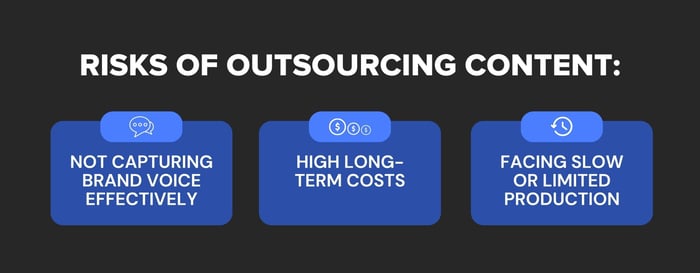
When you work with a third-party to create your content, you run the risk of not capturing your brand's voice or expertise effectively, facing slow or limited production due to conflicting schedules or contract terms, and even high long-term costs.

Ok, so, can you divide and conquer content among your teammates then? No sir. 

Content is a full-time job. It takes time to plan, write, edit, publish, distribute, and analyze. It can't simply tacked onto the workload of an existing team member or members. When you add content to an already full plate of responsibilities, it's often the first thing to fall off the back burner and not get done.

Someone needs to be in charge of making sure this doesn't happen and enabled to make sure it doesn't. That's your content manager. 

why-content-manager3

Over the last decade, we’ve empowered hundreds of companies to stop relying on third-parties to create their content and see better marketing sales results by creating and executing on their strategy in-house with a content manager. 

Not only will this content manager ensure content is published regularly without fail, but they will also:

  • Obsess over creating high-quality content that accurately reflects the true tone and spirit of your brand.

  • Interview your company’s subject matter experts and capture their insights (and your company’s unique perspective) and integrate it into your content.

  • Work directly with the sales team and help them integrate content into the sales process, allowing them to close more deals faster.

  • Monitor your organic search performance and routinely improve ranking and traffic results.

  • Update existing content to ensure it remains relevant and effective.

  • Oversee the other areas of your sales and marketing initiatives where content is critical (including your website, email, and social media).

We've also seen time and again that there's a direct link between marketing gains and hiring an in-house content manager. 

IMPACT client West Roofing Systems is a perfect example — they hired an in-house content manager, began publishing articles answering their buyers' questions regularly, and saw a 1,200% increase in website traffic and an 828% jump in lead conversions (among other amazing results).

None of this was possible before they had someone spearheading their content strategy and creation. 

What to look for in a content manager

why-you-need-content-manager5

Like any new hire, there are never guarantees, but over the years, we've certainly learned a lot about what qualities to look for in a content manager for your company.

Of course there are several hard, tactical skills needed to accomplish the tasks we discussed, but at a high level you should look for a content manager who:

  • Is a passionate and gifted writer, editor, and storyteller.
  • Is creative and thinks outside of the box.
  • Is a clear and effective communicator in general (whether it be written, verbal, visual, or otherwise).
  • Is organized, detail-oriented, and can stick to a deadline.
  • Can give and receive feedback effectively.
  • Can collaborate and build rapport with others (i.e. teammates, subject matter experts, clients).
  • Is a lifelong learner. They are enthusiastic about learning and researching subject matter they may not be familiar with.
  • Is a teacher at their core. They are passionate about helping and educating others (i.e. buyers and peers) through their work. 

While you may find many candidates who check the box on hard skills, these soft skills are the traits that will make the most impact on their performance long-term.

Industry experience not required 

why-content-manager4

Ultimately, for this role, you need someone who is a powerful writer and communicator. 

If you can find someone in your industry with the passion and skills to write, great, but truth is, in many industries where writing less prominent — that may not be super common. 

For that reason: Industry knowledge is a bonus for a content manager, not a requirement. 

When someone is a trained writer and content creator, they have the research and interview skills needed to create quality work. They don't need to have first-hand experience to get the job done.

You can easily turn a writer into an expert in your business, but it's much harder to turn an expert into a writer. 

How to hire the right content manager

As easy as it is to see the value of a content manager, hiring one may not be quite as simple. Let's break down the hiring process.

Listing the job

To start your journey of hiring a content manager for your company, first download our free content manager job description template and customize it for your organization.

As you're making edits, keep in mind the traits we outlined earlier and any unique traits or expectations you want a candidate to know.

For example, will you need to them to film and edit videos in addition to writing articles? Will you need them to manage a team of writers and prioritize editing?

Have all of this information handy so you can set realistic expectations and attract quality candidates

Interviewing

Once you have a pipeline full of great potential hires, it's time to interview.

One of the most successful clients and content managers I've worked with, Krista Kotrla, formerly of Block Imaging, offered great advice on this step of the hiring process.

Some interview questions she always asks a content manager include:

  • What’s been your favorite job so far and why?
  • What job has been your least favorite and why?
  • Can you describe a time that you failed at something and what you learned from going through that experience?
  • What work accomplishment are you most proud of?
  • Thinking back on your previous managers, can you describe a little bit about your favorite boss? And worst boss? How did you handle that?
  • Can you tell me about a project you’ve managed before when you had to motivate people around an idea?
  • Based on our personalities, we have the potential of being misunderstood in different ways. When someone misreads you, what is most common? For example — is there a misread that you have to guard against?
  • From what you know about this role and our team, what do you think the biggest challenge will be?
  • Do you prefer operating with a proven process or figuring out a process as you go?
  • What are you known for? If I were to ask your current team members about you, what common themes or word would they use to describe you?
  • Who do you look to as role models and why? (note: it doesn’t matter who they admire… it only matters why they admire those people)
  • Can you describe a time when you had to teach someone something? How did you creatively help them understand the new concept?
  • Any questions for me? (note: if they have no questions throughout the process then that is potentially a red flag. I would think a good content manager would be great at asking questions throughout.)

All of these questions are open-ended and help dive deeper into how they handle conflict or challenges and what they will bring to the table as a content manager.

Situation activity

After this interview, it's important to evaluate their skills, this should not only include a writing assignment, but conducting a subject matter expert interview.

You can see step-by-step details on how to go about this in our article: "How to Evaluate Interview Skills in a Potential Content Manager."

Your content is only as good as the person behind it

At the end of the day, not just anyone can be a content manager. You can't simply task someone with the job of publishing articles and writing emails and landing pages and expect to get good quality results.

You need someone who is passionate about the craft of content and what it can do for a business when done well. 

If you hire for the right skills — those we outline in this article — your content manager will quickly accumulate the knowledge and expertise you want them to possess simply by doing their job.

They'll become unstoppable.

I'm not saying finding this star will be easy, but it will be worth the process.

Need more guidance on how to find a high-quality, effective content manager for your organization? Check out our free course, "How to Hire a Content Manager" in IMPACT+. 


Author: msheridan@impactbnd.com (Marcus Sheridan)

* This article was originally published here
How to make $1000/day with affiliate marketing 24/7 - start here!


Wednesday, April 12, 2023

Should Your Demand Gen Strategy Change in a Slumping Economy?

Let’s say there are 10,000 potential customers out there for your business. 

How many of them are bottom-of-the-funnel, ready to buy right now? 

For most businesses, it’s only a handful. Let’s say only 5% are currently in the market and ready to buy. The other 95% might buy in a year, or they might not even know your company or solution exists yet. 

That’s where demand gen comes in.

Demand generation seeks to make your solution highly visible to everyone who experiences the problem you solve — whether they’re ready to buy or not. That way, when they are ready to buy, they'll already know who you are and have encountered a number of touchpoints with your brand.

what-is-demand-gen-1

But in a slumping economy, should you still invest in generating demand among those far-off, distant customers?

If you’re interested in still being in business after those 5% buy, the answer is yes. And I’ll explain why below. First, let’s define some terms.

First off, what is ‘demand generation’?

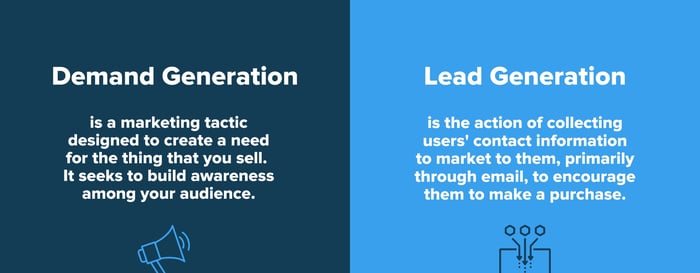
Demand generation is one of those modern marketing terms that gets overused and misused so much that it can start to lose its meaning. (Demand gen often gets confused with lead generation, which is simply the action of collecting user contact information to market to them.)

The way we define it at IMPACT is this: Demand generation is the act of proactively educating a target audience about the problems you solve.

Now, some of this audience might not know anything about you or what you sell. Some of them might not even know they have a problem yet. 

But that’s why you’re doing what you’re doing: You’re generating demand. You’re presenting your product or service as a solution to a problem they may or may not realize they’re facing.

Demand gen is your tool for engaging those 95% of potential buyers not looking to buy right now. 

Why 'discovery platforms' are key to successful demand gen

Demand generation is closely tied to social media networks because these are discovery platforms where people are in the mindset to discover new products, services, ideas, concepts, and frameworks.

People are on social sites to scroll through and discover new content. That’s the reason they’re there. 

They get served content the algorithms think they’ll like.

discovery-platforms

This is a different mindset from how people use tools like Google.  They’re not hunting for specific information; they’re open to consuming whatever is served — even if it does come with an incredibly low consideration span.

Demand gen is not confined to social media, however. It can happen on podcasts, YouTube, and in-person events, to name a few — because these are also places where discovery happens. 

But the idea is that you’re putting your brand in a place where people are hanging out (virtually or physically) and have a mindset that’s open to discovery.

Should you change your demand gen tactics in a downturn?

So, when the economy falters and a downturn or recession seems to be on the horizon, should you change your demand gen tactics?

No.

At least, not really. 

Let me explain: In good times and bad, you need to invest in the future of your business. 

You need to start building inroads with that 95% of potential customers who are not ready to buy from you. You need to establish your brand as a trustworthy one so that they see you as a viable option when they are ready to buy.

But that doesn’t mean you can completely ignore the economic climate. 

Listen to your buyers, not the news

Economic changes are going to affect the marketplace, and you shouldn’t ignore them, but rather than reading the news or the stock report, listen to your buyers so you can stay top of mind for them: 

  • Monitor where they hang out. The social media landscape is always changing. (Does anybody remember a few years ago when Clubhouse was a big thing? Remember when no one took TikTok seriously?) On top of marketplace volatility, remember the fact that personal habits are always more likely to change during uncertainty. Talk with your customers and watch where your potential buyers spend their time so you can meet them there. 
  • Be a (non-salesy) part of conversations. Social media is not the place for cold sales pitches. And you don’t deserve anyone's attention, it must be earned. Creating content and being part of the community is the price of admission. 
  • Pay close attention to how they buy. The pandemic ushered in huge changes in consumer spending, some of which no one anticipated. Economic conditions will impact the way people use their money. Always review and be open to changing the way you package and present your offerings.

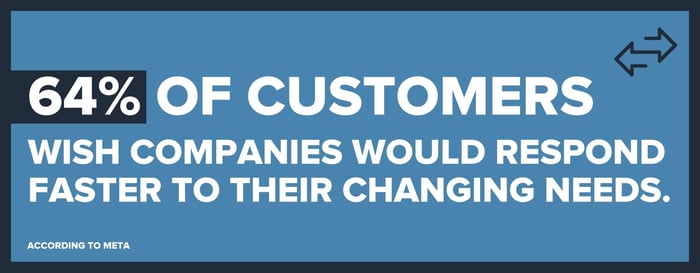
According to research from Meta, 64% of customers wish companies would respond faster to their changing needs.

changing-customers

If you want to be the company that bucks this trend, start listening to your buyers. They’ll tell you exactly what they want and how they want to buy it. No matter what the economic outlook says.

Demand gen in a slumping economy: Start, Stop, Keep

As we continue to experience economic uncertainty, we should lean in to listening channels so we can get a better idea of what our buyers want. What we should not do, however, is stop investing in demand generation.

If you’re feeling unnerved by the up and down economy, follow sound advice for your demand gen efforts so you can adapt and stay the course at the same time. 

Here’s what you should start, stop, and keep doing. 

START: Double-down on your “workhorse” channel 

Some platforms and networks are going to work better, based on what you sell and who you sell it to. Find your workhorse channel and put more of your eggs in that basket.

marketing-efforts-platform

I’m not saying you should ignore other channels, but we should all know which ones pay the bills. Instead of trying to be great on five platforms, focus on the one or two where your audience spends the most time. Maybe it’s LinkedIn. Maybe it’s YouTube Shorts and TikTok. Maybe it’s blogging or podcasting.

If you sell auto parts, you probably don’t need to focus on LinkedIn. If you sell financial consulting, you probably don’t need to be on Pinterest. Get great at your most lucrative channel first so you don’t spread yourself too thin and fail to deliver results.

STOP: Trying to do too much at once

Often we work with businesses that have stood on the sidelines on social media for far too long. Now all of a sudden, they’re ready to get in the game, but rather than listening, learning, and being strategic, they jump in and get started on Facebook, Twitter, TikTok, Instagram, and LinkedIn, and YouTube all at the same time.

Then, after 90 days, they think, “why did nothing work?” 

Unless you’ve got a huge marketing team that has the means to deploy a team to each platform, that’s just not a realistic approach. 

demand-gen-platforms

Put your efforts into the places where it’s going to create the most sales opportunities. Determine where your buyers spend their time online, but be smart about it.

Is your audience on Instagram? Probably. But are they in a mindset to learn about tax attorney services while they’re there? Probably not. Try LinkedIn. 

KEEP: Investing in marketing

Marketing is about the future. Your future. If you’re planning on being in business after next month, the work of marketing will never be finished. 

Experts say that “coke” (as in Coca-Cola) is the second most recognized word on Earth, after "OK."

Still, Coca-Cola spent $4.7 billion on global marketing last year

coca-cola-advertising

An economic downturn is no time to take your chips off the table. Sure, you might have a tighter budget, but marketing is not a luxury that gets cut to balance your books. In fact, your competitors are likely to cut their marketing budget in a downturn. Opportunities to overtake them this easily don’t come around very often.

Marketing is a vital investment in your future. Make sure you treat it as such. 

Building your future with demand gen

Think again about the 10,000 potential customers out there who may someday buy from you. Only a tiny sliver is ready to buy right now. To keep your pipeline full in the future, you need to put in the effort today to create touchpoints and built trust with those future buyers.

Make them aware of their problems today and you will become their future solution.


Author: nbennett@impactbnd.com (Nick Bennett)

* This article was originally published here
How to make $1000/day with affiliate marketing 24/7 - start here!


Monday, April 10, 2023

Demand Generation vs. Lead Generation: What’s the Difference?

If you're a digital marketer, it's likely you've heard the terms “demand generation” and “lead generation” thrown around — often even interchangeably.

It's gotten to the point where some are quick to say there is no difference between the two terms, but there is. 

On the surface, both concepts entail building a relationship with a prospect and bringing them through the sales cycle.

The difference is that demand generation is about building awareness and interest, while lead generation is about driving someone toward sales.

Whether you’re a seasoned marketer or just starting out, you may be trying to figure out what strategy is right for your business.

But let's take a step back.

Let's start with the basics of demand generation and lead generation and how they can be used on their own, then dive into how powerful they can be together. 

What is demand generation?

Demand generation is all about building awareness and "want." Generating demand means making what you offer known among the people who need it and turning that awareness into excitement and interest. 

Demand generation is a critical part of any marketing strategy.

It's impact is most heavily seen in the early stages of the buyer's journey or when launching new products or services, where it can:

  • Help people articulate their problems
  • Help people discover your solution as a remedy for those problems

Overall, demand generation is a complex and potentially long process aimed at the specific goal of making people know who you are.

Just as with other marketing tactics, this begins with understanding who your buyers are and where they exist online. You want to know what problems and pain points they have, and how your company can help solve them.


When your content then speaks to these needs, you begin to generate demand for your products or services.

demand-gen-vs-lead-gen1

So what can demand generation look like?

One of the most powerful channels for generating demand today is social media.

Social media platforms like Facebook, LinkedIn, and Instagram are where your audience is already having conversations. They're asking questions, expressing frustrations, and looking for recommendations. 

You can create generate demand by engaging in these conversations. This may be through direct responses or simply sharing helpful content. 

Speak to the pains and aspirations of your customers. Show that you understand the challenges and can help solve them. 

When you engage in these conversations, you start to showcase that you're a player in that space.

You can begin to create awareness of your business and build trust and relationships with prospects — most of whom are not ready to buy at any given point in time. Demand gen is primarily focused on those who could eventually become customers down the line. 

What is lead generation?

lead-gen-definition

If demand generation is creating the want or need for your product or service, lead generation is the act of capturing existing demand in the market and getting those people into your marketing/sales cycle. 

With lead generation, you’re creating content or marketing campaigns designed to capture a prospect’s contact information so you can market to them.

So what can lead generation look like?

You can generate leads through things like gated content, newsletter sign-ups, paid ads, promotions, subscriptions, and other offerings that exchange something of value for audience contact information.

For example, say you're looking to generate more business for a particular service your business offers.

One traditional way to generate leads could be to create an educational guide that gives potential buyers valuable insights and information in exchange for their email addresses or other contact information.

With this, you give people an avenue to express interest in what you have to offer, provide them with value they can appreciate, and also enable your marketing or sales team to reach out to them in the future. 

To build awareness of that piece of gated content, you can place calls-to-action throughout your site or on other pieces of content, or boost your reach on social media.

Which is right for my business?

Truthfully, all businesses need both demand generation and lead generation, but it's possible both may not need active attention at the same time. 

To know what you need right now, examine your data. 

Marketers need to work closely with their salespeople to really understand why and how people buy from you.

Each month, look at all your closed-won deals and trace them back to their point of first contact.

What journey did they take that brought them to purchase? Did they convert on a piece of gated content, enter a nurture series, and eventually make a purchase when you sent them a special offer?

If so, thank your lead generation strategy.

Or, were they impressed by your social media thought leadership, eventually reaching out to speak to your sales team when they were ready?

That’s pure demand gen. 

What you see in your data will help you decide where to put your efforts for the time being. 

The best strategies, however, involve integration and alignment between your demand generation and lead generation efforts.

Demand generation and lead generation complement each other

demand-gen-vs-lead-gen2

Your buyers are looking for information.

Depending on where they are in their buyer’s journey, that information may need to come in a different form. This calls for a different delivery approach from your business — demand generation or lead generation. 

demand-gen-vs-lead-gen-definition

Early on in their buyer’s journey, a prospect might just be looking to understand their problem: Why can’t my team at work stay organized? Or Why does my basement get flooded every spring? 

These early-stage buyers are prime for demand generation tactics.

Social media content that speaks to these concerns can begin to build awareness for the solution you sell — helping a prospect go from "problem-aware" to "solution aware."

Then, as these customers start to compare options, they are better suited for lead generation tactics that can capture their contact information so they can enter a nurture series or get passed along to your sales team.  

Say as part of your marketing strategy you started a weekly YouTube series focused on your area of expertise. 

You know this series will hit on problems your ideal customer might be faced with, so the content will be relevant and helpful to them.

The series itself is designed to show your expertise and therefore let that viewer know you can help them. Now you’ve attracted them to your brand and started to build trust. They become a subscriber.

Within the videos or in the description, you might include additional resources that you’ve developed, such as ebooks, articles, or guides.

With this, you've given that user a reason to come to your website and learn more, increasing the trust and building the relationship. 

If you notice, you haven’t yet asked for contact information.

Within the pages you’re leading them to from YouTube, you can start to include calls-to-action for things like gated content where the information is more exclusive, detailed, and valuable.

By attracting the customer and starting to build trust with them first, you are now in a better position to capture their contact information. After consuming so much of your content, it's also safe to assume they will be a more qualified lead. 

This is demand generation and lead generation working in tandem. You’re creating demand and generating leads with a seamless experience driven by helpful and timely content. 

The best strategy for growing your business

While there are certainly exceptions, we’ve found demand generation is particularly well-suited to B2B companies.

They initiate social media conversations that speak to the pain points of their target audience. Over time, they build a relationship with this audience and those social media followers become high-quality leads. 

For B2C companies, lead generation can play a bigger role. Building a vast database of leads allows them to send promotional material, newsletters, and other content that can prompt a sale.  

For many companies, however, both lead generation and demand generation figure into their marketing strategies, and the line between the two can be blurry.

If you're ever in doubt as to how to use them, look at your closed-won deals. See the steps they took to buy from you. Then, determine what you need to do to replicate that experience for more and more potential customers. 

This will help you determine if you need demand generation, lead generation — or both!

Always remember that the right digital marketing strategy can guide your business to exponential growth, but the wrong one will lead to stagnation.

At IMPACT, we give businesses the training, coaching, and guidance they need to ensure long-term success. If you want to learn more, take our free course: Investing in Incredible Digital Sales and Marketing Results. You'll be glad you did. 


Author: kharold@impactbnd.com (Kristen Harold)

* This article was originally published here
How to make $1000/day with affiliate marketing 24/7 - start here!


Thursday, April 6, 2023

Need to Set up a Killer Office Video Studio on a Beginner Budget? Here's What to Buy

With the vast amount of equipment options, cameras, lights, and accessories, the task of setting up a video studio in your office can be intimidating. Even more so if you’re on a tight budget.

But is tight budget going to limit my success? And although there are many options, could those options be filtered using some basic criteria?

The answer, I’m delighted to say are, no, your budget will not define your success and yes, I’m going to give you all the criteria you need to confidently set up this studio.

But first, let’s address two important questions that are likely at the top of your list.

Can I use a smartphone setup?

Yes, you could, however, I don’t recommend it, at least if you have the means to purchase and operate stand-alone digital cameras.

Although smartphone cameras are getting better every day, it is still advantageous to use proper cameras for your marketing/sales videos due to the flexibility in equipment and range in quality.

Should I look for used equipment?

Absolutely. Half of my video equipment is second-hand and I’ve saved thousands of dollars this way.

In particular, I dig through the used section on sites like B&H Photo and Video and Adorama to look for deals on a regular basis. There is an element of quality control on both websites that eliminate my concern of buying used equipment that is damaged.

Now, let’s get to it. I’ve broken this article into the five key elements you’ll need for your studio:

  • Backdrop
  • Lighting
  • Tripods
  • Camera
  • Audio

Let's cover each one and look at some inexpensive options for your space.

Backdrop:

Let’s start by removing one of the most common obstacles: What to shoot in front of.

The fact is, not everybody has a camera-ready office or place to record videos. Not to mention, if your goal is to actually set up a studio, you’ll likely be using a room or space that’s undesirable for other functions; it’s just logical when you’re just getting started.

There are still plenty of options, though, two of which I’d like to highlight for a beginner budget.

The main considerations when it comes to your backdrop are :

  • The size of your space
  • How you want to represent your office environment

Here are two of my top recommendations with these in mind:

1. Background System ($180)

office-video-studio-backdrop

If you’re setting up the studio in a cramped space, you likely won’t have room for a full set, which makes a background system likely the best option.

These are a good, inexpensive option because they are easy to set up and provide a clean, solid background for your subject. Additionally, a flat white or flat black color will help the skin tones and clothing stand out.

Although you need a good bit of room for good green screen lighting, you can light a black or white background pretty easily with limited space and lighting.

2. Decorated Set

If you want a unique, creative environment as your backdrop then perhaps a trip to IKEA or other inexpensive furniture options is a good idea.

For less than a thousand dollars, you could decorate your studio with modern furniture, simulating a real workspace, even if the rest of your office looks nothing like it.

(Note: I hope IKEA appreciates this plug.)

Lighting:

Purchasing lighting can be a tricky process, especially if you’re new to videography. Lighting sets come in a nearly infinite variety of options and price ranges and this is one area you don’t want to be cheap in. It can only produce a cheap result.

Two main considerations I always make when it comes to lighting are portability and flexibility in terms of output. In other words, if possible, it’s nice to have variable brightness and color temperature settings like those below:

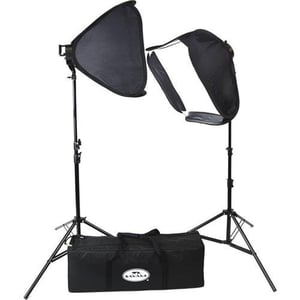
1. SAVAGE LED Portrait Kit with Dimmable LEDS and Softboxes ($180)

office-video-studio-lighting1

If you don’t plan on moving your equipment around on a regular basis, then some basic studio lights like this will be more than adequate. The addition of softboxes will diffuse the light output, which helps eliminate harsh shadows and glares.

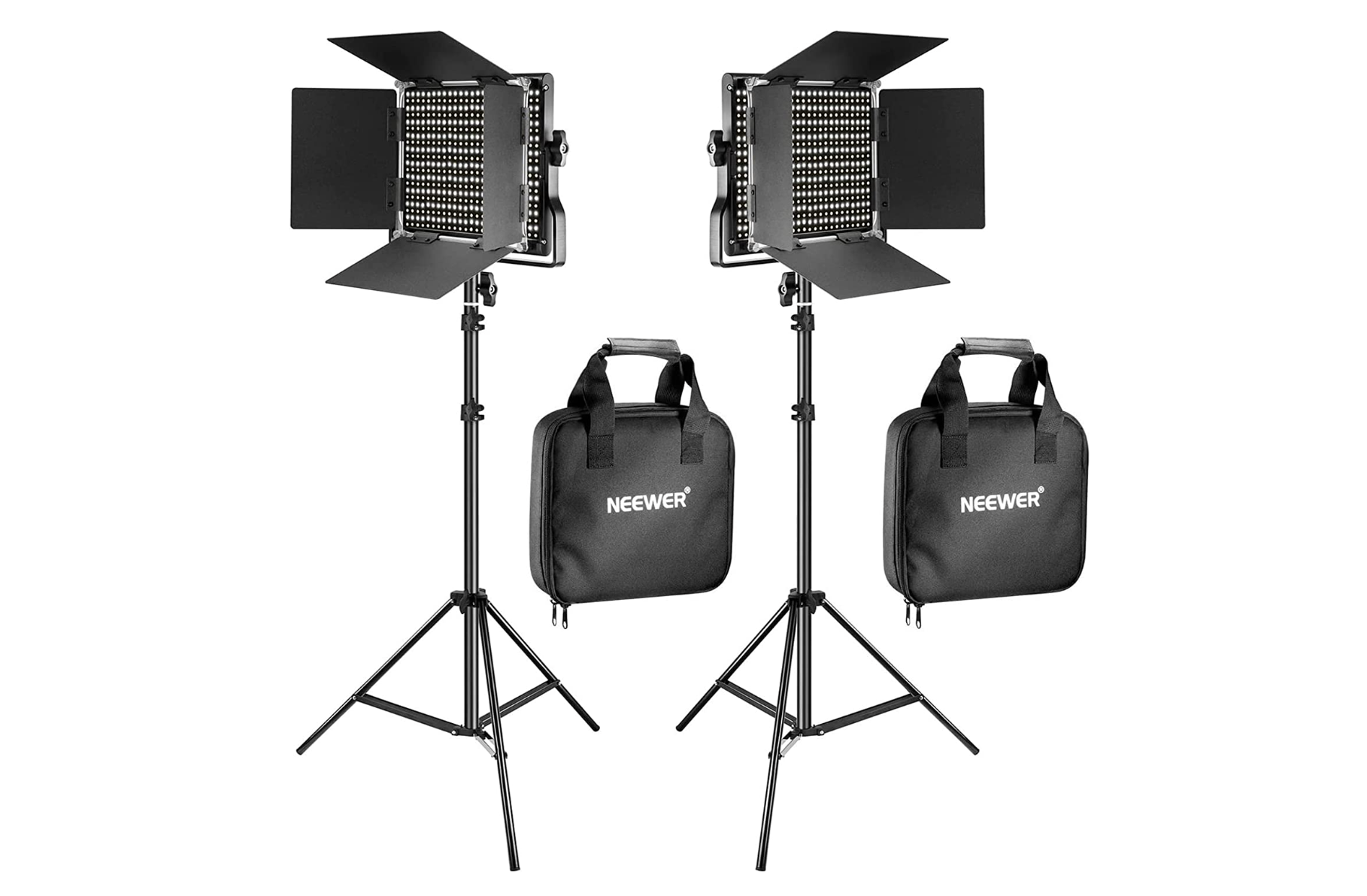
2. NEEWER 2 Pack Bi Color 660 LED Video Light and Stand Kit ($210)

LED lights

If you plan to shoot in a variety of locations, even without subject or talent, having portable, battery power lights like these is going to be valuable.

Additionally, it’s important to have adjustable bi-color lights because you will need cooler or warmer colors in different environments.

In addition to lighting sources like the ones listed above, you should consider diffusion panel(s) ($80) to diffuse a light source and eliminate harsh shadows and glares. A diffusion panel is an inexpensive, portable tool to have around and will work with any sort of light source.

Tripods:

Unless you’re shooting your videos handheld, you’ll need to get a tripod for your camera.

While there are many inexpensive options out there, I generally discourage going with the cheapest option.

Price aside, you should really take the following into consideration when evaluating tripods:

  • Fluidity of the tripod head: If you’re using pan or tilt movements (up and down, side to side) in your footage, you want them to be smooth. Otherwise, you’re going to have shaky, unprofessional videos.
  • Quality of the build: There are a lot of moving and locking parts on a tripod. If you opt for an inferior product, these parts can get worn out and will need to be replaced, adding to your expense.

Considering how often you’ll be using your tripod, it’s an important purchase.

These are a couple of my top picks for tripods based on our criteria above plus overall function, portability, and price.

1. Benro Aero 4 Travel Angel Video Tripod Kit ($290)

office-video-studio-tripod1

If portability is a major factor for you, this is a very lightweight, compact option. Plus, it still wields a great fluid head for the price, sturdy locking hardware, and a bubble level.

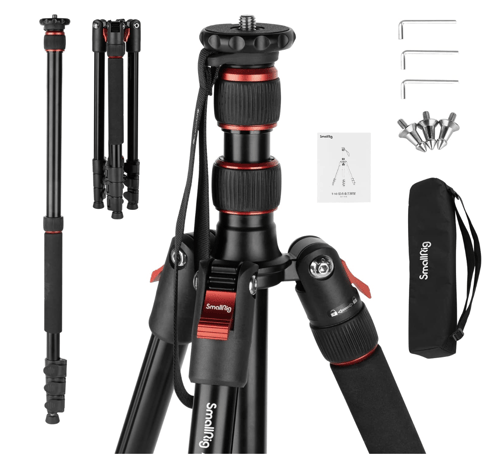
2. SmallRig 68" Camera Tripod, Foldable Aluminum Tripod & Monopod ($60)

Screenshot 2023-02-27 at 1.59.59 PM

Although it doesn’t look like much, this is actually a great budget option. It’s actually my personal studio tripod. The twin legs and middle spreader help keep the tripod from getting knocked over with heavy equipment, and the professional video fluid head is superb.

Camera:

No surprise here; This decision is likely the most important decision you’ll make when it comes to your studio. Even under the best lighting, with the greatest set, and with clear, beautiful audio poor quality footage will likely not represent your brand very well.

As with any other purchase, you want to find the best value for your needs and in this instance, that really comes down to image quality and easy-of-use (usually based on auto-focus capabilities).

This is going to ensure that your finished videos look high quality even after intense edits and also remain crisp and focused on your subject.

The two options below are great for a beginner budget, can keep their value if you decide to upgrade later, and will give you a reasonable starting point in terms of picture quality.

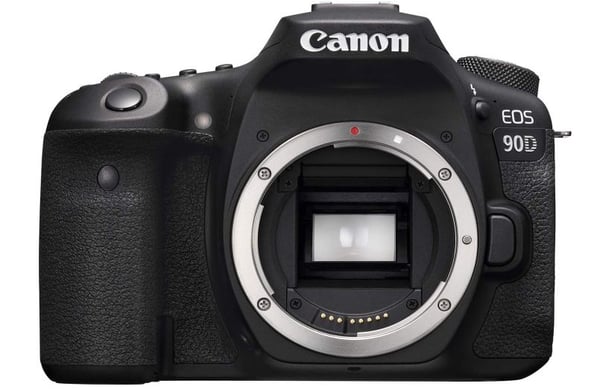
1. Canon EOS 90D Digital SLR Camera ($1,200)

Canon

Starting out at around $1200, I stand by this Canon camera because of its Dual Pixel autofocus System which delivers quick and accurate live focus tracking, ensuring your subject remains in focus throughout your videos.

Additionally, features like image stabilization and a 32.5-megapixel sensor will make for a crisp, clean image, giving you a professional look.

You'll need a lens, too. This option from Canon is a good workhorse at $880.

2. SONY a7 III Full-Frame Mirrorless Interchangeable-Lens Camera ($2,000)

Sony

This is a truly powerful mirrorless camera option for a company that is beginning its video journey.

The autofocus system is extremely fast and has almost three times the amount of focus points as the Canon listed above, even in low light conditions.

Picture quality is light years ahead, offering 4k resolution and a high dynamic range. Without getting too nerdy, this camera offers an incredibly sharp image.

This option is also camera-only, so you'll need a lens as well. I recommend this Sigma 24-70mm zoom option, which will cost another $1,050. But you could also go with a cheaper option like this option for $500.

Audio:

Audio is a very important part of this equation. There is nothing more distracting than audio riddled with hissing or buzzing or even worse, audio that sounds like it was recorded through a tin can.

If you’re on a budget, you can simplify your audio hardware and still sound great.

Your main concerns should be:

  • The acoustics of the environment: If the room is equipped with noisy equipment or other background noise, that will be a factor. Likewise, if the room has an echo, you’ll need an option that will eliminate that.
  • The number of subjects you are shooting: If you’re shooting with one subject, that eliminates the need for multiple microphones or microphones that will pick up more dialogue.

It’s important to also capture your audio on a separate recording device from your DSLR camera.

These cameras tend to produce static noise that will affect your audio recording. The two options we’re recommending below are field recorder and microphone combos, meaning the microphone pack IS an external recorder.

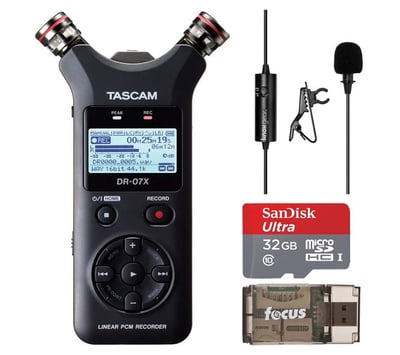
1. Tascam DR-07X Stereo Handheld Digital Audio Recorder ($150)

Mic

If you’re filming in a busy area, with lots of background noise, I would recommend using a lavalier microphone, which is a small clip-on lapel mic that is commonly used by public speakers.

This way you are picking up your subject's dialogue very close to the source. Similarly, if you’re shooting in a large room or with poor acoustics, this will cut down on echos and factors.

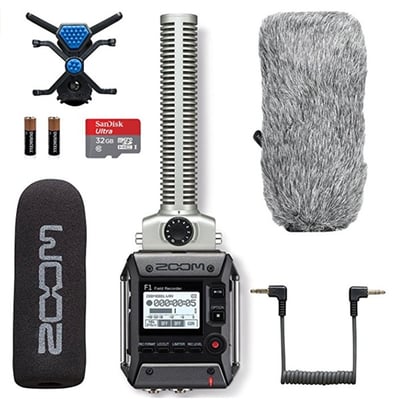
2. Zoom F1-SP Field Recorder & Shotgun Microphone Bundle ($250)

office-video-studio-audio1

If you have more than one subject, you’ll need multiple lavaliers or a shotgun microphone that will capture multiple voices in a given area.

When it comes to audio specifically for your in-office studio, you should also consider looking into acoustic panels like these from Amazon ($17). 

These are great for rooms with poor acoustics. In other words, if the sound is bouncing off of many hard surfaces or if the room is somewhat big, acoustic panels absorb and dampen sound and eliminate echoes.

Why a beginner budget shouldn’t stop you

Like any investment, it’s important to clearly identify your needs with an office studio to determine where you can save a bit and where you should splurge.

Using the criteria I’ve mentioned in this article, you can begin to narrow down which items these are.

As you look around for equipment, thoroughly check reviews and testimonials from real consumers — but, even if an item has an abundance of five-star reviews, it’s worth looking at the one- and two-star reviews to see what drawbacks people have come up with. Oftentimes, you’ll find nuanced issues in the lesser quality reviews.

Overall, my advice is this: don’t jump into your studio purchases mindlessly. Like everything in your marketing approach it strategically with value in mind.


Author: zbasner@impactbnd.com (Zach Basner)

* This article was originally published here
How to make $1000/day with affiliate marketing 24/7 - start here!