Some insights into how businesses can make use of the latest AI tools.
* This article was originally published here
Some insights into how businesses can make use of the latest AI tools.
Inbound marketing was supposed to be a marketer’s dream come true.
It was supposed to be easy! A simple, repeatable approach to marketing that supercharged your lead generation — all for the low-low cost of the time, energy, and effort it took for you to update your website.
But inbound marketing expectations don’t always match the cold harsh reality of today’s digital marketing landscape.
You expected to follow a simple four-step plan:
But the reality of the situation is:
To put it in very blunt terms: Your inbound leads are garbage, and you’re not sure where you went wrong.
To put it simply, a garbage inbound marketing lead is a lead you have no shot at closing or converting into an actual customer.
These leads might be “fluffy” or top-of-funnel.
Fluffy leads are the internet equivalent of a window shopper on a touristy street. Someone who loves to look around and browse your products. They might show some initial interest, but ultimately, they’re probably never going to be a major buyer.
If you’re in the services industry, a trashy lead might be that lead that turns into a bad-fit client — if they ever buy at all. They seem qualified at the start, but if and when they do convert, they become a nightmare to deal with and ultimately churn within six months.
Bottom line: If a lead isn’t a real business prospect and doesn’t have the potential to turn into an ideal customer, they’re not much use to you or your sales team.
And if your inbound marketing strategy isn’t driving traffic, (qualified) leads, and sales, something is definitely wrong with your approach.
Content strategist Liz Murphy defines inbound marketing as “a digital marketing strategy in which a business organically earns the attention of their ideal buyers at different stages of their purchasing journey.”
In case the bold/italics/underlined font wasn’t enough of a hint, the key word in that definition is “earns."
Earning an ideal buyer’s attention (and trust) is the name of the digital marketing game.
From a digital marketing perspective, earning attention means driving traffic to your website. Once prospects have found your website, you need to build trust with them so that they wouldn’t dream of going anywhere else to purchase your product, good, or service.
But... to start applying this approach to your inbound marketing efforts, you first need to understand why your current leads stink and what you can do to fix it.
Spoiler alert: Most inbound leads aren’t looking for a hard sell.
They’re real people on the internet doing research to avoid talking to a salesperson. So take that into consideration when crafting your inbound experience.
If your inbound lead is still in the research phase of their big purchase, don’t rush the process! Create content to aid their movement through the buyer’s journey.
At this point, they're looking for education. Help them learn about what they're buying so they feel comfortable moving forward. This way, you're not forcing them into a sales conversation they're not ready for.
As your sales team learns to take a slightly more gentle approach, they’ll soon realize that inbound, educational content is the best way to help these top-of-funnel leads self-discover that your solution is the perfect fit for their pain points.
Remember: you’re trying to earn (and more importantly maintain) their attention. What better way to keep them engaged than by answering all of their questions via carefully curated content before they truly enter the sales conversation?
Sometimes your leads may not be good because you don’t fully understand your ideal customer: What they want, think, and are concerned about.
This is another instance where it’s not the lead’s fault that they’re not a good fit for your business, but your fault for not understanding who you should be selling to in the first place.
If you don’t know who your ideal customer is, it’s time to break out that whiteboard and start listing what you know about your buyers
Ask yourself: what are their pain points, what are their goals, and how can my business help them achieve those goals?
Once you have those traits defined, it’s much easier to produce content that attracts that audience and converts qualified leads.
If you get stuck, use ChatGPT as a discussion partner. Put in the information you know, and then ask the tool to list common attributes. Then, ask it to dive deeper into common questions, fears, and concerns.
Once you understand your ideal customer, you need to ask yourself: Does my content actually address their needs? Am I tackling what they need to know to feel comfortable making a purchase?
If your content is off target, that might be why your lead quality stinks. It's like you’re fishing with the wrong bait!
Go back to the drawing board, ideally during a revenue team meeting (more on that shortly) to ensure that all of the inbound content you produce is meeting these essential needs.
The best way to ensure you’re not missing out on some crucial concerns is to start collecting common questions that your sales team encounters in the early stages of the sales process.
If nine out of ten leads all kick off the conversation with the same three questions, maybe it’s time to write a killer blog article addressing these concerns. Don't stop there: create a video as well. Spin up some social posts and an infographic. Then, give this content to your sales team so they can share it with future prospects.
The earlier you address your buyer’s common concerns, challenges, and questions, the quicker you’ll build trust and be able to move on to the later stages of the sales funnel!
I hear it all the time: “These inbound leads aren’t ready for sales! They’re not even sure what they’re looking for!”
Fluffy leads aren’t a sign of failure. They’re a sign that you (and your inbound content) have more work to do to get in front of the right eyeballs.
Attracting the right audience means understanding where your most qualified leads hang out on the internet. Rather than waiting for those leads to find your website, sometimes you need to help them along by meeting them where they’re at.
When I worked at a former HRTech SaaS startup in the early 2010s, I figured out pretty quickly that HR professionals loved consuming content on Twitter and LinkedIn. The best way to generate brand awareness for my company was to jump into the conversation and be really proactive in those spaces.
So I logged on for weekly Twitter chats hosted by TalentCulture and the Society for Human Resource Management (SHRM), and joined some key groups on LinkedIn.
By sharing some helpful tips and relevant content through these other mediums, I made personal connections and helped these qualified leads discover my website.
So, get creative. Pay attention to where your customers actually are and meet them there with content they want to see.
If you’re wondering: “How can I tell if my inbound content is engineered to drive qualified leads?” You really should be asking yourself: “When was the last time my sales and marketing team got together to talk about content?” or "When was the last time I interviewed a customer?"
In order to produce inbound content that really drives qualified leads, your sales and marketing teams need to be fully aligned.
These two teams (together we call them "the revenue team") need to be meeting regularly to ensure that what's getting published is the most relevant content.
This goes beyond the sales reps sending over a basic list of commonly asked questions. You need to build a true partnership between these two departments.
If you cut the sales team out of the content creation process, you’ll inevitably end up with fluffy, watered-down content that’s not addressing the core needs of the customer, which inevitably produces fluffy, unqualified leads.
🔎 Related: How to run a revenue team meeting (+example agendas)
All in all, all of these tips come back to one thing — building your prospect's trust in you.
No one wants to do business with someone they don't trust to deliver on their promises. Prove to prospects that you know what you're talking about. Prove that you'll meet their expectations for value and performance.
Your marketing can do this. All of the content and experiences you create should be done so with trust in mind.
If you’ve been suffering from a serious case of trashy inbound leads, you finally know the fix!
With these simple steps in mind, you too can drive high-quality traffic, leads, and sales with your inbound content.
And if you're stuck, subscribe to our Endless Customers podcast! We drop two episodes every week that focus on sales, marketing, AI, and communication.

Here's how you can align with Instagram's new algorithmic focus.
Another new AI feature coming to a Meta app?
Insights into how creators are driving success in the app.
Threads growth has slowed, but it's still rising as a potential rival for X.
If you’re a business owner or lead a sales or marketing team, chances are you already know that video is the present and future of marketing.
Many well-meaning companies turn to third-party video production agencies to help them create marketing videos, thinking it’s too expensive or complicated to produce video in-house. Filming and editing high-quality videos can be intimidating, and you might not have the tools or skills to do so.
If this sounds like something you’ve struggled to get past with your team, you’re certainly not alone — but before you hire that agency, you should consider the potential disadvantages of doing so.
IMPACT has worked with hundreds of businesses to help them bring video creation in-house. And, as a result, our clients have seen incredible inbound marketing results.
We’ve also worked with third parties, so we often get asked why producing video via an agency is such a bad idea.
In this article, we’re going to explain the answer to this question, including:
This way, as you create more video content to grow your business, you know what to expect and can get ahead of the game.
Here’s what to know.
While most businesses that hire a video production agency imagine the agency will take care of everything and make the video production process a breeze, this isn’t typically the case.
Though there are video marketing agencies out there that can create high-quality work, we’ve found that there are specific issues that often arise in the process that make insourcing a better option.
Here’s what to consider before you opt for an outsourced video marketing campaign.
This is something you may run into with a production company of any size.
There’s an estimated timeframe from when a client makes initial contact with a video production agency to when the final product is delivered (and everyone is popping bottles and high-fiving).
However, that estimated timeframe is likely longer than you think, for many reasons.
For one, the planning and pre-production process usually begins with one person acting as the contact for the production agency.
If pre-production is done sufficiently to ensure a deliverable schedule that’s properly aligned with your expectations, then there are usually anywhere from 3-6 meetings that need to take place.
These meetings are usually scheduled weeks apart and require much more prep work on your part, including example videos, creative asset gathering/sharing, internal coordinating, and decision-making about who will be a part of the video.
Then, even after pre-production and the production itself takes place, you’re on to the last stage of the creation process, which is almost always the bottleneck at every production agency: post-production and editing.
Many editors are consistently backlogged with other projects since it takes the longest time, relative to every other stage.
Editing also often requires a minimum of 2-3 revisions. The back and forth communication between you and the agency via email or Basecamp is sometimes several weeks more of time and effort.
And let's face it, you have people in your organization who need to approve the video as well. Then you’re tracking down your own people, trying to get feedback on each draft.
This long timeline can delay initiatives or other campaigns that rely on the content.
It also means that your team cannot create agile content that responds quickly to news or updates.
The last thing you want is to start pre-production for a video that’s obsolete by the time you actually get it out.
With all of this in mind, quality agencies, small or large, must often be contacted 6 months at a minimum prior to when the final video is needed.
It also requires you and your organization to do much of the heavy lifting as far as planning and communication go.
This brings us to a related problem…
No one wants to feel like they’re rushing their project just to hit a deadline. You want a perfect deliverable, not a “this is all we had time for” video.
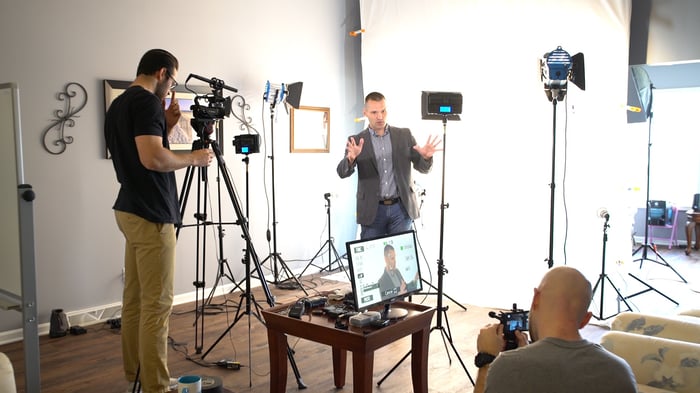
The challenge with video production agencies is that you only have a certain amount of pre-production time allotted to define your goals.
Agencies of all sizes likely have multiple client projects they’re juggling at once. So, they will likely have to limit the amount of time spent in pre-production understanding your objectives and vision. This could lead to deliverables that only partially fulfill expectations.
This means they're more likely to rely on templates and formats they've used before. The problem is, even if this approach yields a beautiful video, it might not resonate with your audience and actually move the sales needle. You'll end up with something that looks and feels similar to everything else out there.
You want to produce videos that have an immediate impact on your sales. We call these videos The Selling 7.
When you rely on a third-party video production company to create these videos instead of hiring an in-house videographer, these videos can take much longer to create. Furthermore, since the video production company doesn’t know your business as you do, it is even more difficult to create videos that truly resonate with your buyers.
The solution?
Generally speaking, this means that you should be allocating ample time with your internal team to define exactly what you want so you can relay that to your production agency.
If you want a video to look, feel, and accomplish what you’re hoping it will, it’s more dependent on your team to articulate those variables than it is for the production team to extract them from you.
Don’t get me wrong, the success of video planning and pre-production is not solely on your shoulders as the client.
However, I believe it’s important for clients of video agencies to recognize that this burden is again more on the client than the agency, especially when the client acknowledges that the agency’s scope is small and spread across multiple projects at once.
This is why we always recommend our clients hire an in-house videographer. With a videographer embedded in your team, you will never have to wait for an agency to create and deliver your videos. You will have someone there who is constantly creating this content for your business.
Just keep in mind that while an in-house videographer is getting started, there is going to be a learning curve and they will need time to get to know your brand. Your videos won’t be perfect right away, but with the right videographer in your company, you can expect them to be producing two to three videos per week — compared to the months it can take for an agency to complete just one video.
You don’t want to be spending money on a third-party video that will take much longer to complete and is doomed to be ineffective from the start.
How do you know that your team is experienced not only with the gear, but also with each other?
It’s very common for agencies, especially smaller ones, to fill the additional hands required on a shoot with freelance video professionals (which can be a detriment to your video success — more on this later). Small agencies commonly do this, particularly when the agency is not local to your business.
If your company is asking the agency to travel for production, it’s more cost-effective for the agency to hire local freelancers rather than fly a second cameraperson out with them.
Freelancers can keep costs low for the agency — and also for you — but problems arise when the contracted team members producing your content have different experience levels.
Freelancers are typically chosen based on convenience, availability, and cost long before the level of team compatibility is considered.
This sets up a quality variability that you don’t want to show through on your end deliverable, particularly if you’ve made multiple projects with the same agency. You will want the same hands working on your content to maintain consistency across creativity and expertise.
The same can be said if the crew working on your project hasn’t collaborated before.
There’s a real collaborative rhythm required on a shoot to make near-perfect content, and that rhythm requires a serious level of understanding and gelling between all involved.
It’s important to ask if the agency has worked with the freelancer(s) in the past, and how often. Ask for example footage that was created by the same team so you know what to expect.
Otherwise, you’re going to feel like the agency is acting as the “middleman” between you and the local freelancers for hire.
If you had someone in-house, however, who was dedicated to sharing information about your business — who was part of revenue team meetings and owning the process from start to finish — this wouldn’t be an issue.
When you combine both the time and money investment required to create each video with an agency, you’re looking at a big-ticket cost no matter how you cut the cake. You need to pay for another company to hire a crew and purchase or rent equipment.
The cost of using an agency a few times each year can be equivalent to hiring an effective videographer in-house (starting at roughly $55,000 salary plus benefits), but minus the flexibility.
Every organization wants to save money, and you might think that outsourcing your video production is a way to do so, but as you can see, if your business is planning to make video a regular part of its content marketing efforts (or even just check the boxes with The Selling 7), the costs can add up quickly.
After years of working with hundreds of clients — and at one time even doing the video production agency work ourselves — we can tell you that time and time again, our clients earn the biggest ROI when they embrace a culture of producing video in-house.
The reason?
No one knows your company, your vision, and your goals better than your own team.
To get the best possible results with your video marketing strategy, you must hire a full-time videographer to own your business’s video production process. Otherwise, you’ll be spending far too much for a deliverable that barely makes a difference to your bottom line.
You might be thinking, “Why would my business need a full-time videographer? There’s no way we need someone working on this 40 hours per week.”
But the truth is, our clients would tell you that it's worth it. The videographer's impact on your sales and marketing numbers can be significant.
Sure there are challenges to hiring in-house, such as some of our clients who get in their own way by striving for perfection, when they should just start publishing. Others don’t explain why they’re hiring a videographer to the rest of the team, and buy-in is lacking.
Even so, our clients would tell you the results speak for themselves.
Of course, there may be instances where you want to outsource for a one-off video, but if video content is going to be a staple of your strategy, in-house is the way to go.
We’ve helped hundreds of B2B and B2C businesses like yours create winning video strategies that build trust with prospects and enable sales teams to sell better than ever.
The best part is this growth can happen for you in months — not years.
Once you have the right person in place, creating lots of videos for your small business will be a piece of cake. You will be amazed at the dramatic increase in traffic, leads, and sales — and wonder why on earth you didn’t hire an in-house video production team sooner.

X continues its efforts to reassure potential ad partners.
So, you’re looking at your business YouTube channel and it seems as though something isn’t really catching on. You know your content is valuable, but nobody seems to find it. Or, maybe some videos on your channel seem to do well, while others are a complete flop.
“What am I doing wrong?” you’re thinking to yourself.
Well as it turns out, many of the mistakes you might be making are pretty common.
In fact, through training and consulting dozens of companies over the past few years, I’ve narrowed down six critical mistakes that, once fixed, will almost guarantee success and help you build a successful YouTube SEO strategy.
If you want your videos to be found at all, you must understand how YouTube works as a video platform, be willing to adjust your video content to your audience, and adapt as the video platform continues to change.
Before we get into the most common mistakes, there is an important distinction to make as you look at the engine that suggests videos to YouTube viewers. YouTube is a discovery platform, a search engine, and a social media site all at once.
When you use a normal search engine you enter a query, find your answer, and move off the search engine.
With YouTube, however, even once you’ve found your answer, you continue to find suggested content. YouTube calls this a search AND discovery algorithm.
This means that not only do you have to optimize your videos around specific keywords and phrases, but also ensure that YouTube knows how to suggest your content beside other similar content as well.
Doing this will not only help YouTube and Google better understand what your content is about and organize it, but it will help get more qualified eyes on it as well.
If that sounds confusing, just think of how Amazon makes a suggestion to buy a tripod while you’re in the process of buying a camera. It knows these products are related even though you didn’t search for tripods.
So again, search engine optimization is important, but you must also consider the “discovery” element of the algorithm as well.
With that being said, let’s get into the most common mistakes we see businesses making with YouTube SEO and getting found on the platform.
In the past, a common understanding of YouTube SEO was that the on-page factors like the title, description, and tags were the best way to rank for keywords.
There seemed to be a particular belief, even from me, that exact-match keywords in your tags were the best way to rank for those keywords aside from your title.
That is until YouTube stated:
Turns out that in addition to your title, the description is actually where you need to include those exact-match keywords and other contextual information for the algorithm.
Commonly, the description gets no love, but if you give it the right structure, it can be quite powerful.
By using a structure and including those important contextual keywords and phrases in your description, you’re helping YouTube understand when to display your video in search results and when to suggest it with other related content.
This is a great place to get help from ChatGPT or another AI tool. Upload a video transcript and ask for a YouTube description. Then, tweak as necessary.
Another important YouTube SEO factor is closed captions.
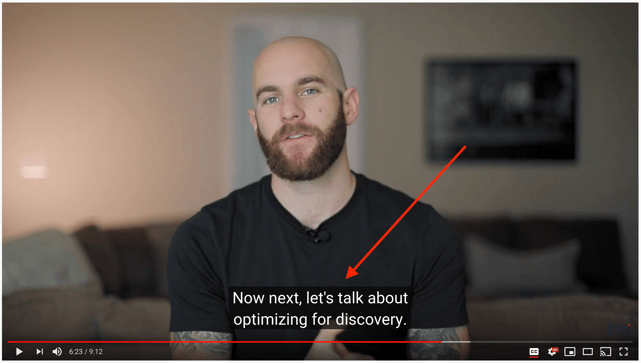
By default, YouTube transcribes the dialogue of uploaded videos to make them accessible to all, and this has improved drastically over the past few years.
In the past, experts have believed that YouTube would only index a video’s captions file if it was a “custom” captions file, meaning a separate transcription was uploaded from tools like Rev. That's no longer necessary.
Nevertheless, whether you choose to upload your own captions, or use the automatic ones, you should make a conscious effort to at least say your target keywords or phrases out loud in your video.
If the phrase is clear in your dialogue, the algorithms know what you’re talking about and have a better chance of displaying your content to your target viewer.
You may even get picked up for a “featured clip” in Google search results.
Similar to a featured snippet, Google will display short clips of a video if it believes that clip alone will answer a searcher’s question.
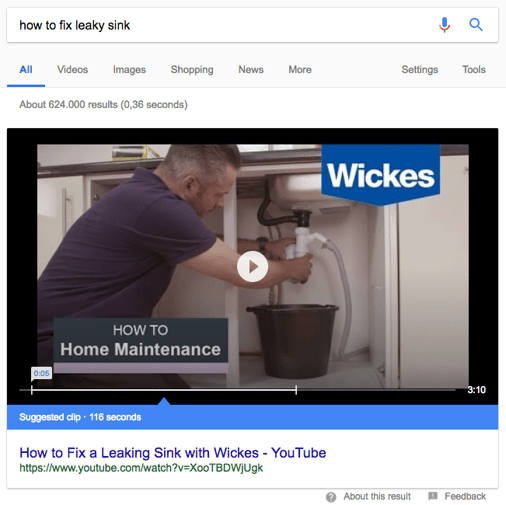
(Source: https://www.woorank.com/en/blog/suggested-clips-youtube)
Some of the most important SEO factors YouTube tends to favor to rank your videos higher actually have nothing to do with what you do at all; they are focused on what your viewers do.
Off-page metrics include things like:
Think about what these things communicate to the algorithms. Would a video that’s valuable, engaging, and worthy of promotion have a short average view duration and no engagement?
As stated by YouTube:
But, it’s not enough to simply know what affects performance; It’s more important to follow that data and make better decisions about the content of your video.
If you don’t, you’re inadvertently hurting your video SEO.
Get to know your analytics dashboard in YouTube and use it as a guide to improve your videos, your channel, and, in turn, your results with video. YouTube makes it incredibly easy to track metrics like reach, views, and engagement with the new YouTube Studio dashboard.
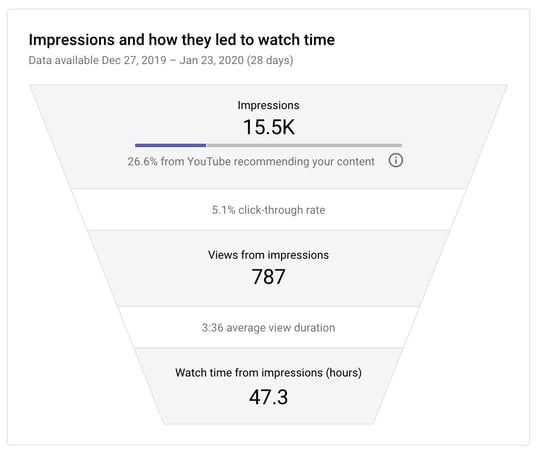
(Source: YouTube Studio)
As mentioned above, YouTube clickthrough rates are one of the most influential off-page metrics and your video thumbnail can make or break this even for the most keyword-optimized, value-packed video.
In other words, I’ve seen videos that rank #1 for a search term in the first 24 hours of being published, only to be pushed to the second page after suffering from a bad clickthrough rate.
So what makes a thumbnail fail?
Thumbnails that either don’t grab attention, don’t generate interest, or otherwise don’t look valuable.
First of all, you must have a custom thumbnail design. Otherwise, you’re relying on YouTube to pick out a still frame of your video, that sometimes ends up looking like this…

Not very enticing, slightly embarrassing, and killing your video clickthrough rate. Fact is, amongst the abundance of things a YouTube viewer can click on, you need to draw their attention with a great thumbnail.
If you’re wondering what I mean, take a look below. What looks like it’s more worth your time?
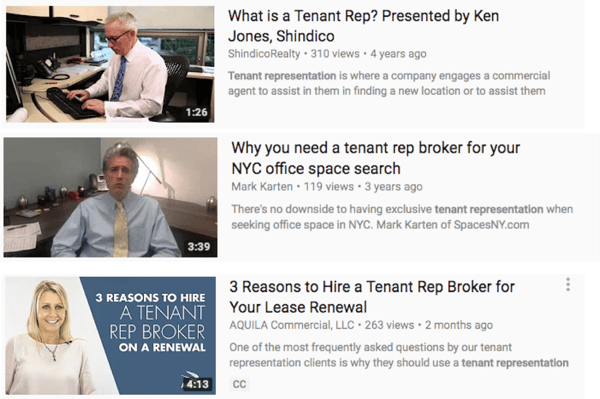
Although we can see a small preview of the video in each of these thumbnails, there is a wealth of “visual cues” in the last thumbnail.
It includes a number of best practices when it comes to an enticing, and clickable thumbnail like:
Here's how we structure our thumbnails at IMPACT for our own YouTube channel:
.jpg?width=500&height=467&name=Screenshot%202024-06-21%20at%202.08.31%20PM%20(1).jpg)
There’s a strong correlation between video performance and engagement like comments, shares, likes, and subscribes.
In fact, Brian Dean of Backlinko.com once analyzed 1.3 million YouTube search results and concluded that videos with lots of comments often ranked number one in search results.
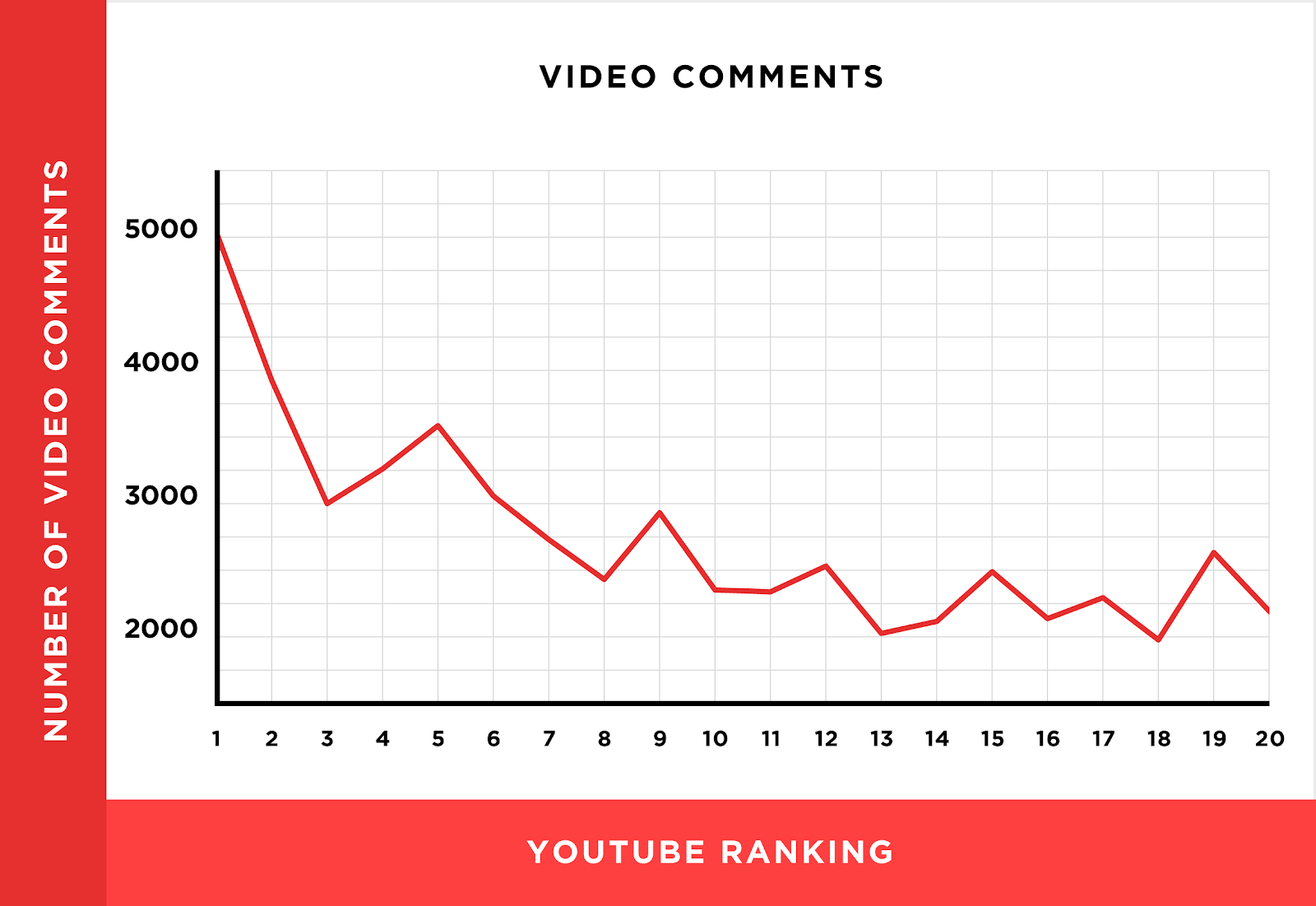
(Source: https://backlinko.com/how-to-rank-youtube-videos)
In his words, “If someone leaves a comment, it sends a strong message to YouTube that they probably enjoyed the video (or at least engaged with it.)”
The problem is, often we don’t do the most logical thing to promote engagement.
Ask for it.
There is no shame in asking for viewers to participate voluntarily in conversation, appreciation, or promotion. Even better, use on-screen prompts and icons to visually reinforce what you’re asking them to do.
Also, as a fun fact, YouTube doesn’t admonish dislikes or any comment with negative sentiment. Controversial videos often perform very well.
While an individual video performing well is great, the entire channel performing well is even better. And, as you may guess, if the entire channel is performing well, it affects the discoverability and searchability of every video you ever publish.
The biggest problem is oftentimes we don’t make it easy for a viewer to consume multiple videos on our channel (or extend their viewing session).
When viewers consume multiple videos in one session, at least two things happen:
As you might guess, YouTube enjoys when content keeps viewers on the platform. After all, that’s more ad space they get to sell.
So when you extend a users viewing session with your content, you’ll see a favorable outcome in your video and channel performance.
Sean Cannell, a notable YouTube expert, suggests using a “cluster strategy."
“Before recording, Sean thinks through four or even 10 videos that can all be related. That way, as he records the series, he can cross-reference videos from the cluster when relevant, and put links to related videos on YouTube cards and in the video description.”
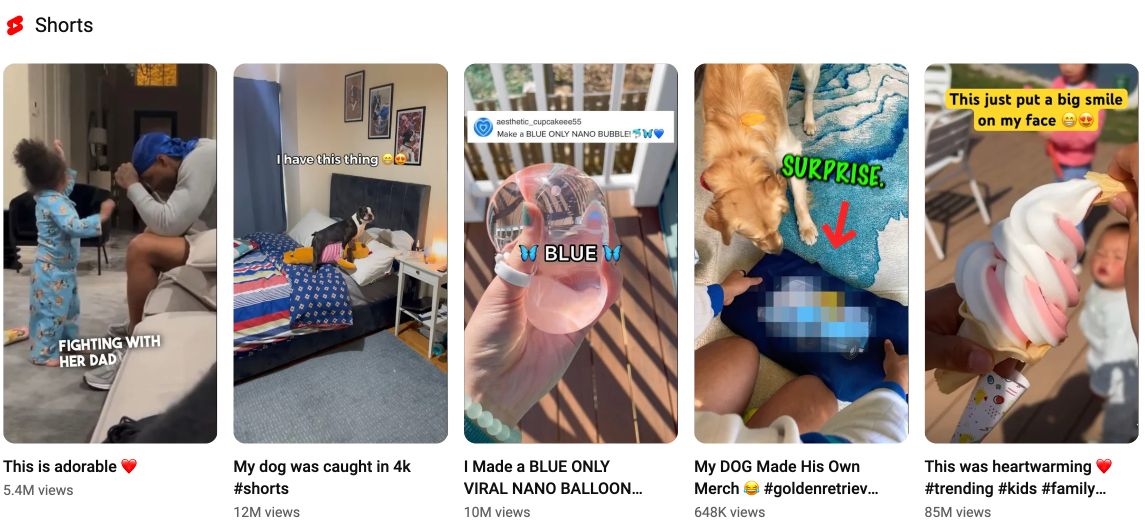
As the name suggests, short-form videos are, well, short. They may be as long as a minute, or even 90 seconds, but are usually 30 seconds or less. Some are as short as 10 seconds.
These videos are vertically-oriented (think: shot on a phone), and often play on a loop (or auto-play into the next one, suiting short audience attention spans.
Following in the popular footsteps of TikTok, platforms are prioritizing these kinds of videos, which boosts their reach. Instagram leaned into Reels, while YouTube did the same with Shorts.
Earlier this year, HubSpot found most marketers reported short-form video having the best ROI compared to all other media formats.
And it makes sense. The format suits the medium. On YouTube, more than 70% of all traffic is mobile, so it makes sense that the content would be prioritized to the device.
Short-form video is great at bringing in viewers and helping them get to know your brand and personality. You can drive traffic to longer videos, pick up subscribers, and build a following with this popular format.
As you can see, when it comes to YouTube SEO, there is quite a lot to know and optimize even after you create great content —emphasis on starting first with great content.
Fact is, even with all of these best practices, if your videos aren’t solving a real need or keeping people watching, it’s safe to assume that all the search engine optimization in the world isn’t going to bring success.
One final thing to keep in mind: It’s very rare that I see videos that were “repurposed” for YouTube perform very well in search.
By repurposed I mean, initially it was made for Facebook or for the website, but just to get some more views, it was thrown up on YouTube as well.
Instead, those organizations who put time and energy into making content specifically for the platform, and therefore are able to make the viewing experience great on YouTube first tend to crush it.
If you want to see what these best practices look like in action, I’d recommend checking out some of the channels from current and former IMPACT clients to get a taste of what’s possible:
If you're looking for more help with digital marketing, check out our podcast, Endless Customers. Twice a week, we bring you tips and insights from noted entrepreneurs, business coaches, and other experts.

Some valuable pointers from the YouTube team.
There's a range of options for Snapchatters to engage with the event.
If you're buying Facebook or IG ads on iOS, you're going to be paying more.
AI can be a game-changer for your video production, streamlining editing duties and turning around tedious tasks in the blink of an eye.
These tools are evolving rapidly, with new players coming on the market as others fall away or get swallowed up by the big boys.
Opus Clip is an AI tool for video creators that can transform long-form videos into short-form social media clips with ease. You can plug your video into their website, wait a few minutes, and voila – it uses AI to select what it calls the most “viral” moments for you to share across your social media channels.
Many big names, including YouTube creators and podcasters, are ambassadors for Opus Clip, and we at Endless Customers use it for our podcasts too. While many are uplifting the tool as flawless and useful for everyone, there are some limitations to this tool that you should be aware of before you choose it to be a part of your video production.
Today, we’ll dive into these limitations and provide some handy solutions to navigate around them.
Before we dive into the negatives, we want to set the record straight. We really love Opus Clip.
As the AI wave has increased these past few years, we’ve tried a number of tools to help us turn a full-length video into short-form content. We liked Opus the best of any of them. There are a number of things to like, especially considering there’s a free version of the tool. (There’s also a Starter level ($9/month) and Pro ($29/month). More info can be found at the Opus pricing page.)
But, it is not without its drawbacks. Considering we’ve used it for hundreds of videos at this point, we’ve got a good idea of what those are.
Let’s dive in.
First off, it’s important to remember what Opus Clip does: it takes a longer video and cuts it up into shorter clips. Considering this, it’s no surprise that sometimes this goes awry.
One of the primary issues with Opus Clip is that it sometimes generates clips that lack context. This can result in clips starting in awkward places or ending abruptly before delivering the full impact.
Solution: To fix this, you can manually edit the clip. For instance, if the clip begins with, "When sales sees marketing doing that..." and you wonder what "that" is, you can go back in the transcript to find and include the necessary preceding context.
By adding some more context manually, you create a coherent clip and a better experience for your audience.
While Opus Clip’s facial detection and cuts can be impressive, they occasionally appear clunky or unprofessional, leaving you with unusable videos.
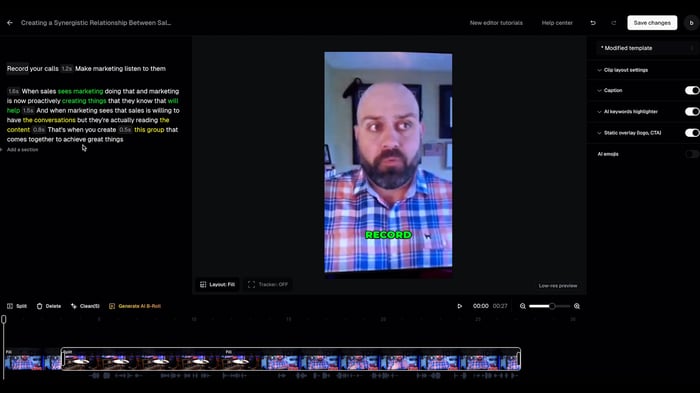
Solution: The best way to smooth out these rough cuts is to use a video editing software like Adobe Premiere. Import the clip into Premiere and manually refine the edits for a more polished final product.
Although Opus Clip offers in-tool editing, we’ve found that it’s often more efficient to handle detailed edits externally.
Opus Clip allows you to export projects as XML files for further editing in video software like Premiere. However, this feature sometimes malfunctions. There are a lot of files involved in an XML project, and occasionally we have noticed a missing video, audio, or caption file.
Solution: If you encounter issues with the XML export, you can download the video directly from Opus Clip and then import it into your editing software. This method ensures you have a complete video to work with, even if the XML file is compromised.
Long-form videos are typically created in a horizontal (or “landscape”) format, but Opus Clip converts them into vertical clips for social media and YouTube Shorts. This conversion can cut off graphics, making the video less effective.
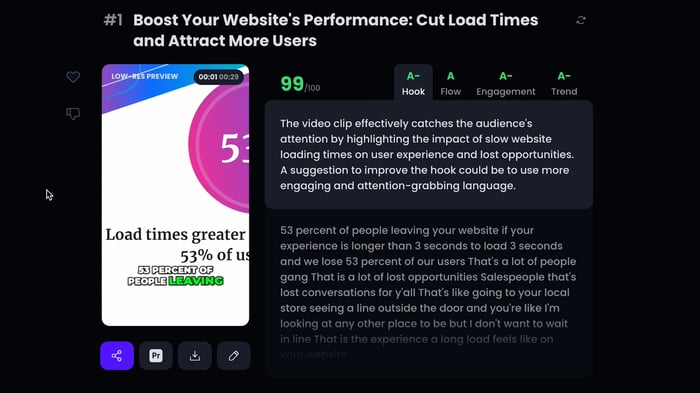
Solution: To address this, avoid using videos with essential graphics that only fit in the horizontal orientation.
Or, edit the video in a vertical format after exporting from Opus Clip. For example, if a keynote speech includes slides that fill the screen in a horizontal format, you’ll need to reformat these slides for the vertical clip.
We all know that good B-roll can make any clip look more professional. Opus Clip offers an AI-powered B-roll feature that can splice in footage relevant to the subject matter.
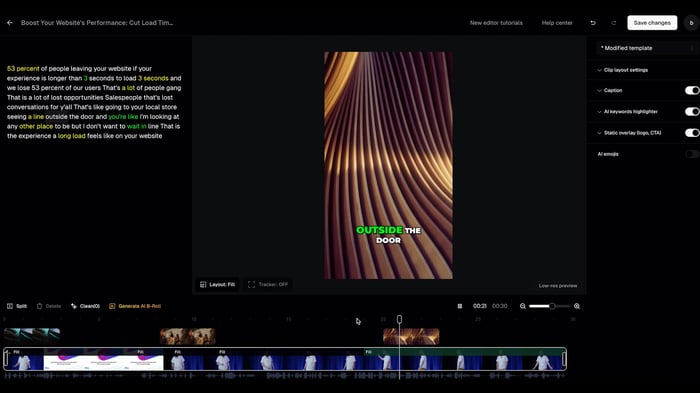
While this feature is a fantastic addition, it sometimes selects irrelevant footage based on isolated keywords from the transcript, leading to mismatched visuals — and doing more harm than good.
Solution: Instead of relying solely on Opus Clip’s AI for B-roll, use platforms like Pexels.com to find more appropriate clips. You can search for vertically formatted videos that better match your narrative, and then integrate them manually into your video.
While Opus Clip is a powerful tool for creating engaging social media content from long-form videos, it’s not without its limitations.
By understanding these challenges and implementing the solutions we’ve provided above, you can get more use from the tool without getting bogged down by frustrations that could otherwise make you throw it out altogether.
Remember, AI is here to help us do our jobs more smoothly and efficiently. In this regard, Opus Clip is very helpful. But AI is a tool that comes with drawbacks. Make sure you’re not blindly handing over tasks that require human creativity and precision.
To learn more about building a healthy culture of AI experimentation at your business, check out our Introduction to AI for Business Leaders and Employees.
For more tips and tricks, subscribe to our Endless Customers podcast on your favorite platform.

Meta's metaverse vision continues to gradually take shape.
Some tips to help improve your LinkedIn approach.
TikTok has outlined its case in opposition to the US government's sell-off bill.
Now you can edit videos that are over 6 hours long.